News
Amazon Opens Its Logistics Network to Outside Businesses, Turning Internal Operations Into a Revenue Stream
 Our Correspondent,
Our Correspondent,
Our Correspondent,
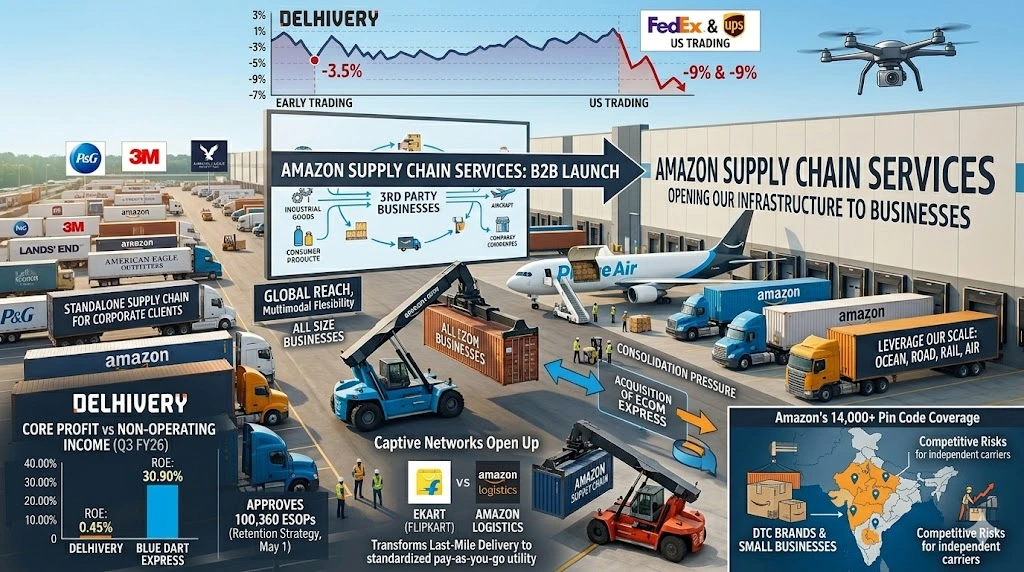
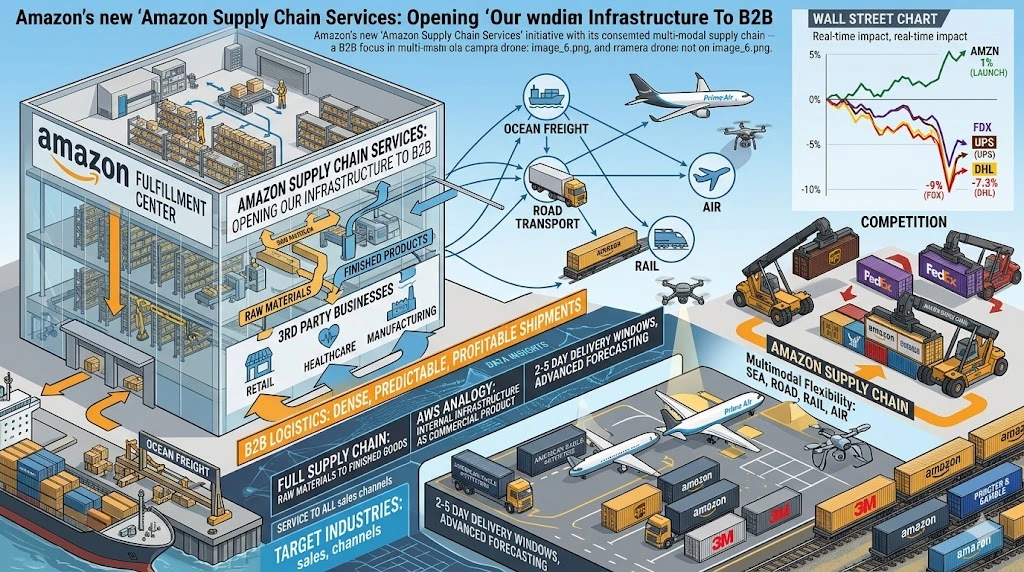
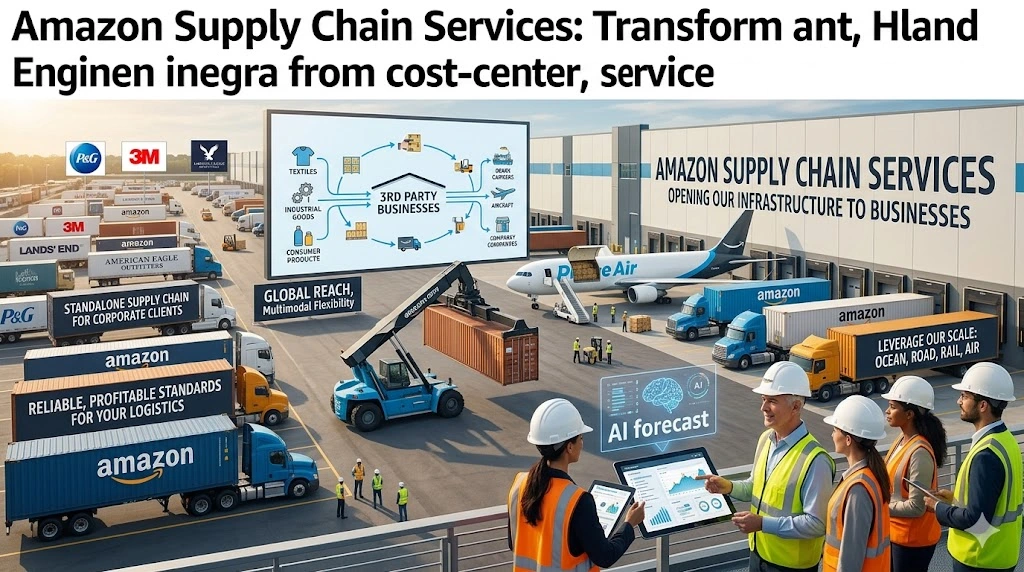
Amazon has begun offering its vast logistics infrastructure to third-party businesses, effectively transforming what was once an internal cost centre into a commercial revenue-generating operation. The move marks a significant strategic shift for the e-commerce giant, which is now packaging its supply chain capabilities as a standalone service for corporate clients across multiple industries.
Peter Larsen, who heads Amazon Supply Chain Services, says the goal is to bring the same standards of reliability and profitability that Amazon has refined for its own operations to the broader market. According to Larsen, the offering is designed to give shippers a dependable logistics alternative built on infrastructure that has already been stress-tested at one of the highest volumes in global commerce.
The service spans the full length of the supply chain, from international sourcing all the way through to last-mile delivery. It is supported by an extensive physical network that includes more than 80,000 trailers, 24,000 intermodal containers, and over 100 aircraft. Shipments can move by sea, road, or rail, giving corporate customers genuine multimodal flexibility depending on their specific distribution needs.
Several major multinational companies are already making use of the platform. Consumer goods giant Procter & Gamble is using the network both to move raw materials into its production facilities and to distribute finished products to downstream markets. Industrial manufacturer 3M is also on board, using Amazon's freight services to shift goods from its manufacturing plants to its global distribution centres.
In the apparel and fashion segment, the infrastructure is being used to manage the kind of demand volatility that is common in seasonal retail.
Conference
Conference
Conference
Conference
Conference
Conference
Summit
Lands' End has reportedly centralised its inventory within Amazon's network in order to fulfil orders arriving from multiple sales channels in a more streamlined way. American Eagle Outfitters is also said to be leveraging the shipping fleet to deliver online orders directly to consumers across the United States, effectively using Amazon's last-mile capability as its own.
For businesses that sign up, delivery windows run between two and five days, with service operating seven days a week. Customers can arrange collections from their own warehouse facilities or from third-party sites, giving them flexibility in how they integrate with a network that already processes several billion parcels each year.
Beyond the physical logistics layer, Amazon is also providing corporate clients with access to artificial intelligence-based forecasting tools. These models are intended to help businesses adjust where they place stock based on anticipated local demand, reducing the inefficiency that comes with either over-stocking or under-supplying regional markets.
The commercial logic behind the move is straightforward. By opening up infrastructure that Amazon has already built and paid for, the company can generate incremental EBITDA from assets that would otherwise represent a fixed operational cost. The logistics network, built at enormous scale to serve Amazon's own marketplace, now has the potential to serve as a profit centre in its own right.
The announcement comes against a backdrop of strong financial performance for Amazon overall. In the first quarter of 2025, Amazon Web Services posted revenue of $37.6 billion, a jump of 28 percent year-on-year that exceeded the average analyst forecast of a 25 percent increase to $36.6 billion, according to data from LSEG. Total net sales for the group reached $181.5 billion during the same period, underscoring the scale of the business from which this new logistics offering has emerged.
Explore the latest edition of Journal of Supply Chain Magazine and be part of the JOSC News Bulletin.
Discover all our upcoming events and secure your tickets today.
Journal of Supply Chain is a Hansi Bakis Media brand.
Subscribe to our Daily Newsletter
Subscribe For FreeBy continuing you agree to our Privacy Policy & Terms & Conditions