Article
Vizhinjam to Vision 2047
 Anamika Mishra,
Sub Editor
Anamika Mishra,
Sub Editor
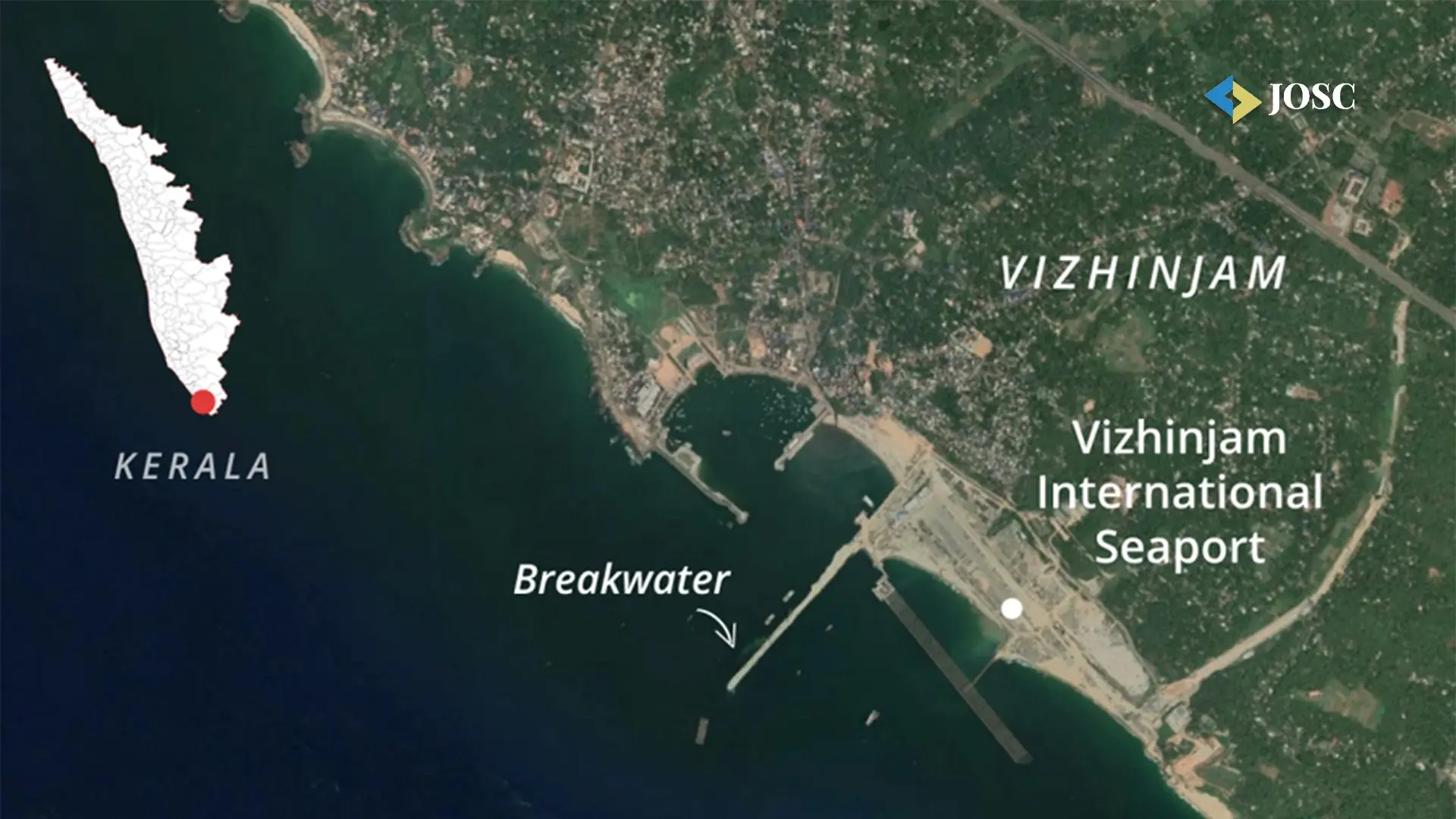
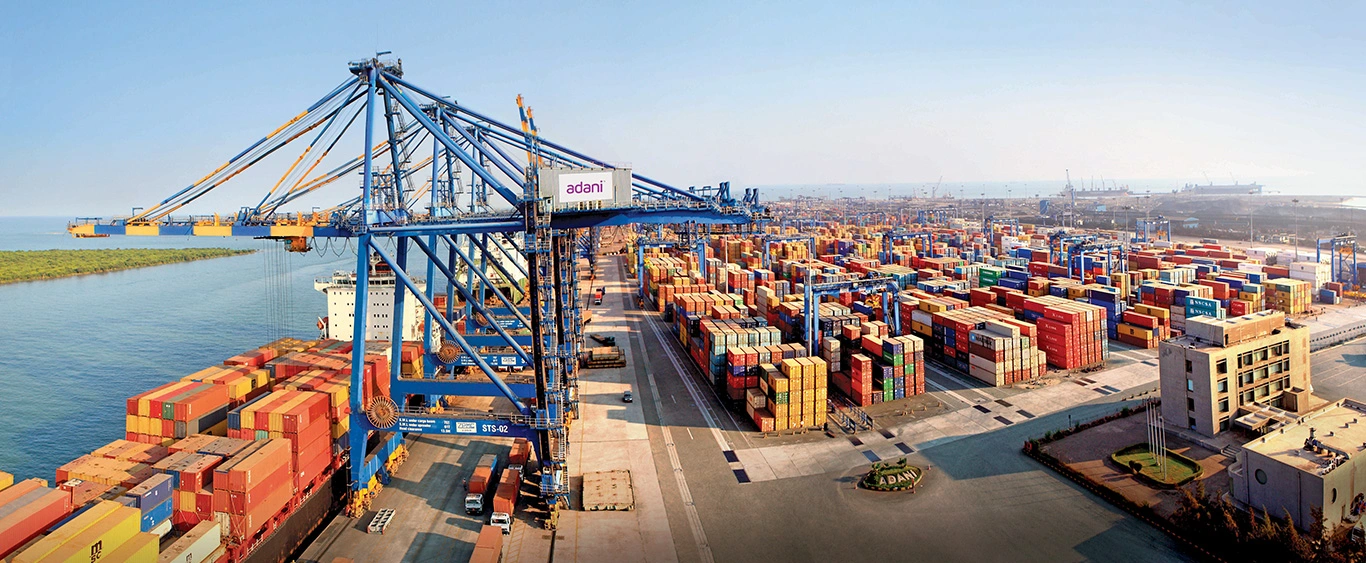
Helping the country explore new horizons in the global maritime trade, the newly built all-weather Vizhinjam International Seaport was dedicated to the nation by Prime Minister here on May 3,2025. Positioned hardly 10 nautical miles from the international shipping routes connecting Europe, the Gulf region and the Far East, the east-west shipping axis, the port is expected to significantly reduce India’s dependence on other international ports for transshipment of cargo.
Festive spirit gripped the port town when Mr. Modi reached the port by around 10.30 a.m. and was received by Chief Minister Pinarayi Vijayan and his Cabinet colleagues.
The Prime Minister then boarded the ship MSC Celestinomaresca that berthed at the port. Later, he visited the key installations, including the port operations building, before the formal commissioning of the port.
The first semi-automated one in the country, the port aims to bring home the Indian cargo transshipment presently being undertaken at the foreign ports of Singapore, Colombo, Salalah, and Dubai due to the absence of deep-water seaports in India near the international shipping route. With the port being commissioned, the Vizhinjam becomes a world-class transshipment hub for the Indian subcontinent to service the entire India.
With the site where the port is situated having a natural water depth of up to 20 meters within a kilometre from the coast, suitable to accommodate very large mother vessels, the port is expected to be a game changer for Kerala as well as in South Asia’s maritime trade.
The automation at Vizhinjam Seaport positions it as one of the most technologically sophisticated transshipment ports globally, reducing vessel turnaround times and enhancing India’s capacity to handle large container ships. The operations of all 24-yard cranes mounted at the port are fully automated, while the eight ship-to-shore cranes are operated remotely, making the port the first semi-automated port in the country.
Even before the commissioning of the project, the port achieved many achievements during its trial run and subsequent five months of commercial operation.
Ranked first among 15 ports in southeastern regions of India in terms of cargo handled in February and March 2025 (78,833 TEUs from 40 vessels in February and 1.08 lakhs TEUs from 51 vessels in March), the port has facilitated the berthing of a total of 285 ships to date, handling a whopping 5.93 lakhs TEUs of cargo in such a short span of time, around 110% utilisation of its installed capacity during this period.
Conference

Conference

Giant mother ships such as MSC Turkiye, one of the largest container vessels in the world (24,346 TEUs) and MSC Claude Girardet with 24,116 TEUs called at the port, showcasing the engineering prowess of the port to the world.
The rubble-mounded breakwater is an engineering marvel. The 2,960-m-long breakwater constructed in water at a depth of 18 m to 20 m with an overall height of 28 m, is equivalent to a 9-storey building, making it the deepest breakwater ever constructed in the country.
Now, with the Ministry of Environment and Forests granting environmental clearance for the second and third phases of development of the port, which will attract an investment of ₹9,560 crore by Adani Ports and Special Economic Zone Ltd (APSEZ) that developed the port under a public-private partnership model with the Kerala government, it will enhance its current capacity from 1 million TEUs / annum to 3 million TEUs / annum by 2028.
Features of Vizhinjam Seaport
·India’s first dedicated container trans-shipment port.
·Strategically located near one of the world’s busiest sea trade routes.
·The port boasts a natural deep draft of nearly 20 meters, enabling it to accommodate some of the world’s largest cargo ships.
·The capacity of this trans-shipment port is expected to increase three times in the coming years.
·Operates in public-private partnership model with Adani Port.
Benefits of Vizhinjam Seaport
The development of this port is expected to significantly reduce India’s reliance on foreign ports for trans-shipment, which previously accounted for 75% of such operations, thereby retaining revenue within the country and creating new economic opportunities for Kerala and its people. This port is set to become a key player in the state, potentially serving as a gateway for commerce between Southeast Asia, the Middle East and Africa.
Initiatives by the Government to promote the ports:
Government of India’s initiatives like the Sagarmala Project and PM Gati Shakti, aimed at enhancing port infrastructure and improving inter-connectivity of waterways, railways, highways and airways. Over the decades, investments under Public-Private Partnerships have upgraded Indian ports to global standards, reducing ship turn-around time by 30% and doubling the capacity of ports. These efforts have positioned India among the top three countries globally in terms of seafarer numbers and among the top 20 in global shipbuilding. For further strengthening India’s Maritime sector, the government is working towards the establishment of a shipbuilding and repair cluster in Kochi, which will create numerous employment opportunities. Additionally, initiatives like the Maritime Amrit Kaal Vision and the India-Middle East Europe Economic Corridor, which was discussed during the G-20 Summit, underscore Kerala’s critical role in global trade network.
The Amrit Kaal Vision 2047, formulated by the Ministry of Ports, Shipping & Waterways, builds on the Maritime India Vision 2030 and aims to develop world-class ports and promote inland water transport, coastal shipping and a sustainable maritime sector. It encompasses aspirations in Logistics, Infrastructure and Shipping, supporting India’s ‘Blue Economy’. The vision, shaped through over 150 consultations with various stakeholders and the analysis of 50 international benchmarks, outlines more than 300 actionable initiatives for enhancing ports, shipping and waterways by 2047.
India-Middle East-Europe Economic Corridor was launched during India’s G20 presidency and aims to integrate India, the Europe, the Middle-East through UAE, Saudi Arabia, Jordan, Israel and the European Union. It is an important initiative that can add to India’s maritime security and faster movement of goods between Europe and Asia. IMEC will reduce the logistics costs by up to 30% and transportation time by 40%. Recently, on April 16, 2025, the IMEC High-Level Roundtable on Connectivity and Economic Growth was held in New Delhi.
One Nation, One Port
The ‘One Nation One Port Process’ initiative focuses on mapping and standardizing port processes and documentation. This involves conducting a comprehensive review of the existing procedures and documents exchanged within the port value chain across all major ports which cover various cargo types, including containers, dry bulk and liquid bulk, as well as different movement categories such as export-import, trans-shipment and coastal operations. The implementation of the ONOP initiative is anticipated to significantly reduce paperwork by approx. 25% for both container operations and bulk cargo, leading to a reduction in logistics costs.
Master Plan to Develop Mega Ports
Six port clusters, out of which four port clusters, namely, Cochin Vizhinjam Port cluster, Galathea South Bay Port, Chennai-Kamarajar-Cuddalore Port cluster, Paradip and other Non-Major Ports cluster with capacity of more than 300 million Tonnes Per Annum and two port clusters namely, Deendayal and Tuna Tekra Port cluster, Jawaharlal Nehru-Vadhavan Port cluster with capacity of more than 500 MTPA are being developed as Mega Ports by the year 2047. These activities are included in the Maritime Amrit Kaal Vision, 2047. The works for infrastructure enhancement and capacity augmentation in the Major Ports are already under progress through Public Private Partnership mode and also through internal resources.
Achievements of Vizhinjam Port
Vizhinjam International Seaport has achieved a significant milestone by handling over 1 lakh containers in a single month, just four months after launching commercial operations. In March 2025, the port efficiently processed 1.08 lakh TEUs (twenty-foot equivalent units) from 51 vessels, demonstrating its growing role in India’s maritime sector. The rapid success of Adani Vizhinjam Port is attributed to its strategic use of advanced technology and meticulous planning, which have enabled high operational efficiency and scalability. The port’s ability to handle such a large volume of containers within a short period highlights its potential to become a major transshipment hub in the region. Trial operations at Vizhinjam began in July 2024, followed by the official launch of commercial services in December 2024. Since then, the port has seen a steady rise in container traffic, reinforcing its position as a crucial gateway for global trade. The latest achievement of surpassing 1 lakh TEUs in a month underlines its operational excellence and growing importance in India’s logistics landscape.
Final Thoughts
The inauguration of the Vizhinjam International Deepwater Multipurpose Seaport is a proud and historic moment for India. This port isn’t just another infrastructure project; it’s a big leap forward in India’s maritime journey and a clear reflection of the country’s growing ambition to become a global hub for trade and logistics. With Vizhinjam, India is sending a strong message to the world, we are ready to lead in shipping, trade and connectivity in the 21st century.
What makes Vizhinjam so special is its strategic location. Situated close to the international shipping routes and just 10 nautical miles from the busy East-West shipping line, it is ideally placed to handle large container ships and reduce transshipment dependence on foreign ports like Colombo, Singapore or Dubai. This will not only save time and money but also boost our self-reliance in the maritime sector.
Another major strength of Vizhinjam is its world-class infrastructure. From its deep natural draft to advanced cargo-handling systems and automation, everything here is built to global standards. The port is being developed with a long-term vision in mind and it aligns perfectly with key government initiatives like Sagarmala, PM Gati Shakti and the Maritime Amrit Kaal Vision 2047. These programmes are all about improving connectivity, reducing logistics costs and building a stronger, more integrated transport network across the country.
Vizhinjam also has a huge role to play in improving regional connectivity. It will act as a gateway, not just for southern India, but for the entire Indian subcontinent. With better road and rail links planned as part of the integrated development approach, cargo movement will become faster and smoother. This will especially benefit industries in Kerala, Tamil Nadu and nearly states, helping them reach global markets more easily.
In the broader context of global trade, projects like the India-Middle East-Europe Economic Corridor are gaining momentum. This corridor is expected to become a key route for trade between Asia, the Middle East and Europe and Vizhinjam is perfectly positioned to be an important link in this chain. It has the potential to become a major transshipment hub in the Indian Ocean, reducing our dependency on foreign ports and making India more competitive globally.
Beyond trade and economic, Vizhinjam is also a symbol of sustainable and inclusive development. Efforts are being made to ensure minimal environmental impact and the port is being built with modern technologies that support green practices. Local communities are also being involved and benefited through job creation and development initiatives.
All in all, Vizhinjam Seaport is not just about ships and cargo. It’s about India’s growth story, our future vision and our rising confidence on the global stage. It shows how smart planning, strong leadership and timely execution can create assets that transform regions and uplift the nation. Truly, Vizhinjam is a shining example of India’s maritime renaissance and a beacon of progress in the years to come.
Explore the latest edition of Journal of Supply Chain Magazine and be part of the JOSC News Bulletin.
Discover all our upcoming events and secure your tickets today.
Journal of Supply Chain is a Hansi Bakis Media brand.
Leave Comment
Join the community of 150,000+ industry professionals
Subscribe to our Daily Newsletter
Subscribe For FreeBy continuing you agree to our Privacy Policy & Terms & Conditions
Latest



Feature Articles






Related