Article
Boeing’s Problem Is Filling Orders, Not Getting Them
 Anamika Mishra,
Sub Editor
Anamika Mishra,
Sub Editor
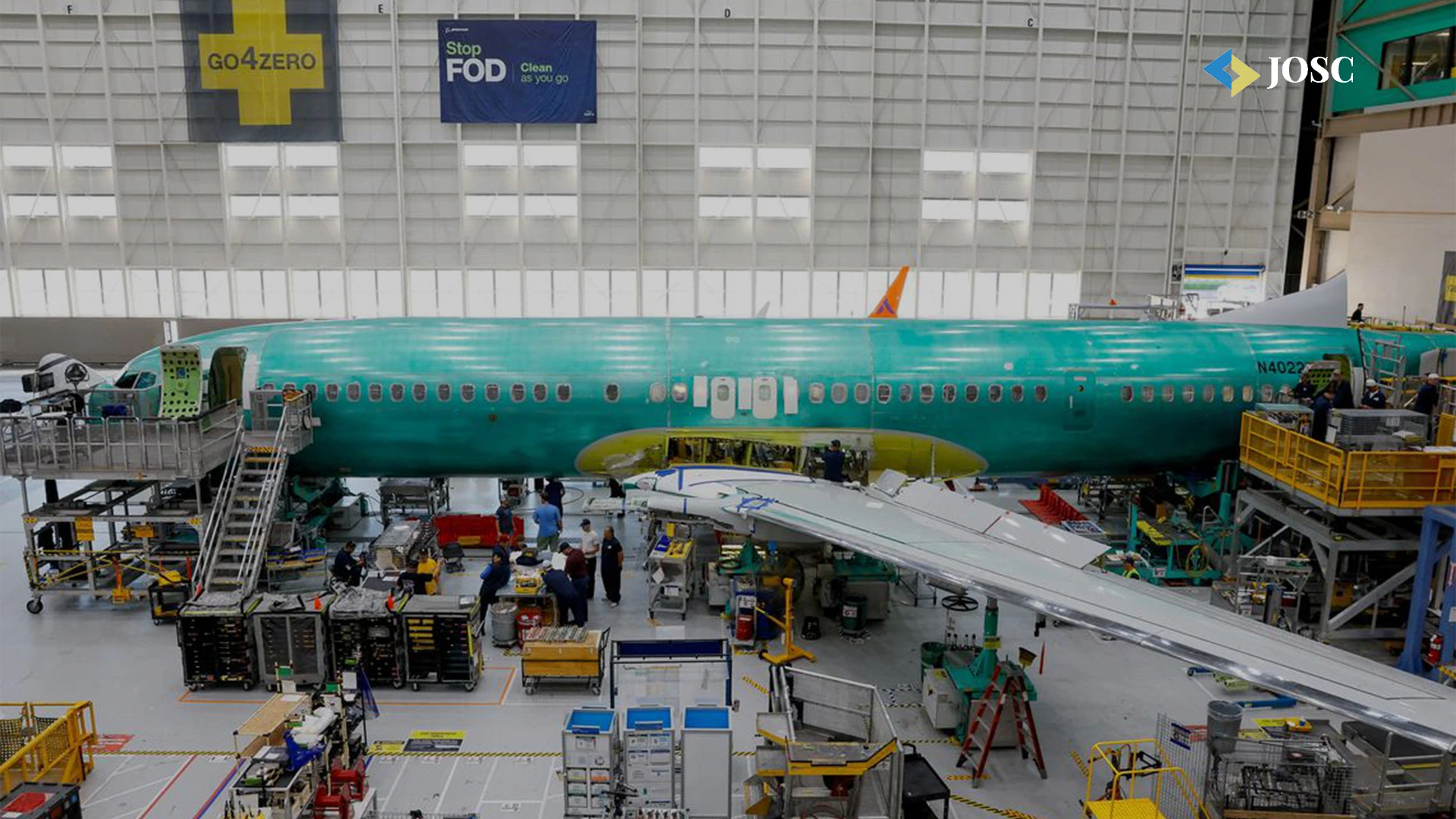
Why is one of the world’s largest aircraft manufacturers, with thousands of planes on order and booming global air travel, unable to keep pace with delivery? Boeing, once the undisputed titan of American aerospace, now finds itself in an unusual and unsettling predicament. The company’s order books are overflowing airlines across the globe are lining up to buy its aircraft but the problem lies not in selling jets, but in building and delivering them.
Traditionally, Boeing's success has been measured by how many planes it could sell. Securing major contracts from leading airlines, governments, and leasing companies was a mark of dominance. For years, Boeing and its European rival Airbus competed fiercely for market share, each racing to outdo the other in orders. But in the wake of a series of high-profile safety incidents, manufacturing setbacks, and regulatory scrutiny, Boeing’s greatest challenge today is no longer competition, it’s execution.
Despite a healthy backlog of more than 6,300 aircraft orders as of early 2025, Boeing’s ability to turn those orders into deliveries has been severely compromised. The company is grappling with a complex web of issues that stretch across its supply chain and production lines. These include ongoing investigations and quality control failures stemming from the 737 MAX disasters, as well as more recent incidents, such as the Alaska Airlines 737 MAX 9 mid-air panel blowout and the Air India 787 crash. Each of these has intensified government oversight and slowed the certification and release of new aircraft.
Labour unrest has added further pressure. A significant machinists' strike in late 2024 brought key assembly lines to a standstill, cutting monthly deliveries and forcing Boeing to revise its production targets. Meanwhile, persistent shortages in aerospace-grade materials and components, many dating back to pandemic-era disruptions, have compounded the delays.
Quality assurance, once a hallmark of Boeing’s brand, is now a source of scepticism among regulators, airlines and the flying public. With the Federal Aviation Administration (FAA) imposing caps on Boeing’s production rates and requiring enhanced oversight, the company's output is being scrutinized like never before.
In short, Boeing’s current crisis is not about winning orders, it’s about fulfilling them. The world still wants Boeing planes. The question now is: can Boeing deliver?
The backlog balloon: a growing backlog, stalling deliveries
In January 2025, Boeing disclosed an unfilled order backlog of 6,319 aircraft, with nearly 4,763 of those being 737 MAX family jets. By contrast, rival Airbus tracked 8,720 jets awaiting delivery.
Aircraft aren’t like toasters; they can’t just be dumped off at your doorstep. Boeing must juggle complex logistics, coordinate parts, and ensure compliance with rigorous safety standards. As of early 2025, Boeing was still working toward ramping 787 production to seven jets per month by year-end, with a 777 9 debut expected in. But those timelines may stretch if safety or regulatory red flags persist.
All hands on deck except workers walked out
Shadowing the manufacturing woes is Boeing’s fracture with its workforce. A major strike by 33,000 machinists in late 2024 crippled assembly plants and slashed December deliveries to just 30 aircraft, bringing full year 2024 deliveries down to 348 jets, a 34 % drop year over year. Given that Boeing realizes most of its revenue upon delivery, each grounded jet equated to nearly $1.8 billion per month in lost sales during the grounding of its MAX fleet.
Quality scares: from mid-air panel loss to “can’t build more MAX”
The specter of Boeing’s past safety crises continues to haunt its production. In January this year, an Alaska Airlines 737 MAX 9 lost part of its fuselage mid flight, a door plug blew off prompting an FAA ban on increasing MAX production. Boeing also recently agreed to plead guilty to a criminal fraud conspiracy tied to the 737 MAX crashes of 2018–19. That deal further dents Boeing’s reputation and invites fresh regulatory scrutiny.
These developments stall Boeing’s ability to simply push more jets down the line. Airbus, by comparison, quietly sidestepped such controversies and delivered 766 planes in 2024, nearly double Boeing’s deliveries leaving Boeing scrambling to catch up.
Airlines feel the squeeze too, and India’s growth is at risk
That logjam ripples into airline fleets worldwide. In India, carriers added a record 120–130 aircraft in 2024. But according to Moneycontrol, Boeing may deliver 20–30 fewer aircraft to Indian airlines in 2025, translating to a possible 15–25 % shortfall.
Conference

Conference

Conference

Conference

Conference

Conference

Summit

Air India itself is among the largest Boeing customers, especially of the 737 MAX and 787 Dreamliner. Yet Boeing’s La Porte, Renton, and Everett lines are producing at lower-than-planned rates, held back by FAA caps and supply chain delays. So, while demand is intact, fulfilment is faltering, a newfound Achilles’ heel.
History matters: from post 9/11 slump to MAX grounding
Boeing’s current woes echo past downturns. After 9/11, the manufacturer slashed production and lost market share. The rise of Airbus in the early 2000s set a competitive tone that Boeing never fully overcame. In 2019, two crash-induced MAX groundings halted its best-selling jet, ended its five-year streak of red ink, and rewrote safety protocols.
Today’s environment, inflation, union strife, trade tariffs, and supply chain constraints have only fueled Airbus’s surge. The backlog now puts over a decade of Boeing’s 2018 rate output in the queue. Even as Airbus develops new narrow body plants (like in China), Boeing’s manufacturing footprint remains flat.
Enter tragedy: Air India’s June 12 Ahmedabad Boeing crash
On June 12, 2025, Air India Flight AI171, a leased Boeing 787 8 Dreamliner (registered VT ANO), crashed mere seconds after take-off from Ahmedabad en route to London, killing at least 270 people making it India’s deadliest air disaster in nearly three decades.
A minute into flight, the aircraft failed to climb beyond 450–650 ft. A mayday call was issued and a Ram Air Turbine (RAT), an emergency backup, deployed, suggesting potential engine or hydraulic failure. Only one passenger, Vishwash Kumar Ramesh, seated in 11A (an exit row), survived with minor injuries.
Investigation underway: black boxes, engine history, and bigger implications
India’s Aircraft Accident Investigation Bureau (AAIB) leads the probe with UK’s AAIB and US FAA/BEA supporting it. The black boxes were recovered; one found on the BJ Medical College rooftop. Preliminary audio and data logging will take weeks, with a preliminary report expected in three months, and a full one potentially over a year.
Air India’s chairman, N. Chandrasekaran, stated in early June that the aircraft's right engine was “new” (installed March 2025) and the left engine serviced in 2023, describing a “clean history”. Still, the RAT deployment suggests dual engine issues or electrical failure. Airbus hasn’t commented, but Boeing and GE Aerospace are cooperating.
Fallout: immediate groundings, inspections, and operations impact
Following the crash, India’s Directorate General of Civil Aviation (DGCA) grounded India’s Boeing 787 8 fleet, inspecting them alongside Boeing 777s, leading to flight cuts, rescheduling, and a 15 % drop in widebody operations till mid-July.
At airports, heightened security checks, airline audits, and flight manifests have escalated. Meanwhile, Air India rebooked affected passengers and doubled down on retrofits of Singapore Airlines safety protocols to restore trust.
Boeing under the fuselage, what’s next for deliveries?
Boeing now faces twin challenges: fixing technical issues exposed by the crash, and maintaining the pace of deliveries. Investigations and regulatory scrutiny often slow production, as every plane, even unaffected models, gets extra oversight.
Can Boeing hit its target of 7 787s/month by year-end? With Airbus pushing ahead and airlines in India and elsewhere eagerly awaiting their jets, the supplier landscape is tightening. Boeing’s past sins, fraud felony, MAX crashes, delivery delays, linger in public memory, fueling scepticism from regulators, airlines, and passengers alike.
Why filling orders matters more than new signings
At last glance, Boeing still holds a staggering backlog. But in an industry where revenue realization depends on delivery, not contract signing, that backlog becomes a liability if airplanes can’t reach customers.
Orders are financial commitments. Deliveries are cash. In other words: “Bookings don’t pay bills.” With Boeing on track to deliver far fewer jets than backlog compounded by the crash investigation and fleet groundings, the company risks missing its revenue targets and losing business. Airlines, especially in fast growing economies like India, can’t wait. They need jets now. Airbus, by contrast, is delivering at pace and capturing market share.
Boeing’s pivot from selling to delivering
For decades, Boeing's strength lay in its ability to secure massive commercial orders from airlines around the world. Its jets symbolized American engineering prowess, and its order book served as a barometer of confidence from the aviation industry. However, that narrative has shifted dramatically. Today, the defining challenge for Boeing is not winning new orders, it’s building, certifying, and delivering those aircraft with consistency, quality, and safety. In other words, the problem isn’t demand, it’s delivery.
This pivot reflects deeper issues within Boeing's operations. Stability in manufacturing, rigorous quality control, and unwavering trust in the brand have always been the pillars of successful aircraft production. Yet Boeing has stumbled across all three in recent years. From the 737 MAX disasters to recent quality lapses and delays with the 787 Dreamliner and 777X programs, the company has battled mounting regulatory scrutiny and customer frustration. These lapses have had real-world consequences, not only eroding Boeing’s once unshakable reputation but also hampering its ability to meet delivery schedules.
The tragedy of Air India Flight AI171 in June 2025, still under investigation but involving a leased Boeing 787-8 Dreamliner that crashed shortly after take-off, has only magnified the pressure on Boeing’s production and safety protocols. Regardless of whether the final report assigns fault to the aircraft, the incident underscores the fragile confidence Boeing now faces. Every failure, whether mechanical, procedural, or regulatory raises broader concerns about Boeing's ability to ensure not just innovation, but reliability.
At present, Boeing’s order book remains robust. Thousands of aircraft await delivery, and global airlines, especially in fast-growing markets like India and Southeast Asia, are eager for fleet expansion. But a backlog means little if the company can’t efficiently and safely turn those orders into operational aircraft.
The industry now expects more than promises from Boeing, it expects proof. That proof must come in the form of jets rolling off the assembly line at pace, with fewer delays, fewer quality issues and a renewed focus on safety. Boeing must transition from being a sales-driven giant to a performance-driven one. It must show that it cannot only win the trust of customers in the boardroom but also uphold that trust in the skies.
Explore the latest edition of Journal of Supply Chain Magazine and be part of the JOSC News Bulletin.
Discover all our upcoming events and secure your tickets today.
Journal of Supply Chain is a Hansi Bakis Media brand.
Leave Comment
Join the community of 150,000+ industry professionals
Subscribe to our Daily Newsletter
Subscribe For FreeBy continuing you agree to our Privacy Policy & Terms & Conditions
Latest






Feature Articles



Related