News
India and US Deepen Trade, Defense, and Technology Ties During Misri's Washington Visit
 Our Correspondent,
Our Correspondent,
Our Correspondent,
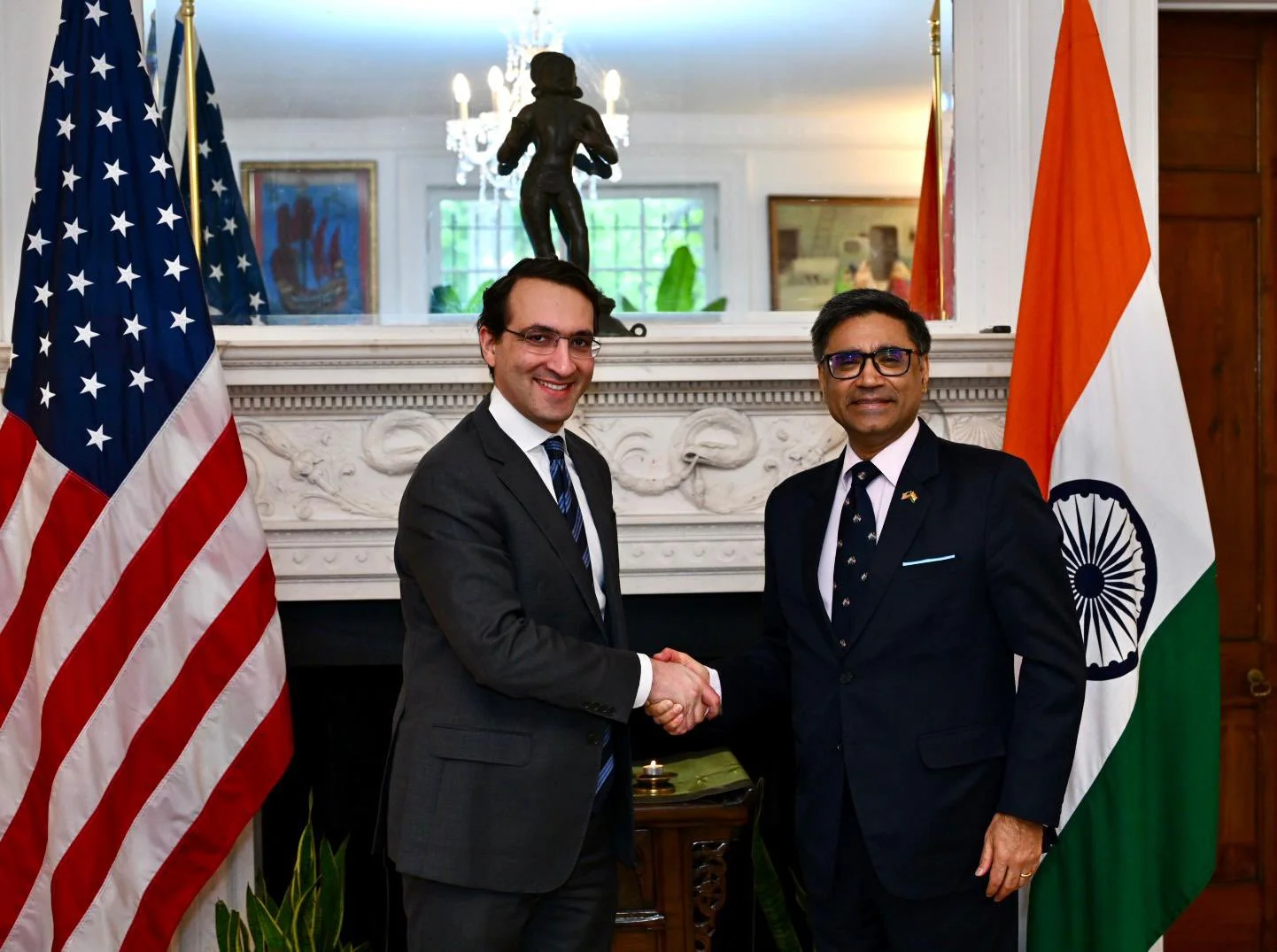
WASHINGTON, D.C. India and the United States have taken significant steps to broaden their strategic partnership, with Foreign Secretary Vikram Misri leading a packed schedule of high-level meetings across Washington during a three-day visit that touched on trade facilitation, defense industrial cooperation, and critical technology collaboration.
Misri, accompanied by India's Ambassador to the United States Vinay Kwatra, participated in the launch of the India–U.S. Trade Facilitation Portal, a new digital platform designed to streamline bilateral commerce and bring both countries closer to their ambitious $500 billion trade target. The portal is now open for exporter registrations and is expected to serve as a key enabler for businesses seeking to tap into the growing economic relationship between the two nations.
At the Pentagon, Misri held a substantive meeting with Under Secretary of Defense for Acquisition and Sustainment Mike Duffey. The two sides focused on deepening defense industrial cooperation, advancing technology collaboration, and strengthening supply chain linkages. These discussions built on the foundation established by the bilateral Major Defense Partnership framework that was formalized last year, reflecting how far the relationship has come in terms of defense sector integration.
Misri also sat down with Under Secretary of Defense for Policy Elbridge Colby to assess evolving developments across the Indo-Pacific and West Asia. The two had previously met in New Delhi, and the Washington session allowed them to continue those conversations in the context of an increasingly complex regional security environment. Taken together, the Pentagon engagements underscored both nations' shared commitment to industrial collaboration, technology transfer, and the gradual integration of their respective defense supply chains.
On the commercial and technology front, Misri met with Under Secretaries Jeffrey Kessler and William Kimmitt at the Department of Commerce.
Conference
Conference
Conference
Conference
Conference
Conference
Summit
The conversations covered cooperation in commercial and critical technologies, with particular emphasis on building resilient and trusted supply chains that can withstand global disruptions. Officials on both sides framed these discussions as part of a longer-term effort to align economic strategies and secure access to emerging technologies that are increasingly central to national competitiveness.
The visit is part of a broader pattern of sustained, high-level diplomatic engagement between India and the United States. It follows External Affairs Minister S. Jaishankar's own trip to Washington in February and reflects the steady rhythm of exchanges that have come to characterize ties between the two countries in recent years.
Adding further depth to the week's activities, Indian Air Force Chief Air Chief Marshal A.P. Singh conducted a separate visit to the United States, during which he toured Peterson Space Force Base and held discussions with General Gregory M. Guillot. Officials described the exchange as productive and focused on complex operational issues, signaling that military-to-military cooperation is advancing in parallel with diplomatic and commercial engagement.
India's Ministry of External Affairs noted that the visit provided an important opportunity to review the full breadth of the bilateral relationship and chart a course for further cooperation across trade, defense, science, technology, and regional affairs.
Over the past several years, India and the United States have steadily elevated their ties under the umbrella of a Comprehensive Global Strategic Partnership. Defense, technology, and supply chain resilience have emerged as the central pillars of this partnership, with both governments increasingly treating these domains as interconnected rather than separate policy tracks. Bilateral trade has grown consistently, and initiatives such as the newly launched trade facilitation portal are expected to accelerate that trajectory by giving exporters a more direct and efficient pathway into each other's markets.
As geopolitical pressures continue to reshape global supply chains and technology ecosystems, the India-U.S. relationship appears well-positioned to deepen further, with both sides signaling a clear intent to move from strategic alignment toward tangible industrial and commercial outcomes.
Explore the latest edition of Journal of Supply Chain Magazine and be part of the JOSC News Bulletin.
Discover all our upcoming events and secure your tickets today.
Journal of Supply Chain is a Hansi Bakis Media brand.
Subscribe to our Daily Newsletter
Subscribe For FreeBy continuing you agree to our Privacy Policy & Terms & Conditions