News
Delhivery Adds 1,500 Electric Cargo Vehicles in Partnership with Bajaj Auto
 Our Correspondent,
Our Correspondent,
Our Correspondent,
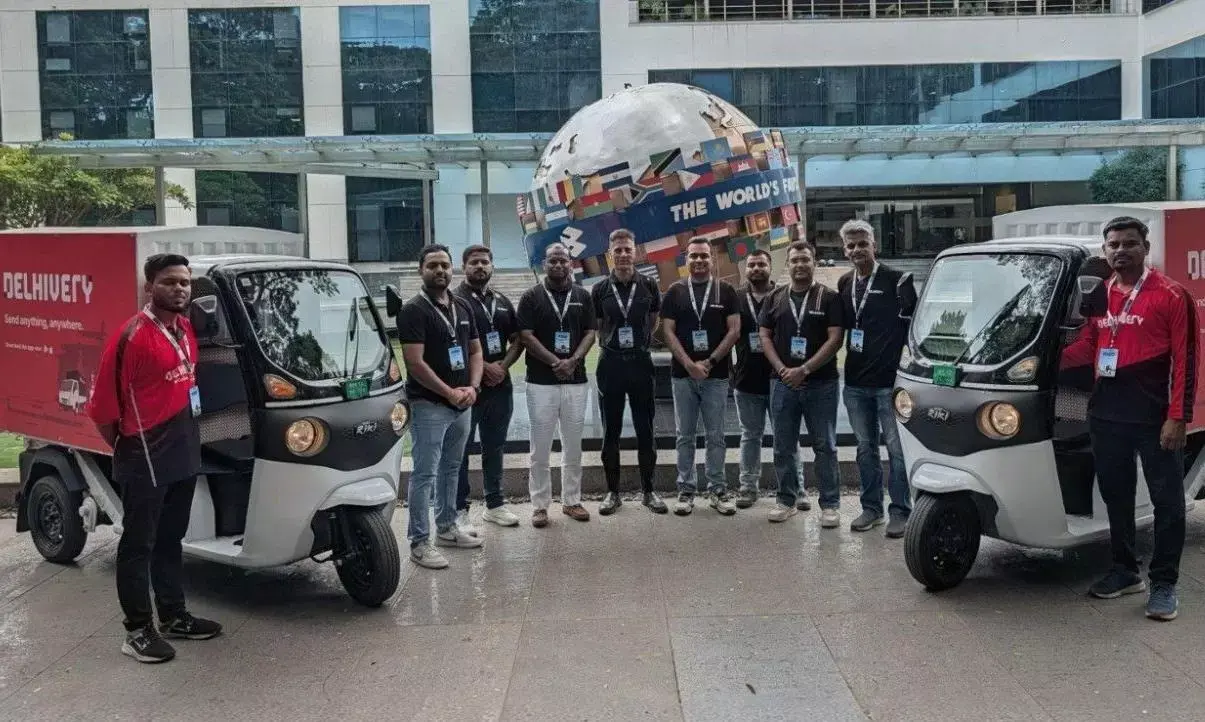
India's logistics sector is undergoing a meaningful shift toward cleaner operations, and Delhivery's latest announcement adds fresh momentum to that trend. The company has integrated 1,500 electric cargo vehicles into its delivery network, deepening its commitment to sustainable last-mile logistics across urban India.
The rollout has been executed in partnership with Bajaj Auto, a well-established name in Indian automobile manufacturing that has been steadily expanding its footprint in electric mobility. The vehicles have been purpose-built for commercial delivery use, making them particularly well-suited to the demands of urban logistics environments where traffic congestion, rising fuel costs, and emission norms create persistent operational headaches.
For Delhivery, which manages one of the country's most extensive delivery networks spanning metros, tier-two cities, and industrial corridors, this deployment represents more than an environmental gesture. It marks a structural shift in how the company approaches ground-level operations. The business has been progressively building out its sustainability credentials, and adding 1,500 electric vehicles in a single move signals that the transition is now moving at scale.
The timing makes commercial sense too. Pressure on logistics firms to reduce their carbon footprint has been mounting from multiple directions, including regulators, corporate clients with their own ESG targets, and increasingly aware consumers. Electric cargo vehicles address several of these concerns at once. They cut fuel dependency, lower running costs, and reduce maintenance cycles, all while helping companies meet evolving compliance benchmarks.
Urban delivery routes are particularly well-matched to electric vehicle capabilities. Shorter distances, frequent stops, and relatively predictable daily mileage mean that range limitations are rarely a concern, and the stop-start nature of city driving actually suits electric drivetrains better than it does conventional engines.
Conference
Conference
High-density delivery zones, which tend to carry the steepest fuel and maintenance costs, stand to benefit most from this kind of fleet transition.
The Bajaj Auto partnership also reflects a broader alignment taking shape between traditional vehicle manufacturers and technology-driven logistics companies. As commercial demand for electric mobility scales up, collaborations like this one are critical for ensuring that vehicles are designed with real operational requirements in mind, not just environmental optics. Reliability, payload capacity, and serviceability all matter enormously in a logistics context, and working closely with an established manufacturer helps bridge the gap between automotive innovation and on-ground delivery realities.
From a financial perspective, the case for electric fleets is becoming harder to ignore. Energy costs for electric vehicles remain significantly lower than those for petrol or diesel equivalents, and the reduced servicing requirements translate into meaningful savings over time. In a logistics market where margins are thin and competition is intense, those cost efficiencies can make a real difference to unit economics at the last mile.
The shift also mirrors a larger transformation underway across India's e-commerce and supply chain landscape. Sustainability is no longer being treated as a side initiative or a regulatory checkbox. It is becoming central to how logistics companies design their operations, manage their fleets, and position themselves to clients. As delivery volumes grow and consumer expectations around speed and service continue to rise, the ability to scale without a proportional increase in emissions is fast becoming a competitive differentiator.
With this expansion, Delhivery is making a clear statement about where it sees the future of logistics headed. The integration of 1,500 electric cargo vehicles moves electric mobility from the margins of its fleet strategy to the mainstream, reinforcing the company's position as one of the more forward-looking operators in India's rapidly evolving supply chain ecosystem.
Explore the latest edition of Journal of Supply Chain Magazine and be part of the JOSC News Bulletin.
Discover all our upcoming events and secure your tickets today.
Journal of Supply Chain is a Hansi Bakis Media brand.
Subscribe to our Daily Newsletter
Subscribe For FreeBy continuing you agree to our Privacy Policy & Terms & Conditions