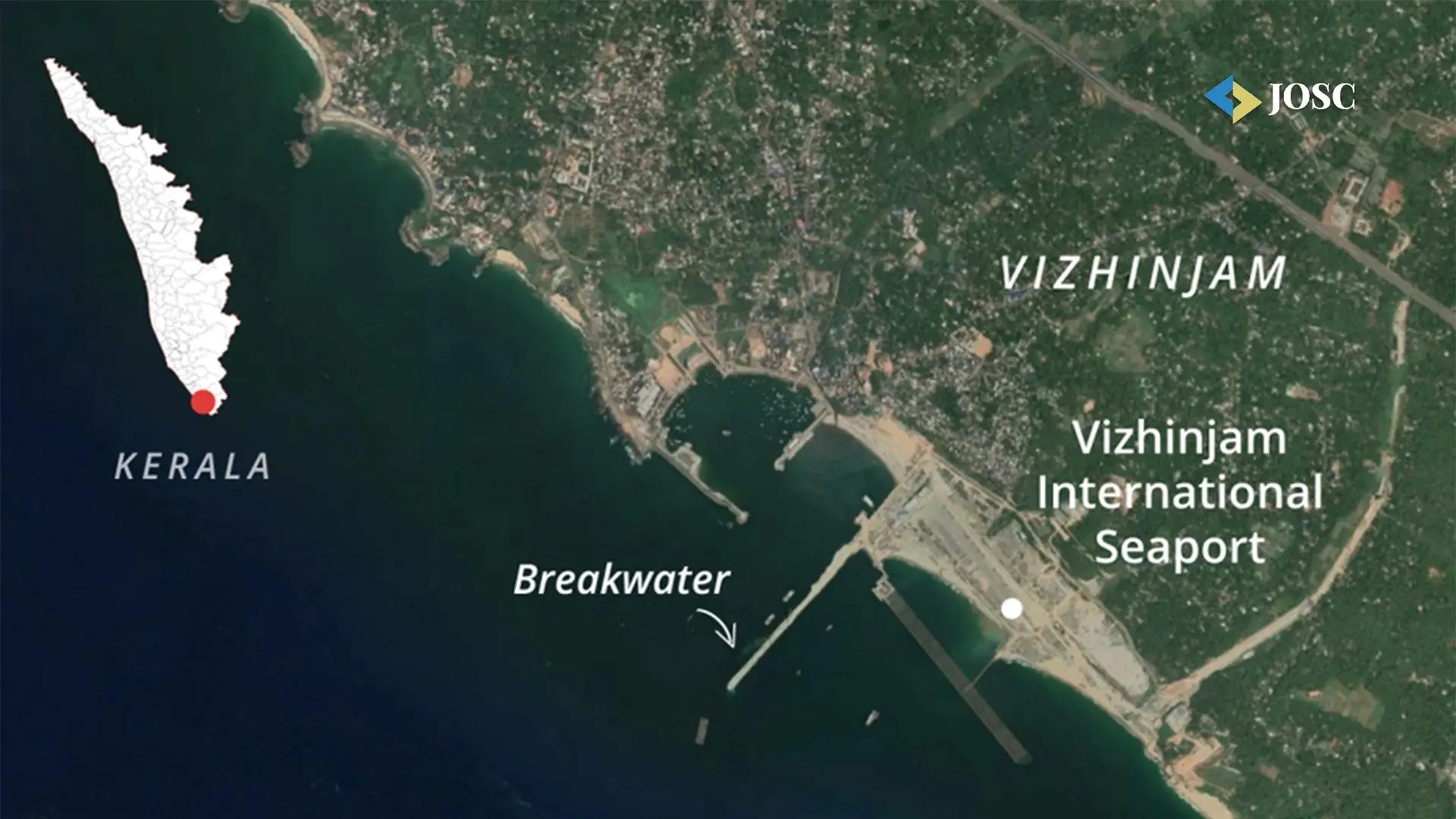
India’s drive to achieve mineral self-reliance is increasingly focused on building rare earth corridors that transform its extensive coastal mineral reserves into fully integrated processing and manufacturing ecosystems. As the global transition to renewable energy and electric mobility accelerates, competition for critical minerals has intensified, highlighting the risks faced by countries dependent on highly concentrated supply chains. Announced under the Union Budget 2026, this initiative marks a clear shift from fragmented mining activity to coordinated, multi-state industrial ecosystems designed for long-term resilience. The strategy directly targets India’s near-total dependence on imported rare earth elements, with import reliance estimated at 95–100% for critical materials such as neodymium, dysprosium and terbium. A detailed study by the Department of Atomic Energy has identified around 13.15 million tonnes of monazite reserves spread across eight states, containing an estimated 7.23 million tonnes of rare earth oxide and about 1.18 million tonnes of thorium oxide. These resources form the foundation of a domestic supply chain capable of sharply reducing India’s strategic exposure over time. Geographic Distribution of India’s Mineral Corridor Strategy India’s rare earth corridor model brings together four coastal states under a unified development framework that leverages regional strengths. By linking upstream mining with downstream manufacturing through dedicated infrastructure, the corridor approach enables value-added supply chains to develop domestically. This design balances mineral availability with market access while building redundancy through multiple processing hubs. The coastal focus reflects geological realities, as India’s heavy mineral reserves are largely found in beach sands and alluvial formations along both coasts. Unlike China’s hard-rock rare earth sources, these deposits require specialised processing technologies tailored to monazite extraction. The presence of thorium alongside rare earths adds complexity, while also offering long-term potential for thorium-based nuclear energy. Key Infrastructure Integration Points: • Port connectivity linking processing units to global markets• Rail networks connecting inland deposits to coastal processing zones• Existing industrial infrastructure capable of supporting rare earth processing• Research institutions driving technology development and skills training• Manufacturing clusters enabling rapid downstream integration This four-state corridor model spreads geographic risk while maximising existing industrial capabilities. Each state contributes unique strengths, from Odisha’s heavy industrial base to Kerala’s precision chemical expertise, creating a diversified and resilient framework. Odisha’s Foundation Role in Corridor Development Odisha emerges as a cornerstone of India’s rare earth strategy, combining sizeable mineral reserves with established processing capabilities and strong port connectivity. The state operates three major ports handling over 100 million tonnes of cargo annually, providing vital export infrastructure. Its steelmaking capacity of more
The only supply chain registration you need
Unrivaled context behind every news and article for free.
 Anamika Mishra,
Sub Editor
Anamika Mishra,
Sub Editor