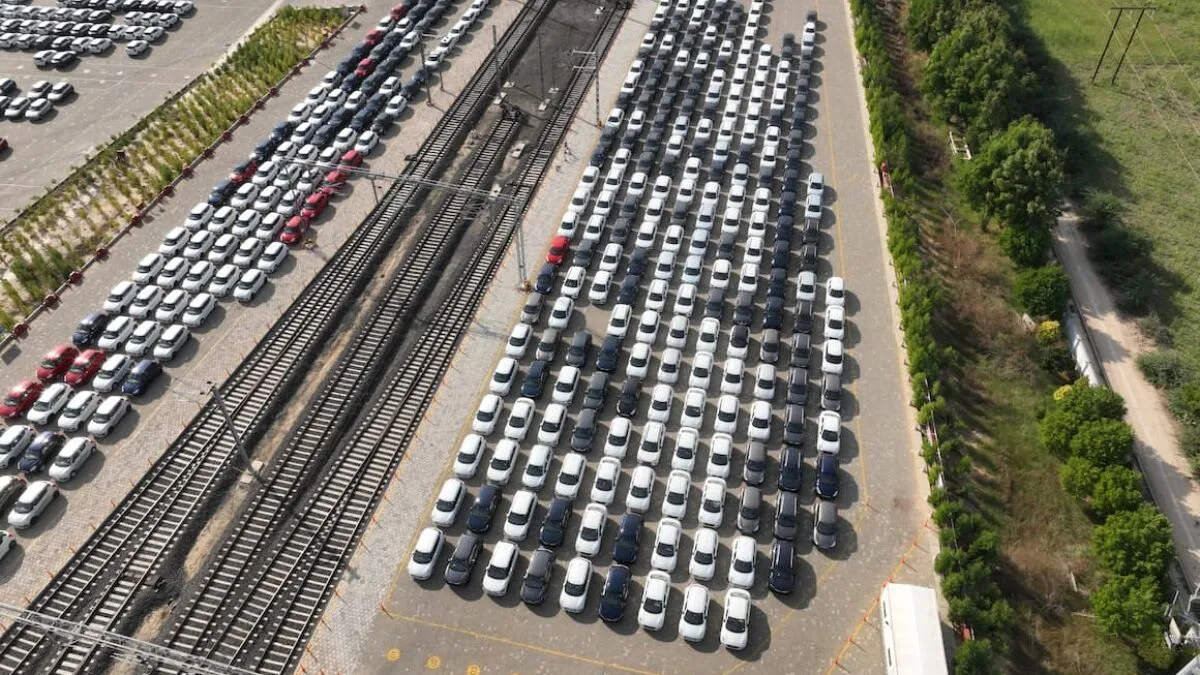
In a significant milestone for sustainable logistics, Maruti Suzuki India Limited has announced that its Gujarat in-plant railway siding has become the world’s first Modal Shift Transportation Project to be registered under the Verified Carbon Standard (VCS) programme of Verra. The recognition places India firmly on the global map for decarbonisation in automotive logistics.
The initiative shifts vehicle dispatches from road to rail and is projected to generate nearly 1.7 lakh carbon credits over a 10-year crediting period from FY24 to FY33. Rail transport is considerably more energy-efficient than road movement, leading to lower greenhouse gas emissions, reduced highway congestion and decreased fossil fuel consumption across the logistics value chain.
The carbon savings from the Gujarat facility were calculated using the AM0090 methodology under the Clean Development Mechanism (CDM) of the United Nations Framework Convention on Climate Change (UNFCCC). Following independent validation and verification, Verra will issue carbon credits to Maruti Suzuki, making it the first logistics-driven modal shift project globally to receive such recognition.
Describing the development as a major step forward in sustainability, Mr. Hisashi Takeuchi, Managing Director & CEO, Maruti Suzuki India Limited, said, “This is a proud achievement for Maruti Suzuki as our Gujarat in-plant railway siding becomes the world’s first Verra-registered Modal Shift in Transportation project. By moving vehicle transportation from road to rail, we are demonstrating that operational scale, efficiency and environmental responsibility can progress together.”
 Anamika Mishra,