News
Jensen Huang Says China Is Part of Nvidia's $200B CPU Market Outlook
 Our Correspondent,
Our Correspondent,
Our Correspondent,
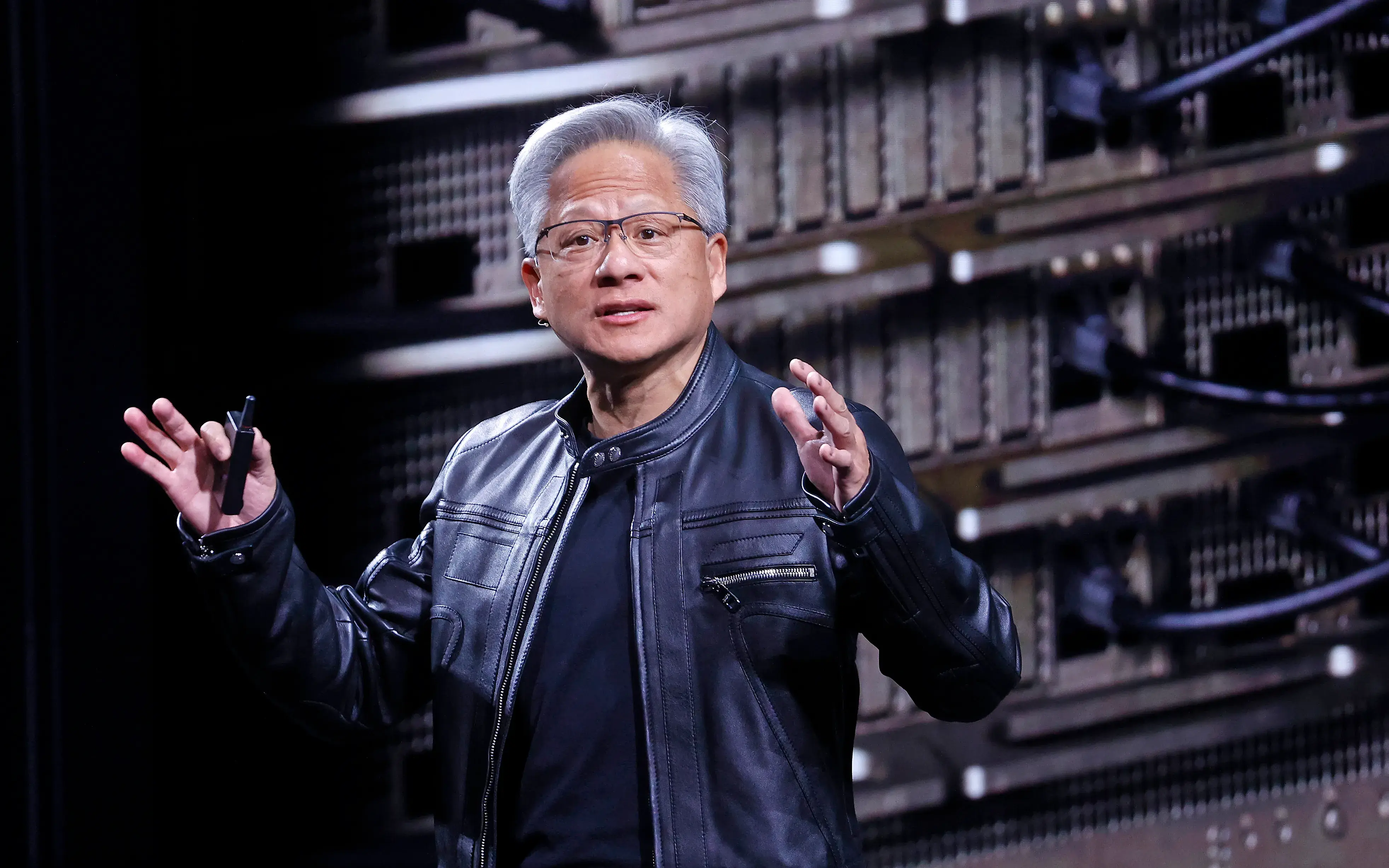
Nvidia CEO Jensen Huang confirmed on Saturday that his projection of a $200 billion market for central processing units includes China, a signal that the chipmaker still sees substantial long-term opportunity in the country despite escalating U.S.-China technology tensions.
CPUs have moved to the forefront of the AI hardware conversation as companies increasingly adopt agentic AI systems capable of performing autonomous tasks without human intervention. This shift is broadening demand well beyond the graphics processing units traditionally used to train large language models. Speaking to investors earlier in the week, Huang sought to reassure Wall Street that Nvidia, currently the world's most valuable company, can sustain its extraordinary growth trajectory through a diversified customer base and a new generation of products. He has forecast that flagship AI chips will generate more than $1 trillion in sales.
During Nvidia's earnings call on Wednesday, Huang highlighted the company's new "Vera" central processors as the gateway to that $200 billion CPU opportunity. When reporters asked him upon his arrival in Taipei on Saturday whether China was factored into that estimate, his answer was simple: "I would think so."
On the question of H200 chip sales to China, the picture remains complicated. Nvidia has secured U.S. government licenses to sell its H200 chips, but Chinese regulatory approval has not followed in part because Beijing is actively nurturing its own domestic chip industry. U.S. President Donald Trump's meetings with Chinese President Xi Jinping in Beijing this month yielded no concrete breakthrough for Nvidia, even as Huang himself traveled to Beijing as part of the American delegation. Reuters reported last week that roughly ten Chinese firms have been cleared by U.S. authorities to purchase the H200, Nvidia's second-most powerful AI chip, yet not a single shipment has been completed.
"H200 has been licensed to ship to China.
Conference
Conference
It would be terrific to be able to serve that market. The Chinese market is very important. It's very large, of course," Huang said, speaking at Taipei's Songshan airport.
Huang arrived in Taiwan ahead of next month's Computex trade show, one of the industry's most prominent annual gatherings. His visit comes just days after AMD announced it would pour more than $10 billion into Taiwan's AI sector to strengthen strategic alliances and expand advanced chip assembly capacity. When asked whether Nvidia had made or planned similar investments in Taiwan's supply chain, Huang was emphatic: "We haven't announced anything in the past, but we've invested in and supported our partners here far more than that." He also confirmed plans to meet with TSMC, the world's largest contract chipmaker and a cornerstone of the global AI semiconductor supply chain.
Huang further disclosed that Nvidia is accelerating production of its Vera Rubin platform an architecture that pairs the Vera CPU with the Rubin GPU and described what this means for local partners: "a very busy second half" for Taiwan's supply chain ecosystem.
The visit was also shadowed by a chip smuggling investigation. Taiwanese prosecutors announced Thursday that three individuals are under investigation for allegedly exporting high-end AI servers built by Super Micro and loaded with Nvidia chips, in apparent violation of U.S. export controls. Asked what Nvidia could do to prevent such diversions, Huang said the company is "very rigorous" in communicating export laws and compliance obligations to its partners.
"Ultimately, Super Micro has to run their own company," he said. "I hope that they will enhance and improve their regulation compliance and avoid that from happening in the future."
The case echoes a broader legal action from March, when the U.S. Justice Department charged three individuals connected to Super Micro including a co-founder with allegedly facilitating the smuggling of at least $2.5 billion worth of American AI technology to China in breach of export laws.
Explore the latest edition of Journal of Supply Chain Magazine and be part of the JOSC News Bulletin.
Discover all our upcoming events and secure your tickets today.
Journal of Supply Chain is a Hansi Bakis Media brand.
Subscribe to our Daily Newsletter
Subscribe For FreeBy continuing you agree to our Privacy Policy & Terms & Conditions