News
India-UAE Strategic Partnership: A New Axis Reshaping West Asia's Trade and Energy Landscape
 Our Correspondent,
Our Correspondent,
Our Correspondent,
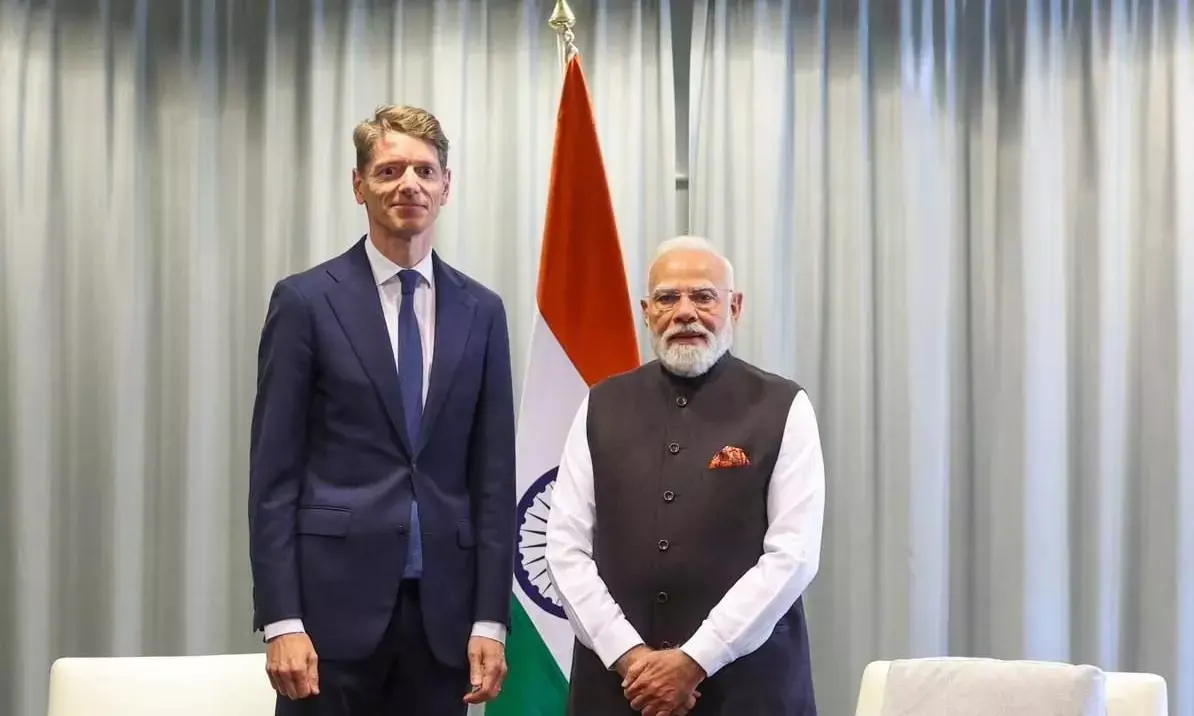
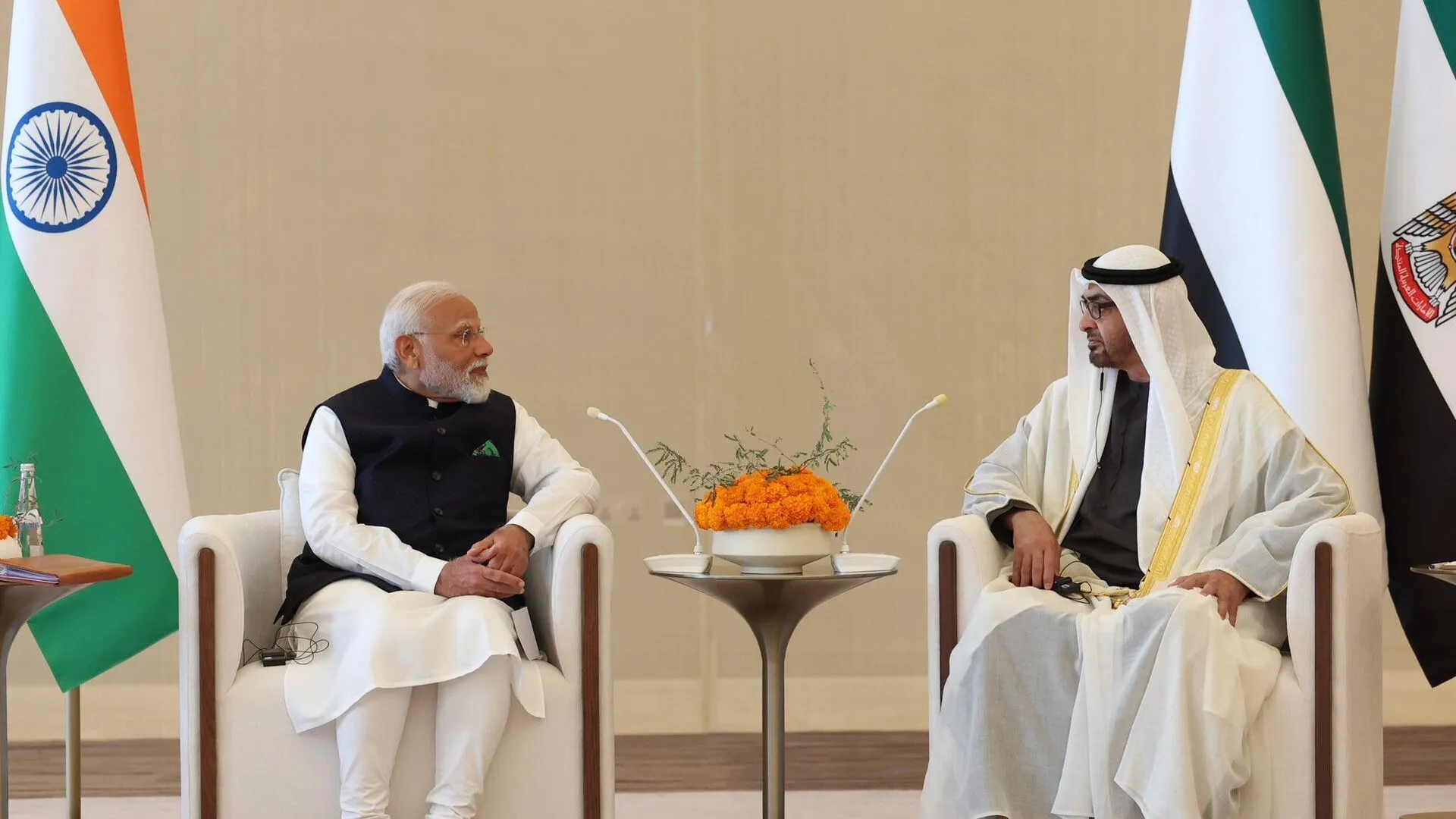
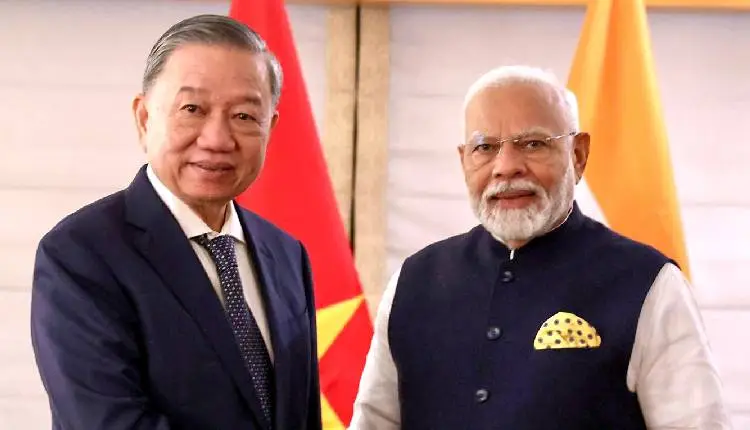
New Delhi, May 17: Prime Minister Narendra Modi's visit to the United Arab Emirates arrives at a pivotal moment for West Asia. With US-Iran tensions escalating, the Strait of Hormuz under persistent security pressure, and geopolitical alignments across the Gulf in flux, India's decision to deepen its engagement with the UAE carries both strategic urgency and long-term consequences.
What began as centuries-old maritime trade across the Arabian Sea has evolved into one of the world's most dynamic modern partnerships rooted in mutual trust, economic complementarity, and a shared commitment to regional stability. Today, the India-UAE relationship spans energy security, defence cooperation, technology, logistics, infrastructure, and investment, and this visit elevated it further through a Strategic Defence Partnership, agreements on crude oil reserves and LPG supplies, a ship repair cluster collaboration, and a commitment of up to five billion dollars in UAE investment into India.
For India, whose energy appetite will shape global demand for decades, the UAE is far more than a supplier it is a trusted, long-term strategic partner. For the UAE, India represents a vast, stable market and a central pillar in its own economic diversification strategy. Together, they are demonstrating that stability and prosperity can be built through sovereign decision-making and economic interdependence rather than external intervention.
A Partnership Built on Trust and Shared Vision
Since Modi's landmark Abu Dhabi visit in 2015, bilateral ties have moved well beyond the transactional. The Comprehensive Strategic Partnership and the Comprehensive Economic Partnership Agreement (CEPA) have institutionalised cooperation across trade, investment, defence, and technology. The UAE ranks among India's largest trading partners and most significant sources of foreign direct investment, with sovereign wealth funds from Abu Dhabi and Dubai pumping billions into Indian infrastructure, logistics, renewable energy, ports, and digital platforms.
At the human level, over 4.5 million Indians live and work in the UAE—the largest Indian expatriate community anywhere in the world. Their contributions have helped fuel the UAE's remarkable economic rise while strengthening India through remittances, entrepreneurship, and deep cultural goodwill.
Why This Visit Matters Now
Timing shapes strategic significance. Modi's visit comes as West Asia navigates profound uncertainty. Renewed Iran-related tensions have exposed the fragility of global energy supply chains. Any disruption in the Strait of Hormuz immediately threatens oil and gas shipments from Iraq, Kuwait, Bahrain, Qatar, and beyond—with cascading consequences for developing economies across Asia and Africa, where high energy prices risk reversing a decade of development gains.
In this context, the visit delivers three clear messages: India stands firmly with its trusted strategic partners; energy and economic cooperation will continue regardless of regional instability; and both nations are committed to building a stable, development-oriented regional order. Strategic partnerships, after all, are tested most meaningfully during periods of uncertainty.
The Fujairah Advantage: A Natural Strategic Asset
One of the partnership's most enduring strategic assets is the port of Fujairah. Located on the Gulf of Oman and outside the Strait of Hormuz, Fujairah offers a secure energy gateway insulated from Hormuz disruptions. For India, this means a dependable, proximate source of crude oil, LNG, and petroleum products that can move directly across the Arabian Sea to India's western coast without navigating one of the world's most sensitive maritime chokepoints.
Existing cooperation on strategic petroleum reserves and long-term crude storage already reflects this shared understanding.
Conference
Conference
Going forward, India should actively partner with the UAE to expand Fujairah's port infrastructure, storage capacity, pipeline networks, and downstream refining and petrochemical capabilities institutionalising a permanent India-UAE energy corridor and transforming Fujairah into a cornerstone of the partnership's long-term strategic architecture.
Beyond Oil: The Strategic Depth of the Relationship
Economic Integration: The CEPA has injected fresh momentum into bilateral trade, with both countries targeting significant growth in non-oil trade, investment, and financial connectivity. The UAE's capital combined with India's scale creates a powerful economic synergy across logistics, ports, food security, fintech, and infrastructure.
Defence and Security: Defence ties have grown steadily through joint exercises, intelligence sharing, maritime security coordination, and counter-terrorism cooperation. Shared concerns over regional instability, cyber threats, and sea lane security underpin a defence relationship built on genuine strategic confidence.
Technology and Artificial Intelligence: Among the most forward-looking dimensions of this partnership is collaboration in artificial intelligence, semiconductors, and digital infrastructure. India contributes world-class software talent and cost-effective innovation; the UAE provides investment capital, advanced infrastructure, and a strategic ambition to become a global technology hub. A jointly funded India-UAE AI Innovation Centre focused on cybersecurity, governance, smart infrastructure, healthcare, and defence applications—could generate solutions relevant not just for both countries but for the broader Global South.
The Regional Significance of the India-UAE Axis
West Asia is undergoing a strategic reordering. Competing regional influences and shifting alignments have created new uncertainties. In this fluid environment, India and the UAE stand out for their pragmatic, development-first approach. Neither seeks confrontation. Both prioritise stability, trade, infrastructure, and long-term prosperity.
This partnership has the potential to serve as a bridge connecting South Asia, Central Asia, East Africa, and Southeast Asia facilitating economic corridors, energy security arrangements, digital partnerships, and people-to-people exchanges across a vast region.
India's distinctive advantage lies in its ability to maintain trust across competing regional actors simultaneously sustaining strong relations with the UAE, Saudi Arabia, Iran, Israel, and other Gulf states. This balanced diplomacy, anchored in development, connectivity, and mutual respect rather than military alliances or ideological agendas, is consistent with India's civilisational ethos of Vasudhaiva Kutumbakam the world is one family. By remaining outside regional rivalries while engaging constructively with all sides, India is well positioned to support dialogue and encourage de-escalation when needed.
A Partnership for the Future
The India-UAE relationship is more than a bilateral success story it is an emerging model of cooperation for the multipolar world. India brings demographic strength, technological talent, and strategic credibility; the UAE contributes capital, global connectivity, and visionary leadership. Together, they offer a framework grounded not in dependency but in shared growth and strategic trust.
As this partnership deepens, India's role in the Gulf is evolving from important economic partner to trusted strategic stakeholder a credible contributor to regional security and long-term prosperity. In a geopolitical environment too often shaped by shifting allegiances and competing external agendas, the India-UAE partnership stands apart for its consistency, transparency, and depth of mutual trust. It is, in the fullest sense, a game-changing axis capable of helping shape a more stable, balanced, and self-reliant West Asia.
Explore the latest edition of Journal of Supply Chain Magazine and be part of the JOSC News Bulletin.
Discover all our upcoming events and secure your tickets today.
Journal of Supply Chain is a Hansi Bakis Media brand.
Subscribe to our Daily Newsletter
Subscribe For FreeBy continuing you agree to our Privacy Policy & Terms & Conditions