News
Indian Railways Sees 170% Surge in Cement Transport After Freight Logistics Overhaul
 Our Correspondent,
Our Correspondent,
Our Correspondent,
Indian Railways has registered a remarkable 170 per cent increase in cement transportation over the past four months, following a sweeping set of logistics reforms rolled out in November last year. Railway Minister Ashwini Vaishnaw announced the milestone on Thursday while reviewing the progress of container sector reforms, attributing the turnaround to a combination of technology-driven container solutions and a forward-looking bulk cement terminal policy.
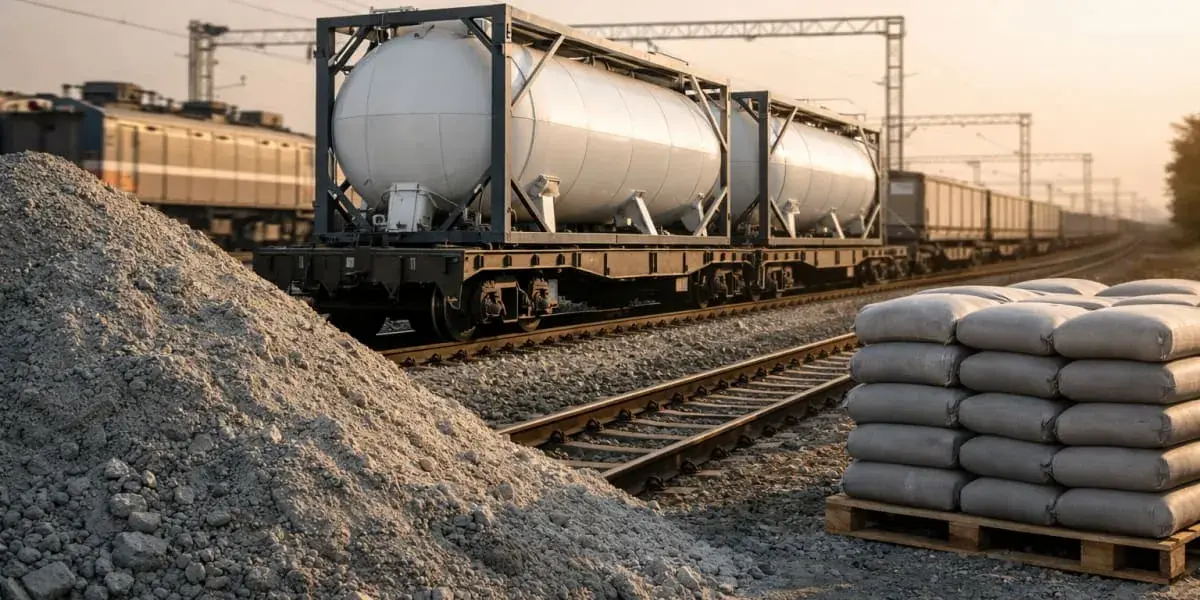
The reforms, designed to shift freight movement away from road transport and toward rail-based logistics, have already begun reshaping how cement moves across the country. At the heart of the initiative are newly introduced bulk cement tank containers, which have been engineered specifically to simplify loading and unloading operations, reduce material losses during transit, and bring down overall logistics costs and turnaround time.
According to the Railway Ministry, these specialised containers — developed under the 'Make in India' initiative — allow cement to travel directly from manufacturing plants to consumption centres and active construction sites in a ready-to-use form. Crucially, the containers are compatible with Ready-Mix Concrete (RMC) systems, which are increasingly central to modern construction practices in India. The design also facilitates a smooth handover between trains and road trailers, supporting mechanised loading and unloading while significantly cutting down on spillage and the packaging losses that have long been associated with conventional bagged cement transportation.
By reducing the number of intermediate handling stages between the plant and the market, the reforms are expected to improve plant-to-market efficiency and lower the delivered cost of cement.
Conference
Conference
Conference
Conference
Conference
Conference
Summit
Officials at the ministry noted that this cost reduction could have a meaningful downstream impact on affordable housing projects, making construction more financially accessible for lower- and middle-income households across India.
Minister Vaishnaw also drew attention to the environmental dividends of the new approach. The shift toward bulk rail freight, he said, has led to measurable reductions in dust generation, fuel consumption, road congestion, and carbon emissions — outcomes that align with broader national sustainability and decarbonisation objectives.
Building on the early success seen in cement logistics, Indian Railways is now setting its sights on a similar overhaul for fly ash transportation. During a high-level review with senior ministry officials, Vaishnaw urged them to unlock the 'vast potential' of the fly ash market and transform the industrial waste generated by thermal power plants into, as he put it, 'national wealth.'
The scale of the opportunity is significant. India produces approximately 300 million metric tonnes of fly ash annually, yet only around 13 million tonnes currently move through the rail network. That gap represents both a logistical shortfall and a missed opportunity for the construction and infrastructure sectors, which could benefit enormously from greater access to fly ash as an affordable and sustainable raw material.
Vaishnaw highlighted that fly ash has wide-ranging applications across multiple industries — from brick kilns and cement manufacturing to road construction and large-scale infrastructure projects. Channelling more of this material through the railways, he argued, would simultaneously reduce industrial pollution, encourage the recycling of waste byproducts, and bring down the cost of construction materials across the value chain.
The Railway Ministry described the cement logistics reforms and the planned expansion into fly ash transport as a major milestone in its broader push toward cleaner, more cost-effective, and highly scalable freight movement. The dual initiative reflects a deliberate strategy to position Indian Railways not merely as a passenger carrier but as a central pillar of the country's industrial supply chain infrastructure — one capable of supporting everything from housing affordability to environmental sustainability.
Explore the latest edition of Journal of Supply Chain Magazine and be part of the JOSC News Bulletin.
Discover all our upcoming events and secure your tickets today.
Journal of Supply Chain is a Hansi Bakis Media brand.
Subscribe to our Daily Newsletter
Subscribe For FreeBy continuing you agree to our Privacy Policy & Terms & Conditions