Article
Strategical Push of Tamil Nadu to Port Expansion in Reason to Manufacturing Future of the World
 Anamika Mishra,
Sub Editor
Anamika Mishra,
Sub Editor

Envisaging the role of Tamil Nadu as a participant in India's ambition to become a global manufacturing hub, the huge state is currently widening its coastal infrastructure. It stretches a 1,076-kilometer coastline. Now, it is ramping up the harnessing and is operationalizing the 17 minor ports. All this coincides with the operationalization of the maritime corridor of Chennai-Vladivostok, which is a strategic sea route linking India to Russia and promises much in terms of economic prosperity to this region.
The vision that Tamil Nadu has for itself is the alignment of port development not only in providing additional port capacity but also positioning it firmly at the center of an evolving Indian manufacturing environment that sees demand for raw material increase and logistics costs decrease-all combined with cost-effective and sustainable transport using coastal shipping. The present moment has never been riper for focusing on port development.
Main port Developments in Tamil Nadu
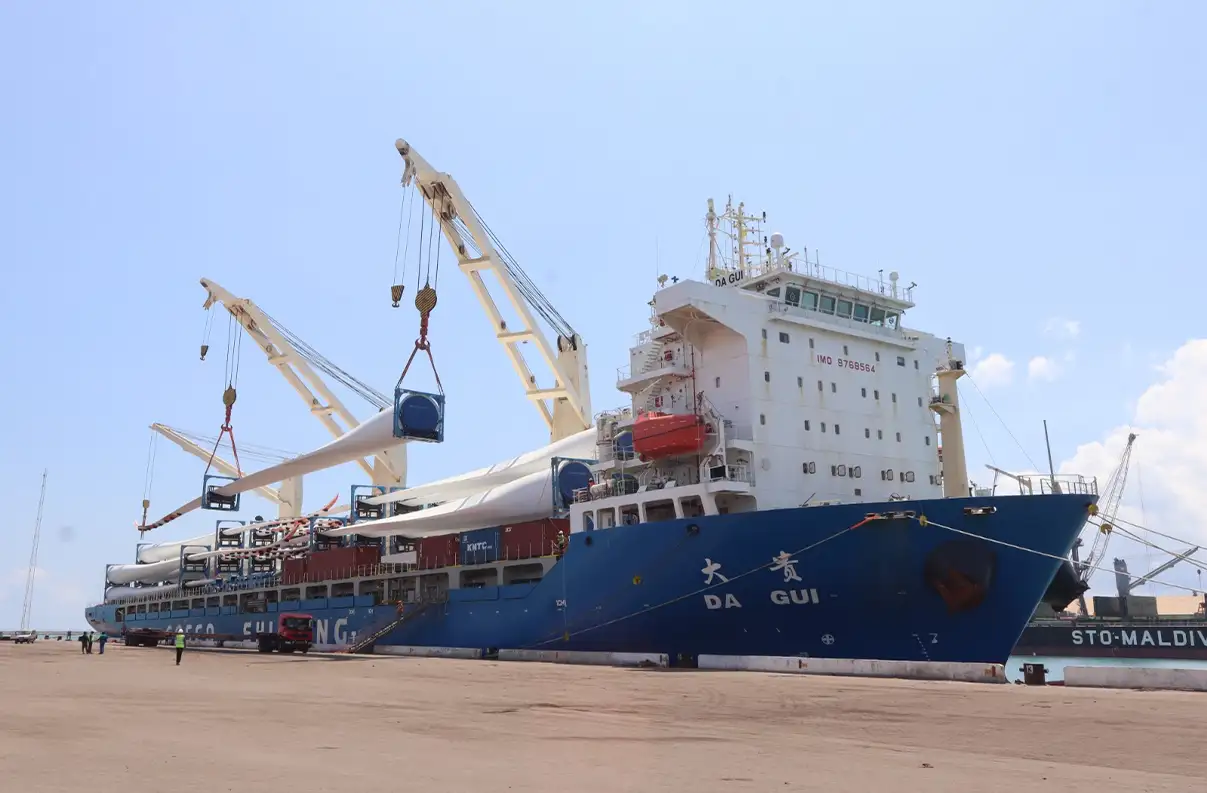
Currently, the major initiative is the construction of a new greenfield port in Cuddalore. This port is being implemented under the Public-Private Partnership (PPP) model with an investment of INR 4,000 crore. It would be endowed with 25 berths along a seafront of 3.6 kilometres and would be able to handle 40 million tonnes of cargo every year. Once the port functions, there will be increased port capacity in Tamil Nadu and will also ramp export-import facilities which will be increasingly merged in the international trade networks.
Cuddalore is the second port developed by the Tamil Nadu Maritime Board after that of Kattupalli, which is located about 30 kilometers north of Chennai. This facility is expected to ease the pressure on existing infrastructure and contribute to regional dynamism. There is also the minor port of Nagapattinam, along with Udangudi and Rameswaram, which are earmarked for potential upgrades. These are part of the further investment strategy to link regional economies with the global supply chain.
Cost Effective Transport through Coastal Shipping
One of the motives, among the many, for Tamil Nadu to develop its ports is to allow logistics costs to be reduced through coastal shipping. Now, the merchandise is mostly carried by roads, which, though they are important, also become an uneconomic means of transport, especially for bulk goods. Coastal shipping is a better value alternative-the much cheaper one.
M Vallalar, who holds the position of vice-chairman as well as the head of the Tamil Nadu Maritime Board, spoke about how the state could save some INR 1,500-2,000 per tonne by sea from Gujarat and Maharashtra instead of overland transport for cotton bales. The cotton is majorly consumed in Tamil Nadu in raw form, where more than 120 lakh bales are imported annually, and the arrangements will obviously lead to great savings to the businesses in the region.
Coastal shipping is very cost-effective because it is aimed at increasing Tamil Nadu's markets' competitiveness nationally and internationally. Coastal shipping is eco-friendly and will cut down the congestion on roads and rail, thus adding to the overall sustainability targets for India.
Conference

Conference

Economic Corridors: A Vision for Growth
Beyond expanding the state’s port infrastructure, Tamil Nadu is also looking at creating economic corridors through the development of industrial zones and Special Economic Zones (SEZs) along its coastline. There is a clear vision to integrate the port expansion with the development of Sipcot industrial complexes and SEZs, which could attract industries to the region and foster greater economic activity.
This idea has been endorsed by experts like J Celestine Villavarayar, CEO of Vilsons Shipping, who believes that Tamil Nadu should take inspiration from Gujarat, which has successfully leveraged its coastline by developing minor ports and integrating them with industrial hubs. A minor port could be set up in the delta districts of the state, while a greenfield container port in the Chengalpet district, located south of Chennai, would strategically complement the region’s manufacturing growth.
Adding to this, a minor port with a cruise terminal in Kanyakumari would not only boost tourism but also contribute to the region's trade and infrastructure growth, providing more opportunities for exporters to access global markets.
Boosting Exports and Global Connectivity
Tamil Nadu’s efforts to expand its port infrastructure are especially significant in light of the Chennai-Vladivostok maritime corridor, which recently became operational. This direct shipping route linking Chennai with Russia’s Far East will open up new avenues for trade, making it easier and cheaper to import critical raw materials such as coking coal from Russia, compared to traditional routes from Indonesia, Australia, or South Africa.
The operationalization of the Chennai-Vladivostok maritime corridor is expected to have a profound impact on India’s economy, especially in sectors such as steel production, which depends heavily on coking coal. According to Chennai Port Authority chairman Sunil Paliwal, importing coking coal from Far East Russia can save up to INR 1,000 per tonne. This will benefit not only Tamil Nadu but also the broader Indian manufacturing sector, which is keen to establish itself as a global supplier of goods under the "China plus one" policy.
Developing Tamil Nadu’s ports is a key part of this vision, as it will allow the state to attract more exports, create jobs, and position itself as an integral part of India’s industrial and trade infrastructure.
The Case for State-Controlled Ports
The port decentralization plea is becoming a clarion call among the experts. According to K Ashok Vardhan Shetty, a retired IAS officer and former vice-chancellor of the Indian Maritime University, India's coastal shipping constitutes less than 5% of freight transport; countries like the US, China, and Europe have percentages that are between 10% and 30%. Shetty's next call is for them to transfer port management to the states so that they are capable of formulating the needed infrastructure that suits their unique situation. This will boost coastal shipping while freeing up road and rail networks.
This will help India reach environmental targets while relieving its overstressed road and rail systems. That expanded port infrastructure in Tamil Nadu is expected to attract investments in port-related industries, spur local economic activity, and make the state and all invested parties’ players on the competitive field of the world.
A Vision for the Future
The state's mega port development programs are being implemented as India's manufacturing sector readies to take off. Indeed, such port developments will not only improve access across the coastline of the state but also bring down logistics costs and forge economic corridors that spur industrial development.
By investing in greenfield ports such as Cuddalore and upgrading marginal ports in areas such as Nagapattinam and Rameswaram, Tamil Nadu is creating the basis for becoming a savior in the global supply chain. The modernization of port infrastructure will continue to open different economic windows while lowering the costs of transportation and placing India at the top of the manufacturing map globally.
Explore the latest edition of Journal of Supply Chain Magazine and be part of the JOSC News Bulletin.
Discover all our upcoming events and secure your tickets today.
Journal of Supply Chain is a Hansi Bakis Media brand.
Leave Comment
Join the community of 150,000+ industry professionals
Subscribe to our Daily Newsletter
Subscribe For FreeBy continuing you agree to our Privacy Policy & Terms & Conditions
Latest



Feature Articles

Related