The Centre for Digital Economy Policy Research, in partnership with IIT Delhi, has released a report analysing how technology-enabled intra-city logistics can help reduce costs and improve operational efficiency for Micro, Small and Medium Enterprises (MSMEs). Titled ‘Study of Technology-Enabled Intra-City Logistics for MSMEs’, the report was launched on January 16 at the India Habitat Centre in New Delhi.
The study evaluates the role of digital goods transportation services in supporting the daily business needs of MSMEs by addressing key challenges such as high transportation costs, inconsistent vehicle availability and delays in the movement of goods within urban areas. It is based on interactions with MSMEs, logistics service providers and analysis of aggregated data from technology-enabled logistics platforms.
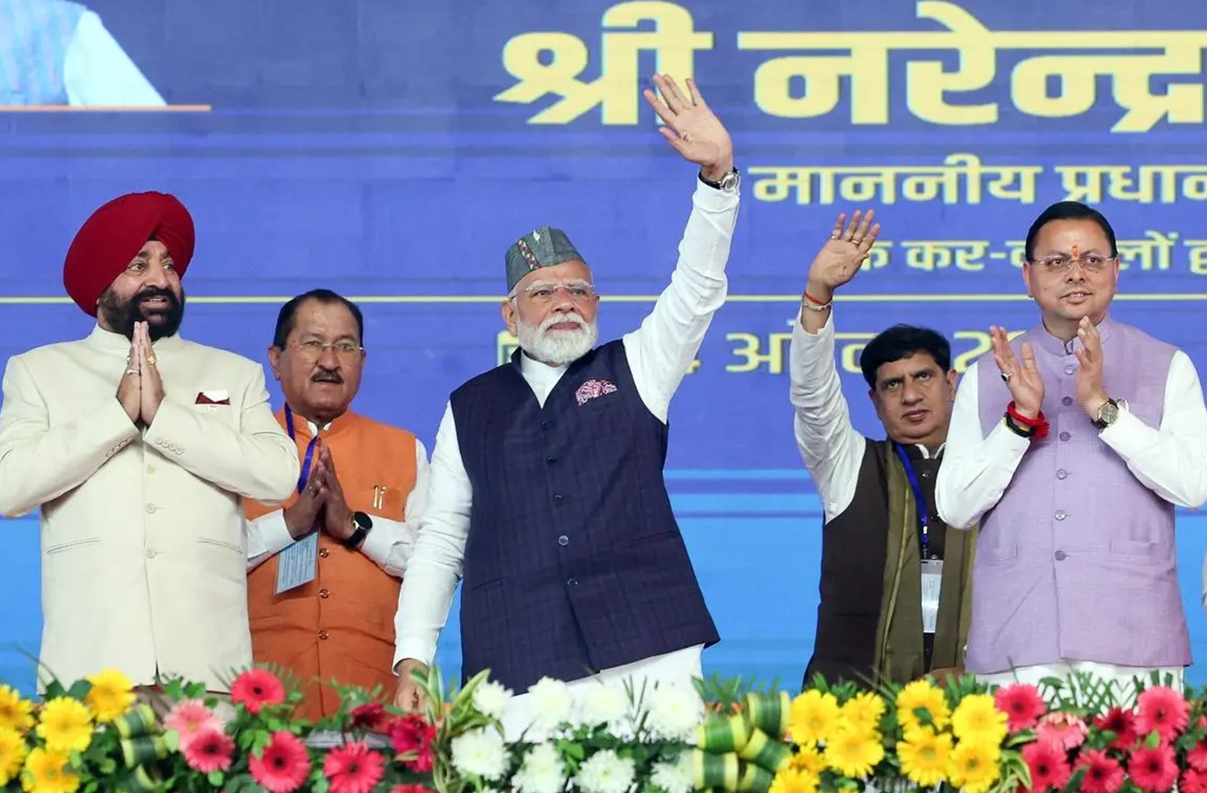
The report was released by Praveen Khandelwal, Member of Parliament and Secretary General of the Confederation of All India Traders, along with Ashwini Mahajan, Co-Convener of the Swadeshi Jagran Manch.
MSMEs contribute close to 30 per cent of India’s GDP and around 45 per cent of industrial output, yet continue to face persistent challenges related to intra-city logistics. The study finds that technology-enabled goods transportation services have emerged as a key enabler for small businesses, helping them manage day-to-day operations more efficiently.
Speaking at the launch, Praveen Khandelwal said reducing logistics costs for MSMEs is vital for India’s economic growth. He pointed out that road transport accounts for a significant portion of logistics expenses in the country and stressed that improving cost efficiency in road-based and intra-city logistics is crucial to bringing down overall logistics costs.
Ashwini Mahajan said MSMEs have long formed the backbone of the Indian economy and have demonstrated their potential with the adoption of technology. He highlighted the rapid expansion of India’s technology ecosystem and said the country is well positioned to assume a leading role globally.
Jaijit Bhattacharya, President of the Centre for Digital Economy Policy Research, said a substantial share of road transport logistics costs arises from intra-city movement of goods. He noted that technology-enabled services are helping reduce these costs while improving reliability and time efficiency for MSMEs. He cautioned that higher taxes could make such services unaffordable and undermine the benefits achieved through technology adoption.
According to the study, business users account for nearly 71 per cent of users on technology-enabled goods transportation platforms and place about 97 per cent of all intra-city goods transportation orders across two-wheeler, three-wheeler and four-wheeler segments. Among MSMEs surveyed, 73 per cent reported reduced transportation costs, 95 per cent experienced improved on-time delivery of goods, and nearly 27 per cent expanded their customer reach through on-demand logistics services.
The report notes that quicker vehicle availability and access to appropriately sized vehicles enable MSMEs to complete more deliveries per day, cut down coordination time and handle priority consignments without the need to invest in owned fleets.
It also flags policy and regulatory risks that could potentially dilute these efficiency gains. The study raises concerns around GST 2.0, under which digitally booked goods transport services could be reclassified as local delivery services, increasing the tax rate from 5 per cent to 18 per cent. According to the report, this could push up per-trip logistics costs by more than 12 per cent and disproportionately impact small businesses operating on thin margins. The study warns that higher costs may drive MSMEs back to informal transport arrangements.
P. Vigneswara Ilavarasan of IIT Delhi said MSMEs gain from technology-enabled logistics through wider market access, better efficiency and cost savings. He emphasised that the regulatory framework should be designed to reinforce these benefits.
The report also highlights challenges faced by small transport operators in transitioning towards formalisation, including compliance burdens and limited access to digital infrastructure. It points out that initiatives by state governments to promote fleet electrification, particularly in higher-payload freight categories, represent an important move towards sustainable mobility.
To address these concerns, the report recommends regulatory clarity under GST, a phased formalisation of informal transport operators through digital public infrastructure, and targeted production-linked incentive support to facilitate a smooth shift to electric freight vehicles without raising logistics costs for MSMEs.
Explore the latest edition of Journal of Supply Chain Magazine and be part of the JOSC News Bulletin.
Discover all our upcoming events and secure your tickets today.
Journal of Supply Chain is a Hansi Bakis Media brand.
Subscribe to our Daily Newsletter
Subscribe For FreeBy continuing you agree to our Privacy Policy & Terms & Conditions