News
The port productivity revolution transforming global shipping supply chains
 Anamika Mishra,
Sub Editor
Anamika Mishra,
Sub Editor
Anamika Mishra,
Sub Editor
Anamika Mishra,
Sub Editor
The global maritime and shipping industry is undergoing a transformational shift as ports worldwide integrate automation, artificial intelligence, and digital logistics into their operations. These innovations are reshaping port logistics in supply chain systems, slashing vessel turnaround times, and altering global freight dynamics.
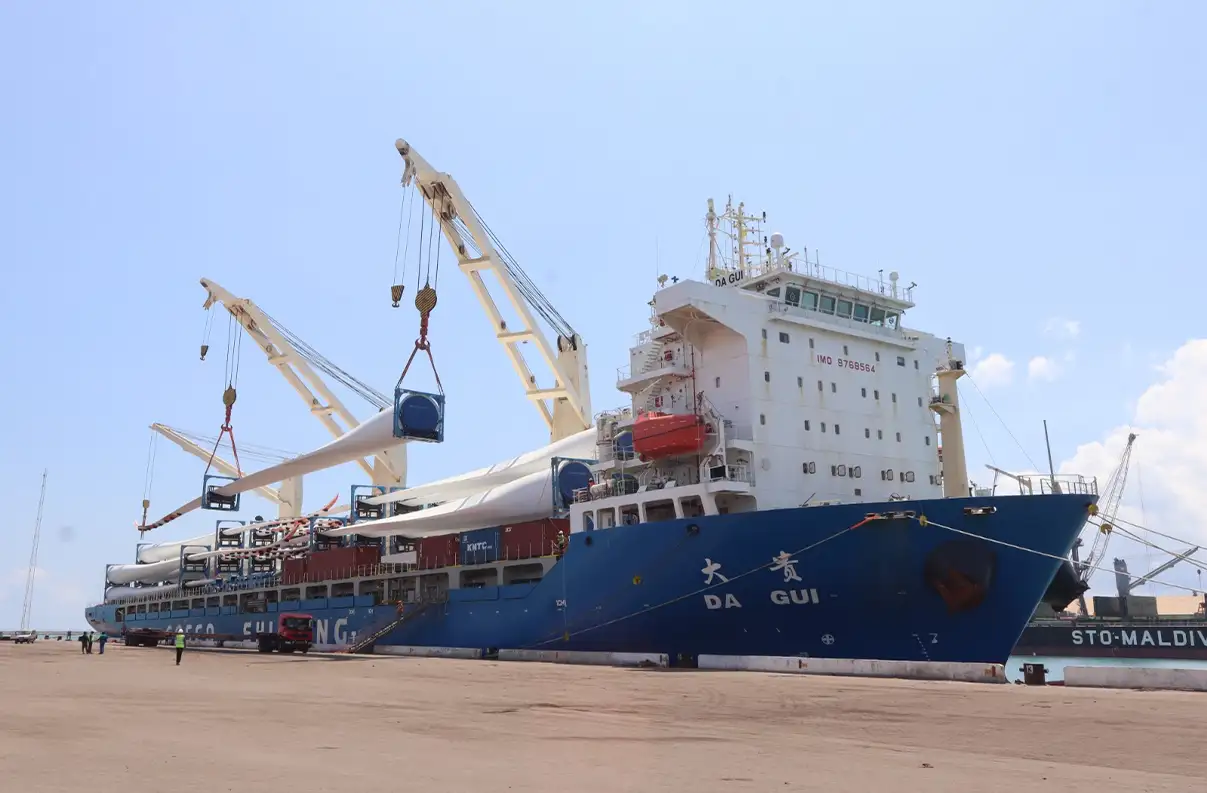
Recent headlines highlight India's rapid evolution in shipping ports and freight handling. Deendayal Port (formerly Kandla), for example, has achieved a new milestone by discharging nearly 80,000 tons of coal in a single day quadrupling productivity compared to earlier decades. The surge in efficiency reflects the port’s investment in automation, aligning it with global performance leaders in East and Southeast Asia, where 13 of the world’s 20 most efficient container ports are located.
Smart port and supply chain technologies such as automated yard cranes, AI-driven cargo routing, and robotic container handling are now central to port strategies. These systems eliminate downtime and human error, enabling 24/7 operations and significantly reducing vessel dwell time. This has led to a rise in “phantom capacity,” where ships complete more voyages annually without additional fleet expansion. For instance, container vessels that once made 12 trips per year can now complete 15-18 voyages on the same route, boosting effective vessel supply by up to 50%.
Conference
Conference
While increased productivity enhances trade throughput, it also brings new challenges. The oversupply of shipping capacity, created without adding new ships, puts downward pressure on freight rates. This imbalance is particularly pronounced on routes serving highly automated ports, intensifying India port congestion on some lanes while underutilizing others. Furthermore, smaller and less digitized ports risk being bypassed entirely, deepening regional disparities in global logistics.
This efficiency-driven disruption is structural. Unlike vessel deliveries, port automation investments are irreversible. Once implemented, the gains are permanent, continuously injecting new capacity into the market regardless of trade demand. Traditional capacity management tools, like ship scrapping or newbuild delays, are no longer sufficient.
In this context, shipping companies are urged to rethink their strategies. Rather than expanding fleets, carriers must monitor average voyage times, rebalance routes, and consider trimming capacity. The goal is to remain agile in a landscape where performance is dictated not just by vessels, but by the ports they serve.
Meanwhile, global trade uncertainties including ongoing economic slowdowns and a 20% decline in U.S. imports in April further complicate efforts to offset the supply glut. The industry now faces a dual challenge: maintaining profitability in a high-capacity environment while navigating geopolitical volatility.
Explore the latest edition of Journal of Supply Chain Magazine and be part of the JOSC News Bulletin.
Discover all our upcoming events and secure your tickets today.
Journal of Supply Chain is a Hansi Bakis Media brand.
Subscribe to our Daily Newsletter
Subscribe For FreeBy continuing you agree to our Privacy Policy & Terms & Conditions