News
Maharashtra Exporters Face Crores in Losses as 800+ Containers Stuck at Dubai Port Amid US-Iran Conflict
 Anamika Mishra,
Sub Editor
Anamika Mishra,
Sub Editor
Anamika Mishra,
Sub Editor
Anamika Mishra,
Sub Editor
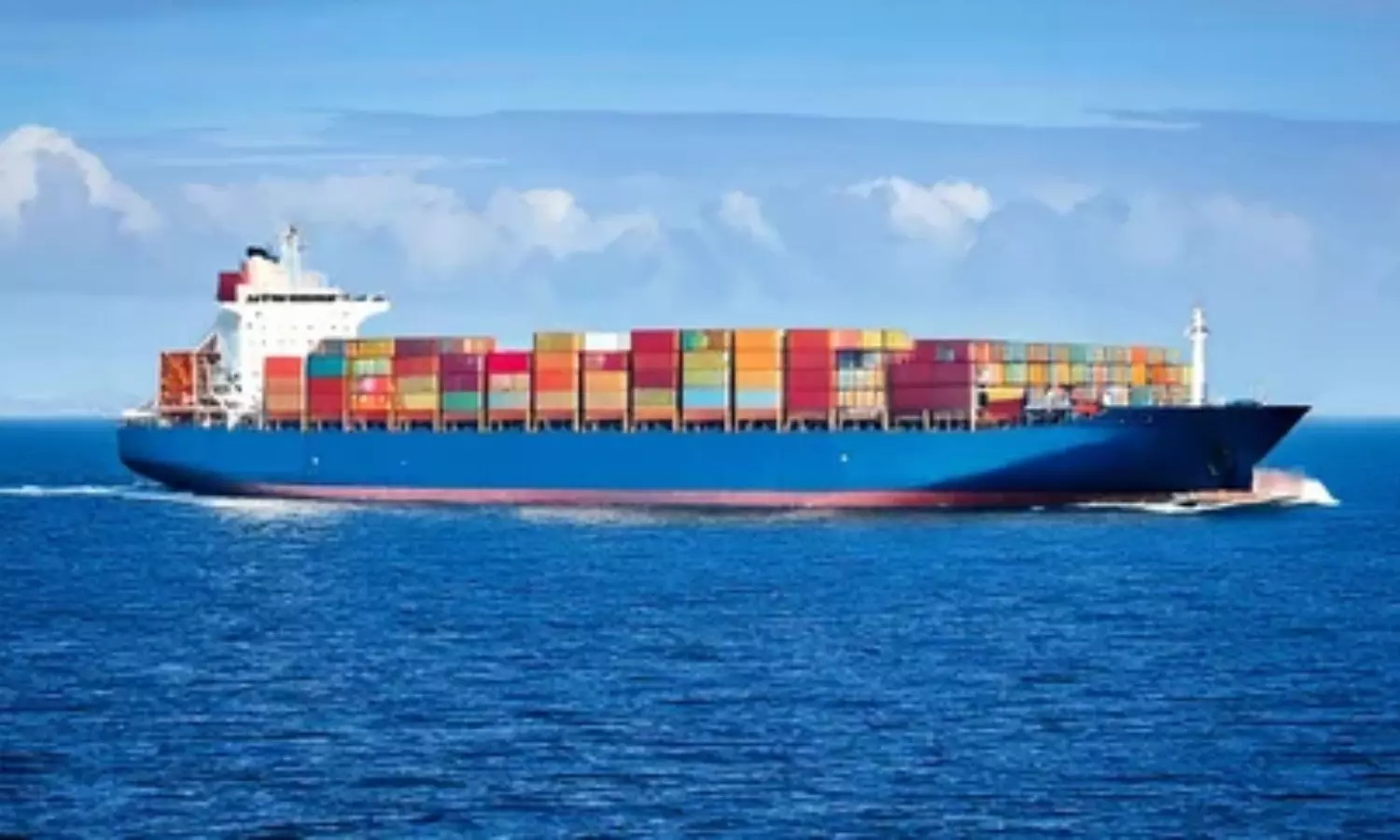
Agricultural exporters and farming communities across Maharashtra are grappling with devastating financial losses following the stranding of approximately 800 to 1,000 shipping containers loaded with perishable farm produce at Dubai's Jebel Ali port. The disruption stems directly from the escalating military tensions between the United States and Iran.
Jebel Ali stands as one of the Middle East's most critical maritime facilities, functioning as the primary gateway for agricultural imports that are subsequently distributed throughout the Gulf region. Since hostilities erupted on February 28, port activities have ground to a complete standstill, leaving hundreds of containers filled with fresh produce languishing without being unloaded.
According to industry representatives, the crisis affects two categories of shipments: containers that had already arrived at Dubai before operations ceased, and those that departed Indian ports prior to the conflict but are now unable to dock. The stranded cargo predominantly consists of bananas, grapes, pomegranates, watermelons, various leafy vegetables, and onions—all shipped from Maharashtra's agricultural heartland.
The timing of this disruption could not be worse for Indian exporters. Consumption of fruits including grapes, pomegranates, bananas, dragon fruit, and watermelons traditionally increases dramatically across Gulf nations during the holy month of Ramadan. Maharashtra's farmers specifically time their harvesting cycles to capitalize on this predictable seasonal spike in demand. This year, however, the armed conflict has thrown those carefully laid plans into disarray.
The grape export sector has been hit especially hard by the port shutdown. Industry estimates suggest that between 5,000 and 6,000 tonnes of grapes currently sitting at various ports face potential total loss. Meanwhile, an additional 10,000 tonnes of premium export-grade grapes still awaiting harvest in orchards may now need to be diverted to India's domestic market, where they will fetch significantly lower prices than international buyers would pay.
Conference
Conference
The situation at Jawaharlal Nehru Port Trust (JNPT), located near Mumbai and serving as India's busiest container terminal, illustrates the scale of the bottleneck. Approximately 80 containers packed with grapes and destined for Dubai markets remain unloaded at the facility. Adding to the congestion, more than 200 additional containers dispatched from the grape-growing region of Nashik have been forced to halt outside the port premises, creating a massive backlog. These details were provided by Vikas Singh, who serves as Vice-President of the Horticulture Produce Exporters Association.
The cascading effects have paralyzed the entire export supply chain. Containers sit motionless at port facilities while packhouses continue filling up with freshly packed grapes that have nowhere to go. Exporters acknowledge that the full picture will only become clear once international shipping companies restart their operations to the affected region. The financial stakes are enormous—each individual container represents potential losses running into several lakh rupees, according to Madhukar Kshirsagar, who holds the position of Director at the Indian Grape Exporters Association.
Farmer advocacy groups have issued urgent calls for government action to address the crisis. Bharat Dighole, serving as President of the Maharashtra State Onion Growers Association, has put forward specific demands including an immediate subsidy of Rs 1,500 per quintal for affected produce, complete waiver of port charges and demurrage fees for the stranded containers, and the introduction of a temporary government procurement program to provide support to exporters until normal shipping operations can resume.
Some exporters have already made the difficult decision to recall their shipments rather than risk complete spoilage. Prakash Gaikwad, an exporter dealing in multiple commodities, explained that he withdrew containers carrying bananas and onions from JNPT after extended delays at the port began causing visible deterioration of the produce. In one particularly costly incident, an onion container that was sent to Nashik customs for clearance took four full days to process. By the time clearance was granted, the entire shipment had spoiled beyond salvage.
The financial implications for individual exporters are staggering. A single container of agricultural produce typically represents goods valued at approximately Rs 24 lakh. For banana shipments specifically, preparing a container weighing roughly 22 tonnes costs exporters between Rs 24 and 25 lakh, and that figure does not include the additional shipping charges of nearly Rs 3 lakh per container.
The disruption is not limited to outbound shipments from India. Import trade flowing in the opposite direction has also been severely impacted. Between 600 and 700 containers carrying imported products such as apples, kiwi fruit, and dates are currently stranded at Iranian ports, unable to reach Indian markets. The value of these stuck imports is substantial—a single container of kiwi fruit typically costs between Rs 30 and 32 lakh, while a container of dates can carry a value of approximately Rs 45 lakh, according to fruit trader Suyog Zede.
The ongoing military conflict may also cast a shadow over India's sugar export prospects. Earlier this season, the central government had authorized the export of 20 lakh tonnes of sugar. However, exporters now express serious concerns that only about 5 lakh tonnes—merely one-quarter of the permitted amount—will actually make it to international markets. Iran has historically been one of the most significant importers of Indian sugar, and the current instability directly threatens this trade relationship.
Recent trade data underscores the importance of the affected region to India's agricultural exports. In March 2025 alone, India exported sugar valued at more than USD 405 million to various countries including the United Arab Emirates, Afghanistan, Iran, and Tajikistan.
Industry representatives have issued stark warnings about the consequences if the conflict persists. Agricultural trade originating from Maharashtra faces the prospect of additional major setbacks that would directly harm farmers who depend on overseas markets to sell their crops, particularly during the peak harvest season when production volumes are at their highest. The combination of stranded shipments, spoiling produce, mounting storage costs, and canceled orders threatens to inflict long-lasting damage on Maharashtra's export-oriented agricultural economy.
Explore the latest edition of Journal of Supply Chain Magazine and be part of the JOSC News Bulletin.
Discover all our upcoming events and secure your tickets today.
Journal of Supply Chain is a Hansi Bakis Media brand.
Subscribe to our Daily Newsletter
Subscribe For FreeBy continuing you agree to our Privacy Policy & Terms & Conditions