News
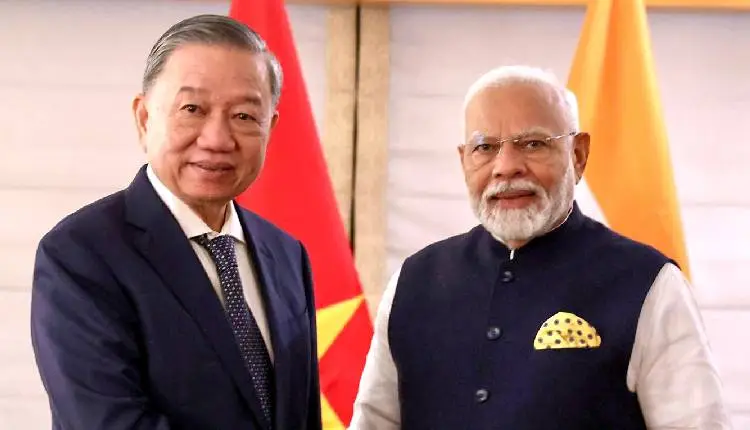
India-Vietnam Strategic Partnership Enters New Phase as President To Lam Arrives in New Delhi
 Our Correspondent,
Our Correspondent,
Our Correspondent,
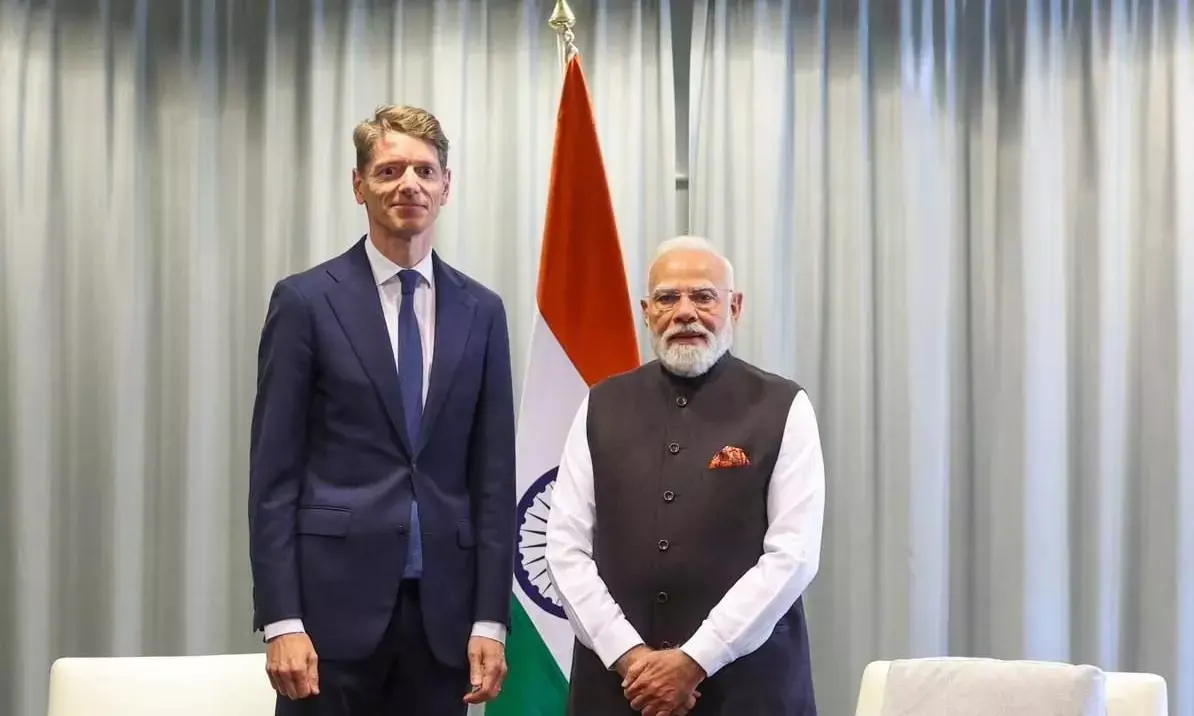
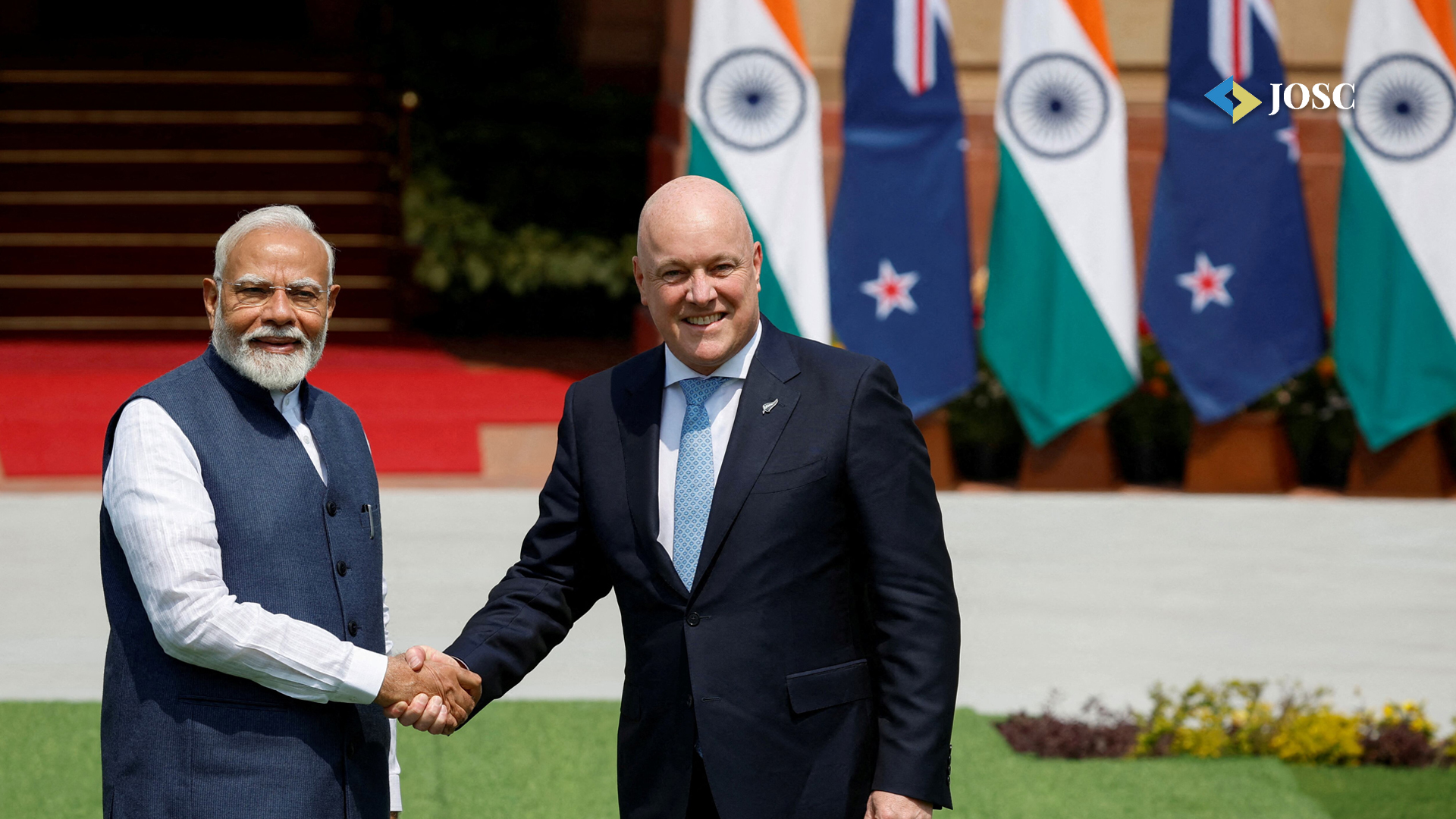
A decade after India and Vietnam elevated their bilateral ties to a Comprehensive Strategic Partnership, Vietnamese President To Lam's maiden state visit to New Delhi from May 5 to 7 marks a turning point — the relationship is no longer just symbolic, it is becoming deeply operational.
With tensions continuing to simmer in the South China Sea and global manufacturers accelerating their shift away from China, both New Delhi and Hanoi are increasingly looking to each other as reliable anchors for maritime security and economic resilience. The discussions taking place in New Delhi are expected to reflect this growing convergence of strategic ambitions and commercial interests.
The Ministry of External Affairs confirmed that President Lam will be accompanied by a high-level delegation that includes several ministers, senior government officials, and a robust business contingent. This is Lam's first state visit to India since being elected President of Vietnam in April of this year.
According to the Ministry, Prime Minister Narendra Modi will hold wide-ranging discussions with President To Lam spanning the full spectrum of bilateral relations, as well as regional and global issues of shared concern. "India and Vietnam share historical and civilisational ties, which have steadily deepened over the years," the official statement reads. "President To Lam's visit coincides with the special occasion of the two countries marking the 10th anniversary of the elevation of relations to a Comprehensive Strategic Partnership, agreed during the visit of Prime Minister Modi to Vietnam in 2016."
The visit is expected to inject fresh momentum into an already robust bilateral relationship and unlock new avenues for cooperation across multiple domains.
Maritime Stakes and South China Sea Dynamics
Vietnam stands among the most directly affected nations in the South China Sea territorial disputes, enduring sustained pressure from Beijing over maritime claims, energy exploration rights, and freedom of navigation. India, while not a claimant state in the dispute, has consistently championed freedom of navigation and overflight, adherence to the United Nations Convention on the Law of the Sea (UNCLOS), and peaceful dispute resolution free from coercion.
ONGC Videsh, India's state-owned overseas oil exploration arm, has long maintained a presence in Vietnamese offshore blocks in the South China Sea despite repeated objections from China. Against this backdrop, President Lam's visit reinforces what has quietly become a firm maritime alignment between New Delhi and Hanoi in support of a rules-based international order.
For Vietnam, India represents a trusted, non-intrusive security partner — one that lacks the geopolitical baggage that comes with the great-power rivalry between the United States and China. India, in turn, views Vietnam as a pivotal maritime partner that helps anchor its strategic footprint in Southeast Asia.
Defence Cooperation: From Goodwill to Operational Depth
India-Vietnam defence ties have evolved considerably — moving well beyond ceremonial gestures toward practical capacity-building and genuine operational cooperation. This evolution has been guided by the Memorandum of Understanding on Defence Cooperation signed in 2009 and the Joint Vision on Defence Cooperation adopted in 2015.
In June 2022, both countries agreed on a Joint Vision Statement on India-Vietnam Defence Partnership towards 2030 and signed an MoU on mutual logistics support — a significant step toward interoperability. Bilateral defence engagement has since diversified to encompass broader military-to-military dialogue, capacity building, and training across all branches of the armed forces. Steps to deepen defence industry cooperation were formalized through the signing of a Letter of Intent in November 2025.
On the hardware front, India gifted Vietnam an indigenously built missile corvette, INS Kirpan, in July 2023. Prior to that, in June 2022, twelve high-speed guard boats constructed by Indian manufacturer Larsen and Toubro under a bilateral line of credit worth $100 million were formally handed over to Vietnam. Two additional lines of credit — $120 million and $180 million — were subsequently signed between the EXIM Bank of India and Vietnam's Finance Ministry in July 2024 and are currently being operationalized.
Joint military exercises are also a regular feature of the partnership. The sixth edition of the India-Vietnam peacekeeping exercise VINBAX was held in Vietnam in November-December 2025, and naval forces from both countries conduct regular operational turnarounds at each other's ports.
Key pillars expected to be advanced during the current visit include military training and capacity building. India already trains Vietnamese submariners, fighter pilots, and cyber specialists, and Vietnam operates training modules developed with Indian Navy support — especially those linked to Kilo-class submarine operations. Discussions are also anticipated to progress on offshore patrol vessels and missile systems, including the BrahMos — a platform that has been under consideration for Vietnam for several years — along with indigenous radar and surveillance technologies.
With both nations increasingly concerned about grey-zone tactics at sea, cooperation in white-shipping data, coastal radar networks, and real-time information sharing is gaining greater centrality in the defence dialogue.
Conference
Conference
Trade and Economic Complementarity
Vietnam has emerged as one of Asia's fastest-growing manufacturing hubs and a significant beneficiary of the global supply chain diversification away from China. For India, Vietnam represents multiple economic opportunities simultaneously: a gateway into ASEAN markets, a complementary partner in electronics and semiconductor supply chains, and a growing destination for Indian exports in pharmaceuticals, information technology, and automotive components.
Bilateral trade between the two countries crossed $16 billion in 2025-2026 — a year-on-year increase of more than 10 percent — according to figures from the Indian Embassy in Hanoi. India's exports to Vietnam accounted for approximately $6.11 billion of that total, while Vietnam's exports to India stood at roughly $10.35 billion.
Indian exports to Vietnam are primarily composed of engineering goods such as automobile parts, iron and steel, and machinery and equipment, alongside agricultural products including maize, animal feed ingredients, bovine meat, and cotton, as well as marine products, chemicals, pharmaceuticals, and minerals. India, in turn, imports from Vietnam a range of goods including electrical and electronic equipment, machinery and mechanical appliances, inorganic chemicals, plastics, copper, rubber, coffee, tea, spices, iron and steel articles, footwear, and garments.
Both sides have consistently worked to expand these commercial linkages through regular business delegation exchanges, participation in trade fairs, and bilateral business meets. Several Joint Working Groups — covering agriculture, health, and information technology, among others — serve as institutional mechanisms for deepening economic ties. The ASEAN-India Trade in Goods Agreement of 2009 is also currently under review, which could further enhance the trade architecture between India and ASEAN nations, including Vietnam.
The large Vietnamese business delegation accompanying President Lam underscores the economic dimension of this visit. Priority sectors for discussion include the digital economy and fintech, pharmaceuticals and healthcare, renewable energy, IT and skill development, and direct shipping and connectivity links between the two countries.
Development Partnership and People-to-People Ties
Beyond security and trade, India has established itself as a consistent and trusted development partner for Vietnam. Cooperation spans training, capacity building, skill development, and socio-economic initiatives. Each year, nearly 200 Vietnamese nationals attend courses in India under the Indian Technical and Economic Cooperation (ITEC) programme and ICCR scholarship initiatives.
Vietnamese officials and professionals have also participated in initiatives such as the Global South Young Diplomats' Forum, the Professional Course for Foreign Diplomats, the Disarmament and International Security Affairs Fellowship, and ASEAN-India media and youth exchanges.
Within regional frameworks including ASEAN cooperation and the Mekong-Ganga Cooperation mechanism, Vietnam has partnered with India on training programmes and Quick Impact Projects aimed at delivering tangible benefits to local communities. Since 2017, these projects have been implemented across several Vietnamese provinces, delivering grassroots-level improvements in livelihoods and community infrastructure.
India's development partnership has also extended into technical training, sharing of best practices, defence capacity building, and cultural heritage conservation. A particularly visible example is India's assistance in conserving and restoring the UNESCO World Heritage Site of My Son Sanctuary, undertaken through the Archaeological Survey of India.
Several key institutional projects highlight the depth of this engagement. These include the Centre for Excellence in Software Development and Training at the Post and Telegraph Institute of Technology in Ho Chi Minh City, established in November 2024; the Army Software Park at the Telecommunications University in Nha Trang, inaugurated in August 2024; support to the Cuu Long Delta Rice Research Institute in Can Tho dating back to the 1980s; a Nuclear Science Centre in Da Lat; an Advanced Resource Centre in ICT in Hanoi, inaugurated in 2011; and a Hi-Tech Cyber Forensic Laboratory in Hanoi, established in 2017.
India's engagement has also extended to humanitarian response. In September 2024, following the destruction caused by Typhoon Yagi, India delivered 35 tonnes of emergency relief supplies to Vietnam under Operation Sadbhav.
A Strategic Signal for the Indo-Pacific
Taken together, at a time when Southeast Asian nations are carefully calibrating their positions amid intensifying major-power competition, Vietnam's decision to deepen its engagement with India carries considerable geopolitical weight. It signals confidence in India as a long-term, stable partner committed to both regional security and economic resilience — without the strings that often accompany partnerships with larger powers.
President To Lam's state visit is therefore far more than a diplomatic courtesy call. It is a strategic reaffirmation that India and Vietnam view each other as essential partners in maintaining maritime stability, strengthening defence preparedness, and building resilient economic and supply chain linkages across the Indo-Pacific. As the global order continues to shift and supply chains are redrawn, the India-Vietnam partnership is positioning itself as one of the more quietly consequential relationships in the region.
Explore the latest edition of Journal of Supply Chain Magazine and be part of the JOSC News Bulletin.
Discover all our upcoming events and secure your tickets today.
Journal of Supply Chain is a Hansi Bakis Media brand.
Subscribe to our Daily Newsletter
Subscribe For FreeBy continuing you agree to our Privacy Policy & Terms & Conditions