News
India Launches Semiconductor Hub in Sanand as PM Modi Unveils Vision for Tech Self-Reliance
 Our Correspondent,
Our Correspondent,
Our Correspondent,
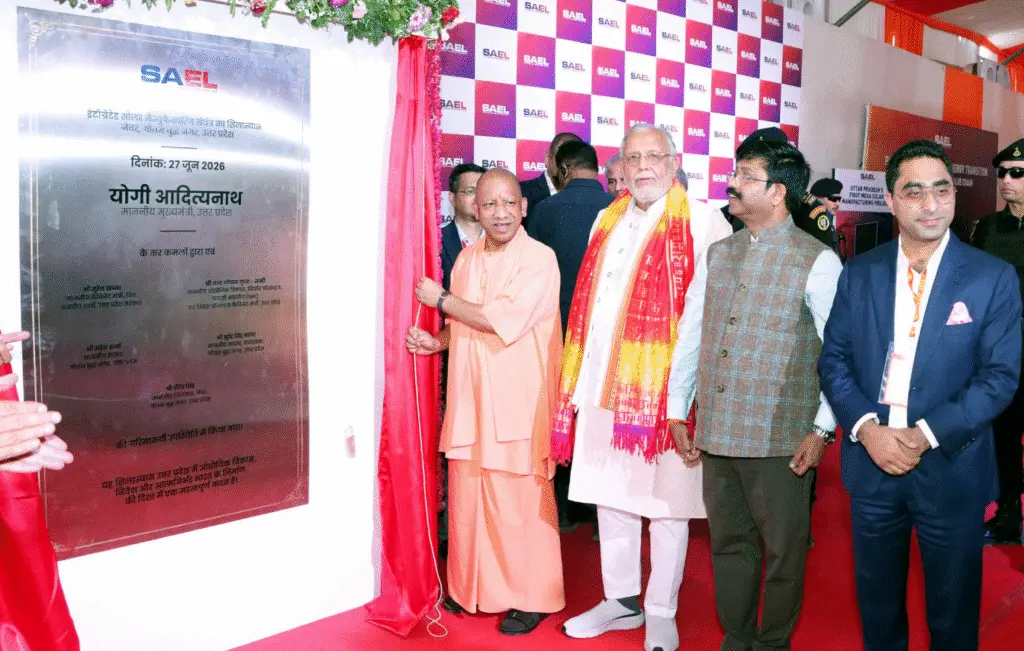
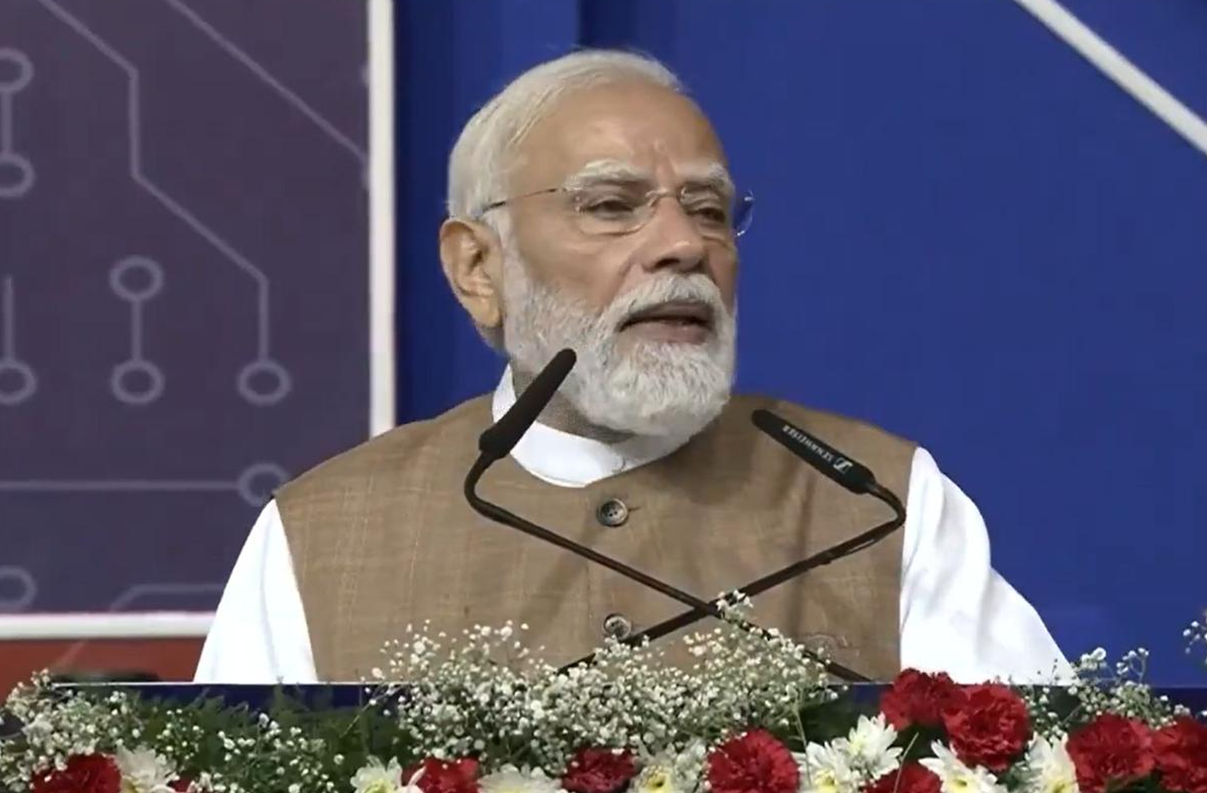
Prime Minister Narendra Modi inaugurated Kaynes Semicon's outsourced semiconductor assembly and testing plant in Sanand on Tuesday, marking a watershed moment in India's journey toward becoming a global semiconductor manufacturing powerhouse. Speaking at the event, Modi emphasized that the 21st century has presented numerous challenges, particularly as global supply chains face disruption from geopolitical conflicts affecting chips, rare earth minerals, and energy resources.
The newly operational facility represents India's growing capabilities in the semiconductor sector, with Modi noting that the country is now strengthening its position as a dependable semiconductor supplier in the international market. "In a sense, a new bridge has emerged today between Sanand and Silicon Valley," the Prime Minister remarked, highlighting that the Sanand plant is already supplying Intelligent Power Modules to a California-based company.
Modi described the inauguration as a "moment of pride," particularly because an Indian company has successfully integrated into the global semiconductor supply chain. This development comes at a critical juncture when nations worldwide are reassessing their technology dependencies and seeking to establish more resilient manufacturing ecosystems.
The Prime Minister underscored that India is proactively constructing a comprehensive semiconductor ecosystem while making substantial investments to create a resilient supply chain for raw materials. He pointed to India's recent participation in Pax Silica as evidence of this commitment. Pax Silica is a US-led strategic coalition launched in December 2025, designed to secure critical technology supply chains with particular emphasis on semiconductors, artificial intelligence, and rare earth elements.
"India is actively building a robust semiconductor ecosystem and simultaneously making significant efforts to establish a resilient supply chain for raw materials. India's participation in Pax Silica is a testament to this very endeavor. Working in tandem with our global partners, we aim to ensure a secure supply chain," Modi stated during his address.
The government's strategic approach extends beyond semiconductors to encompass critical minerals, which form the backbone of modern technology manufacturing. Modi announced that India has launched the National Critical Minerals Mission to achieve self-reliance in this vital sector. This mission places strong emphasis on both mining and production of critical minerals essential for technology manufacturing.
To support the circular economy and reduce dependence on imports, the government has introduced a scheme worth Rs 1,500 crore specifically aimed at promoting the recycling of minerals. This initiative reflects a long-term vision for sustainable resource management in the technology sector.
A significant announcement highlighted by Modi was the establishment of a 'rare earth corridor' unveiled in this year's Budget. This corridor will span coastal states including Odisha, Andhra Pradesh, Tamil Nadu, and Kerala, creating an integrated network that connects mining, refining, and manufacturing operations. The objective is to forge a robust value chain and establish a national reserve of critical minerals within the country.
"It would have been ideal had this initiative commenced 30 or 40 years ago; nevertheless, India is now pursuing this objective in a dedicated 'mission mode,'" Modi acknowledged, expressing both reflection on past opportunities and determination for future progress.
The Prime Minister articulated a broader vision for India's role in shaping the technological future, stating that the 21st century represents not merely an era of economic competition but a pivotal moment to influence the global technological landscape. He characterized the current decade as India's 'Techade,' emphasizing that technology-related initiatives undertaken during this period will cement India's leadership position in coming years.
Modi drew attention to India's leadership in artificial intelligence adoption, noting that Indians demonstrate a natural affinity for exploring technology. The success of Digital India and exceptional progress in the Fintech sector exemplify the trust Indians place in technological solutions. He suggested that India's AI ecosystem stands to gain tremendously from the emerging semiconductor manufacturing capabilities.
"The India of the 21st century is moving forward not merely as a witness to change, but with a firm resolve to lead that change. Our policies and decisions are laying a strong foundation for the technology and energy security of the coming decades," the Prime Minister declared.
Reflecting on the challenges posed by recent global events, Modi recalled how the Coronavirus pandemic severely disrupted supply chains worldwide. This crisis prompted India's decision to transform itself into a semiconductor manufacturing hub.
Conference
Conference
He emphasized that disruptions in supply chains impact the development of the entire human race, making it crucial for a democratic nation like India to advance in this direction for global progress.
The India Semiconductor Mission, launched in 2021, represents more than just an industrial policy according to Modi—it stands as a declaration of India's confidence in its technological capabilities. Under this mission, projects worth Rs 1.60 lakh crore are currently underway across ten states. Building on this foundation, the government launched Semiconductor Mission 2 in the most recent budget, aiming to make India self-reliant across every segment of semiconductor production.
The government is taking a comprehensive approach to developing the semiconductor ecosystem, with particular focus on human capital development. Modi announced that arrangements are being made to prepare more than 85,000 design professionals in the country very soon. Beyond design professionals, training programs are being established to develop talent across the entire semiconductor ecosystem.
To foster innovation and entrepreneurship in semiconductor design, the government has initiated the chips-to-startup program. This initiative has already provided more than 400 universities and startups with access to advanced design tools, democratizing access to cutting-edge technology and nurturing the next generation of semiconductor innovators.
Modi cited industry projections indicating that India's semiconductor market currently stands at Rs 4.5 lakh crore and is expected to exceed Rs 9 lakh crore in the coming years. These figures underscore the tremendous potential this sector presents for economic growth and technological advancement. The government's stated target is to manufacture domestically most of the chips required for India's own consumption, reducing dependence on imports and enhancing technological sovereignty.
The Prime Minister expressed confidence in India's trajectory, noting that global investor enthusiasm toward India's semiconductor ambitions represents significant capital for the nation's development goals. He emphasized that India is making unprecedented investments and implementing reforms across every critical technology sector, working simultaneously on technology development, deployment, ease of doing business, manufacturing capabilities, and logistics infrastructure.
The inauguration of the Sanand facility marks the second semiconductor plant to become operational in India, signaling accelerating momentum in the country's semiconductor manufacturing capabilities. This milestone represents a concrete step toward reducing India's technological vulnerabilities and establishing the nation as a key player in global technology supply chains.
Modi's vision encompasses not just semiconductor manufacturing but a holistic approach to technological self-reliance that includes critical minerals, artificial intelligence, digital infrastructure, and sustainable manufacturing practices. The government's initiatives reflect an understanding that technology leadership in the 21st century requires integrated strategies spanning raw material security, manufacturing capabilities, human capital development, and innovation ecosystems.
As global supply chains continue to face pressures from geopolitical tensions and the legacy of pandemic disruptions, India's push for semiconductor self-sufficiency takes on strategic significance beyond economic considerations. The ability to produce semiconductors domestically enhances national security, reduces vulnerability to supply chain shocks, and positions India as a stabilizing force in global technology markets.
The Prime Minister's emphasis on democratic values in the context of technology leadership suggests India's approach differs from authoritarian models of technological development. By highlighting India's role as a democratic nation advancing in critical technology sectors, Modi positioned the country as a trustworthy partner for nations seeking to diversify their technology supply chains away from concentrated dependencies.
The convergence of semiconductor manufacturing capabilities, critical mineral security, AI adoption, and digital infrastructure creates a foundation for India to emerge as a comprehensive technology power rather than a participant in isolated segments. This integrated approach reflects lessons learned from observing how supply chain disruptions in one area can cascade across entire technology ecosystems.
As the Sanand facility begins production and supplies components to Silicon Valley, it demonstrates that India's semiconductor ambitions are transitioning from vision to reality. The bridge between Sanand and Silicon Valley that Modi referenced symbolizes not just commercial transactions but the integration of Indian manufacturing capabilities into global innovation networks. This integration positions India to benefit from and contribute to technological advancement on a global scale while building resilience against future supply chain disruptions.
Explore the latest edition of Journal of Supply Chain Magazine and be part of the JOSC News Bulletin.
Discover all our upcoming events and secure your tickets today.
Journal of Supply Chain is a Hansi Bakis Media brand.
Subscribe to our Daily Newsletter
Subscribe For FreeBy continuing you agree to our Privacy Policy & Terms & Conditions