News

India and Jordan Deepen Strategic Ties with $5 Billion Partnership Plan

January 21, 2026 9 min read
author Anamika Mishra, Sub Editor
Jordan has emerged as an increasingly important partner for India in West Asia at a time when global alliances and supply chains are being rapidly redefined. Prime Minister Narendra Modi’s visit in December 2025 — marking 75 years of diplomatic relations — resulted in the signing of five Memorandums of Understanding across energy, water, digital cooperation, culture, and heritage sectors. With bilateral trade valued at USD 2.3 billion and Indian investments touching USD 1.5 billion, ties are steadily maturing into a strategic partnership that supports India’s supply-chain security and regional engagement.

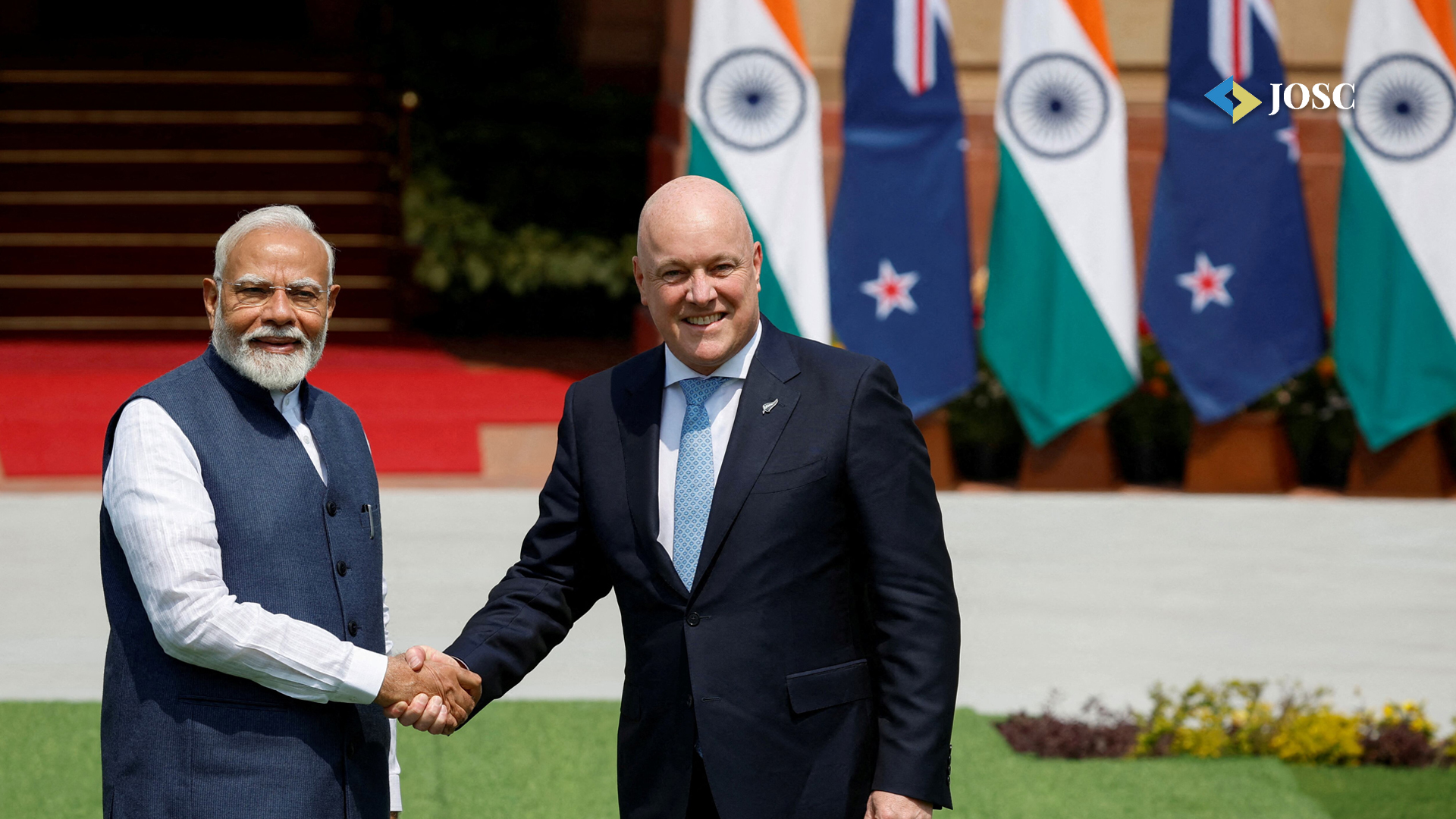
India and Jordan share a growing strategic understanding. But what underpins this partnership between the two countries? At a time of shifting geopolitical alignments and vulnerabilities in global supply chains, the Hashemite Kingdom of Jordan has positioned itself as a crucial partner for India in West Asia. On December 15–16, 2025, Prime Minister Narendra Modi undertook the first full-fledged bilateral visit by an Indian Prime Minister to Jordan, coinciding with the 75th anniversary of diplomatic relations established in 1950. This significant visit—part of a three-nation tour that also included Ethiopia and Oman—featured detailed discussions with His Majesty King Abdullah II ibn Al Hussein, a joint address at the India-Jordan Business Forum, and the signing of five important MoUs covering new and renewable energy, water resource management, digital transformation, cultural exchanges (2025–2029), and heritage twinning between Petra and the Ellora Caves.

The visit not only commemorated decades of mutual trust and goodwill but also injected fresh momentum into economic cooperation. Bilateral trade, estimated at around USD 2.3 billion in 2024 (with India ranking as Jordan’s third-largest trading partner), is now targeted to reach USD 5 billion within the next five years (Prime Minister of India, 2025). Supporting this growth is India’s sizeable investment presence—approximately USD 1.5 billion—concentrated largely in phosphates, fertilisers through the Jordan India Fertiliser Company joint venture, and textile manufacturing in Qualified Industrial Zones.

These developments reflect a clear transition from traditionally cordial relations to a comprehensive strategic partnership. India’s deeper engagement with Jordan is driven by deliberate efforts to diversify supply chains for critical inputs such as phosphates and potash—essential for its agricultural sector—while reducing exposure to geopolitical risks in a volatile region. Jordan’s role as a moderate and stable bridge in West Asia, with established ties across Arab states and Israel, allows India to pursue a policy of multi-alignment without becoming entangled in regional rivalries, while also strengthening connectivity through initiatives such as the India-Middle East-Europe Economic Corridor.

This article explores the economic, diplomatic, trade, and geopolitical dimensions of India-Jordan relations, examining how targeted investments and high-level political engagement are fostering shared growth amid global uncertainty.

Insights from Prime Minister Modi’s 2025 Visit
Prime Minister Narendra Modi’s visit to Jordan on December 15–16, 2025, marked a defining moment in bilateral relations. It was the first full-scale bilateral visit by an Indian Prime Minister to the Hashemite Kingdom and coincided with the 75th anniversary of diplomatic ties established in 1950.

As part of his three-nation tour covering Ethiopia and Oman, Modi held extensive talks with King Abdullah II ibn Al Hussein, addressed the India-Jordan Business Forum, and oversaw the signing of five key agreements. These included cooperation in new and renewable energy, water resource development and management, a twinning arrangement between Petra and the Ellora Caves, renewal of the Cultural Exchange Programme for 2025–2029, and a Letter of Intent on digital transformation solutions.

Key outcomes from the visit included:

Bilateral and expanded discussions aimed at strengthening political, economic, defence, security, and cultural cooperation in the context of regional challenges.
A joint commitment to raise bilateral trade from approximately USD 2.3 billion in 2024—when India was Jordan’s third-largest trading partner—to USD 5 billion over the next five years.

India’s exports to Jordan, which include electrical machinery, cereals, chemicals, and petroleum products, and Jordan’s exports to India, dominated by phosphates, phosphoric acid, and fertilisers that are critical for India’s agricultural needs.
These outcomes build upon longstanding trust-based relations that are now evolving into a multidimensional strategic partnership. Trade and economic engagement has been reinforced by India’s investments of roughly USD 1.5 billion, primarily in fertilisers, phosphates, and textile manufacturing within Jordan’s Qualified Industrial Zones.


Historical and Diplomatic Foundations
India’s strong push for investment in Jordan, especially in the phosphates and fertilisers sector, reflects a calculated strategy to enhance resource security, diversify supply chains, and manage geopolitical risk in an increasingly uncertain global environment.

This engagement, exemplified by the Jordan India Fertiliser Company (JIFCO)—a joint venture between India’s IFFCO and Jordan Phosphate Mines Company—has seen cumulative Indian investments reach about USD 1.5 billion, with further expansion discussions held during Prime Minister Modi’s December 2025 visit.

The core driver remains resource security. India depends almost entirely on imports for potash and sources a large share of its phosphates from abroad, both of which are essential for fertiliser production and food security. Traditional suppliers such as Russia, Belarus, and Morocco have faced disruptions due to sanctions, conflicts, and export restrictions following the Russia-Ukraine war that began in 2022.

These disruptions triggered sharp price fluctuations and supply uncertainty, prompting India to identify more stable alternatives. Jordan, as a dependable producer of phosphates and potash, offers such diversification, reducing dependence on politically sensitive or high-risk regions. While this does not replace suppliers in the US or Europe, it significantly strengthens resilience against global shocks.

This approach aligns with India’s broader multi-alignment strategy in West Asia. Jordan acts as a geopolitical bridge—a moderate monarchy with close ties to Western nations and a peace treaty with Israel—allowing India to expand its regional presence without being drawn into competing blocs. The partnership also supports India’s ambition to enhance regional connectivity through projects like the India-Middle East-Europe Economic Corridor, positioning Jordan as a potential transit and logistics hub.

Risk mitigation remains central. At a time of rising protectionism, supply-chain disruptions, and regional instability across West Asia, Jordan offers relative political stability and predictability compared to several alternatives.

Challenges persist, including Jordan’s high public debt, unemployment levels of around 21% in 2025, and fiscal pressures that could limit the pace of cooperation. Regional sensitivities, particularly the Israel-Palestine issue, also require careful diplomatic management. Despite these constraints, India’s engagement reflects a pragmatic and forward-looking strategy.

India’s Aggressive Investments in Jordan: Key Examples and Drivers
Bilateral trade between India and Jordan has expanded steadily, reflecting complementary economic strengths and growing strategic alignment. In FY 2023–24, trade reached approximately USD 2.875 billion, with India ranking among Jordan’s top trading partners. Estimates for calendar year 2024 range between USD 2.3 billion and USD 2.8 billion, reflecting differences in reporting periods.

India’s exports primarily include electrical machinery, cereals, chemicals, and petroleum products, valued at around USD 1.465 billion in 2023–24. Jordan’s exports to India are dominated by phosphates, potash, and phosphoric acid—critical inputs for India’s fertiliser industry. The Jordan India Fertiliser Company joint venture remains a cornerstone of this relationship, producing phosphoric acid almost entirely for the Indian market.

During Prime Minister Modi’s December 2025 visit, both sides set a clear target of expanding bilateral trade to USD 5 billion within five years. The signing of five MoUs during the visit reinforced this ambition and highlighted a shared commitment to broad-based economic cooperation.

These developments point to a shift toward future-oriented engagement, with trade acting as a foundation for a wider strategic partnership in a complex geopolitical environment.

Geopolitical and Strategic Implications
India’s investment push in Jordan’s phosphates and fertilisers sector is a strategic response to global resource vulnerabilities and supply-chain risks. Indian investments of approximately USD 1.5 billion, led by the USD 860 million JIFCO project, directly support India’s food security by ensuring stable access to critical raw materials.

At the heart of this strategy is diversification. With nearly all potash and a large share of phosphates imported, India has sought to reduce exposure to disruptions affecting traditional suppliers. Jordan’s role as a reliable producer helps mitigate such risks while complementing broader energy and resource security objectives.

The engagement also fits squarely within India’s multi-alignment policy. Jordan’s balanced regional position allows India to maintain strong ties with Israel, Arab states, and Iran simultaneously, reinforcing New Delhi’s pragmatic diplomacy.

Jordan’s potential role in the India-Middle East-Europe Economic Corridor further enhances its strategic value, offering Indian businesses improved access to European markets and alternative trade routes that bypass congested chokepoints.

Despite economic challenges within Jordan, India’s investments underscore a long-term calculation aimed at securing critical resources, expanding regional influence, and enhancing resilience in an unpredictable global landscape.

Elevating India-Jordan Relations to a Strategic Partnership for Mutual Prosperity and Global Resilience
India’s expanding investments in Jordan—particularly in fertilisers, phosphates, and textiles—have transformed a traditionally friendly relationship into a strategic partnership defined by economic interdependence and shared geopolitical interests.

These investments secure essential agricultural inputs for India while delivering capital inflows, employment, and technology transfer for Jordan. The momentum generated during Prime Minister Modi’s December 2025 visit, which set an ambitious USD 5 billion trade target, reflects this deeper integration.

Looking ahead, cooperation in renewable energy, water management, digital transformation, and cultural exchange promises further gains. Heritage initiatives such as the Petra–Ellora twinning are expected to strengthen people-to-people ties, while future trade arrangements could align with broader regional connectivity projects.

In sum, India’s engagement with Jordan illustrates its wider strategy of building diversified, reliable partnerships. By strengthening ties with a stable West Asian partner, India enhances its supply-chain security, regional influence, and role as a responsible global actor committed to long-term cooperation and shared prosperity.


Explore the latest edition of Journal of Supply Chain Magazine and be part of the JOSC News Bulletin.

Discover all our upcoming events and secure your tickets today.


Journal of Supply Chain is a Hansi Bakis Media brand.

Leave Comment

logo

Subscribe to Our Newsletter

The week’s best stories, handpicked by JOSC editors in your inbox every week.

Stay informed with exclusive content