News
Import Cargo Levels to Remain High Ahead of Rising Tariffs
 Anamika Mishra,
Sub Editor
Anamika Mishra,
Sub Editor
Anamika Mishra,
Sub Editor
Anamika Mishra,
Sub Editor
Aead of growing tariffs on China and threats against other countries, imports at the nation’s major container ports are expected to remain high according to the Global Port Tracker report released on Feb. 7 by the National Retail Federation and Hackett Associates.
“Supply chains are complex,” NRF vice president for Supply Chain and Customs Policy Jonathan Gold said, in a statement. “Retailers continue to engage in diversification efforts. Unfortunately, it takes significant time to move supply chains, even if you can find available capacity.
"While we support the need to address the fentanyl crisis at our borders, new tariffs on China and other countries will mean higher prices for American families. Retailers have engaged in mitigation strategies to minimize the potential impact of tariffs, including frontloading of some products, but that can lead to increased challenges because of added warehousing and related costs. We hope to resolve our outstanding border security issues as quickly as possible because there will be a significant impact on the economy if increased tariffs are maintained and expanded.”
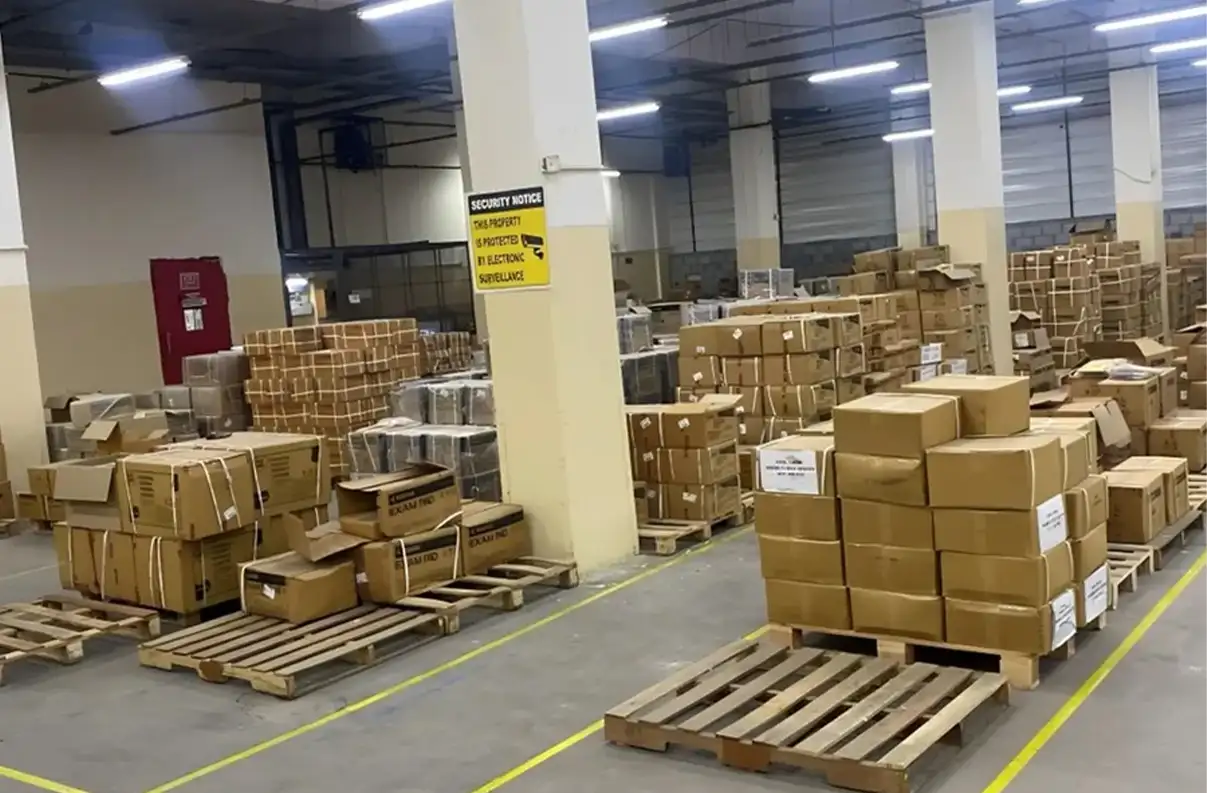
Retailers have been frontloading imports of key products for several months because of the potential for the East Coast/Gulf Coast port strike in January as well as to get ahead of potential tariffs from President Donald Trump. Feb. 1 , Trump announced tariffs of 25% on most goods from Canada and Mexico and 10% on goods from China. The Canadian and Mexican tariffs were suspended on Monday for 30 days, but the China tariffs took effect on Feb. 4.
Hackett Associates Founder Ben Hackett said tariffs on Canada and Mexico would initially have minimal impact at ports because most imports from either country move by truck, rail or pipeline. In the long term, tariffs on goods that receive final manufacturing in Canada or Mexico but originate elsewhere could prompt an increase in direct maritime imports to the U.S. In the meantime, port cargo “could be badly hit” if tariffs on overseas Asian and European nations increase prices and prompt consumers to buy less, he said.
“At this stage, the situation is fluid, and it’s too early to know if the tariffs will be implemented, removed or further delayed,” Hackett said, in a statement. “As such, our view of North American imports has not changed significantly for the next six months.”
U.S. ports covered by Global Port Tracker handled 2.14 million TEU– in December, although the Port of New York and New Jersey and the Port of Miami have yet to report final data. That was down 0.9% from November but up 14.4% year over year, and would be the busiest December on record.
December brought 2024 to a total of 25.5 million TEU, up 14.8% from 2023 and the highest level since 2021’s record of 25.8 million TEU during the pandemic.
Ports have not yet reported January’s numbers, but Global Port Tracker projected the month at 2.11 million TEU, up 7.8% year-over-year.
Projections include:
February, traditionally the slowest month of the year because of Lunar New Year factory shutdowns in China, is forecast at 1.96 million TEU, up 0.2% year over year.
March is forecast at 2.14 million TEU, up 11.1% year over year
April at 2.18 million TEU, up 8.2%
May at 2.19 million TEU, up 5.4%,
June at 2.13 million TEU, down 0.6%.
Explore the latest edition of Journal of Supply Chain Magazine and be part of the JOSC News Bulletin.
Discover all our upcoming events and secure your tickets today.
Journal of Supply Chain is a Hansi Bakis Media brand.
Subscribe to our Daily Newsletter
Subscribe For FreeBy continuing you agree to our Privacy Policy & Terms & Conditions