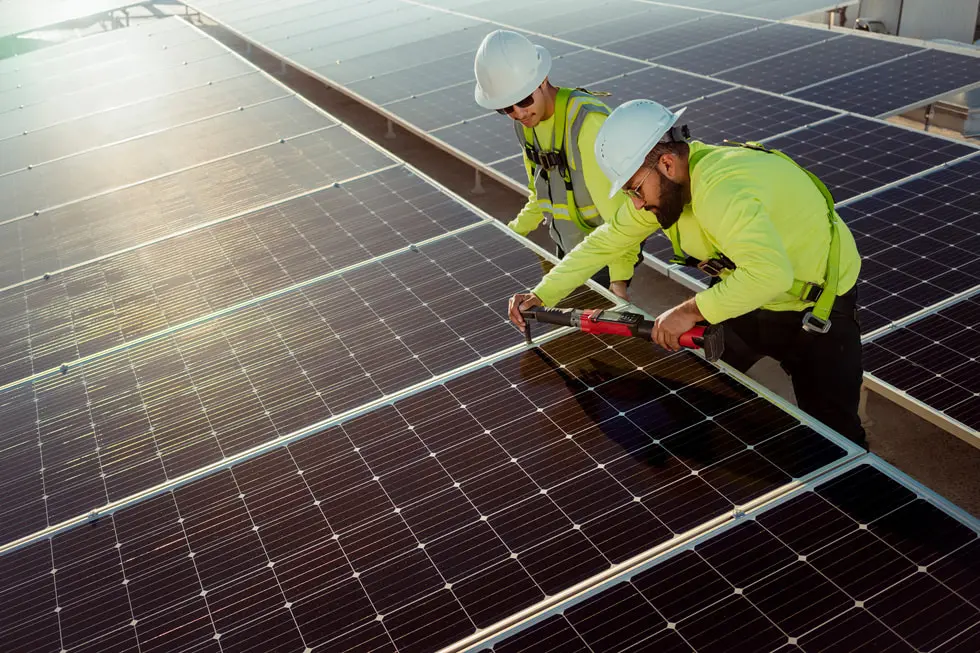
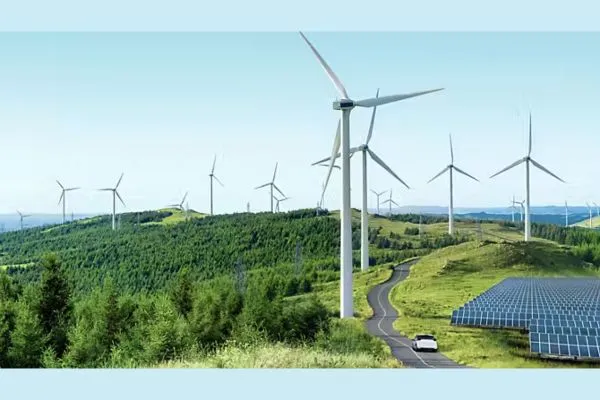
India's ambitious goal of achieving 500 GW of non-fossil power by 2030, driven primarily by solar and wind energy, faces significant hurdles, according to experts speaking at the Business Today India@100 session on Navigating the Green Transition. The three main challenges identified are land acquisition, energy storage solutions, and dependence on China for the supply chain.
Rajeev Gupta, CEO of NTPC Green Energy Ltd. (NGEL), emphasized that expanding renewable capacity will require vast land areas, a contentious issue given that land acquisition remains a federal concern. “Land acquisition will be a significant challenge, and we need to address it collectively. We must also enhance central and state transmission networks and build a robust supply chain for capacity expansion,” Gupta said.
NGEL, the green energy division of NTPC, aims to increase its renewable energy capacity from 3.7 GW to 60 GW by 2032. The company is also exploring battery storage and pump hydro solutions to support its goals.
The Solar Energy Corporation of India (SECI) is focusing on storage solutions to address the intermittent nature of renewable energy and ensure continuous supply to the grid. RP Gupta, CEO of SECI, highlighted the crucial need for long-term storage solutions. “The energy transition is unachievable if surplus renewable energy cannot be stored for lean periods. The solution lies in concepts like ‘One Sun, One Grid’,” Gupta stated.
SECI’s CEO also noted that the cost gap between renewable and thermal energy is narrowing with advances in storage technology. However, India's reliance on China for solar components remains a significant issue. Sumant Sinha, Chairman and CEO of ReNew, pointed out that while China’s solar products are cost-effective, there is a pressing need for indigenization. “Dependence on China for solar components is a major global clean energy challenge. India needs to focus on local production for modules, wafers, cells, and polysilicon,” Sinha said.
Sinha also addressed the financial challenges of the green transition, estimating a $10 trillion requirement for climate action. He emphasized the need for improved blended finance solutions to mobilize private sector capital. “On the debt side, various financing options are available, but the equity side needs better support from multi-lateral development banks,” he added.
Explore the latest edition of Journal of Supply Chain Magazine and be part of the JOSC News Bulletin.
Discover all our upcoming events and secure your tickets today.
Journal of Supply Chain is a Hansi Bakis Media brand.
Subscribe to our Daily Newsletter
Subscribe For FreeBy continuing you agree to our Privacy Policy & Terms & Conditions