News
Draft National Electricity Policy 2026 Sets Roadmap for India’s Modern, Digital and Sustainable Power Sector
 Anamika Mishra,
Sub Editor
Anamika Mishra,
Sub Editor
Anamika Mishra,
Sub Editor
Anamika Mishra,
Sub Editor
India’s Power Sector Vision: A New Policy Blueprint
The Ministry of Power has unveiled the Draft National Electricity Policy (NEP) 2026, laying out a detailed roadmap to modernise India’s power sector in line with the ‘Viksit Bharat @2047’ vision. The draft policy replaces the National Electricity Policy of 2005 and responds to present-day challenges such as energy transition imperatives, the financial health of distribution companies (DISCOMs), and the need for a resilient, digitally enabled electricity grid. The overarching aim is to deliver reliable, affordable and high-quality 24x7 power through a financially stable and environmentally sustainable electricity ecosystem, while strengthening national energy security. Key goals include financial turnaround of the sector, assured and reliable power availability, competitive electricity pricing, higher non-fossil fuel capacity, and the promotion of competition.
Driving Technological Self-Reliance and Innovation
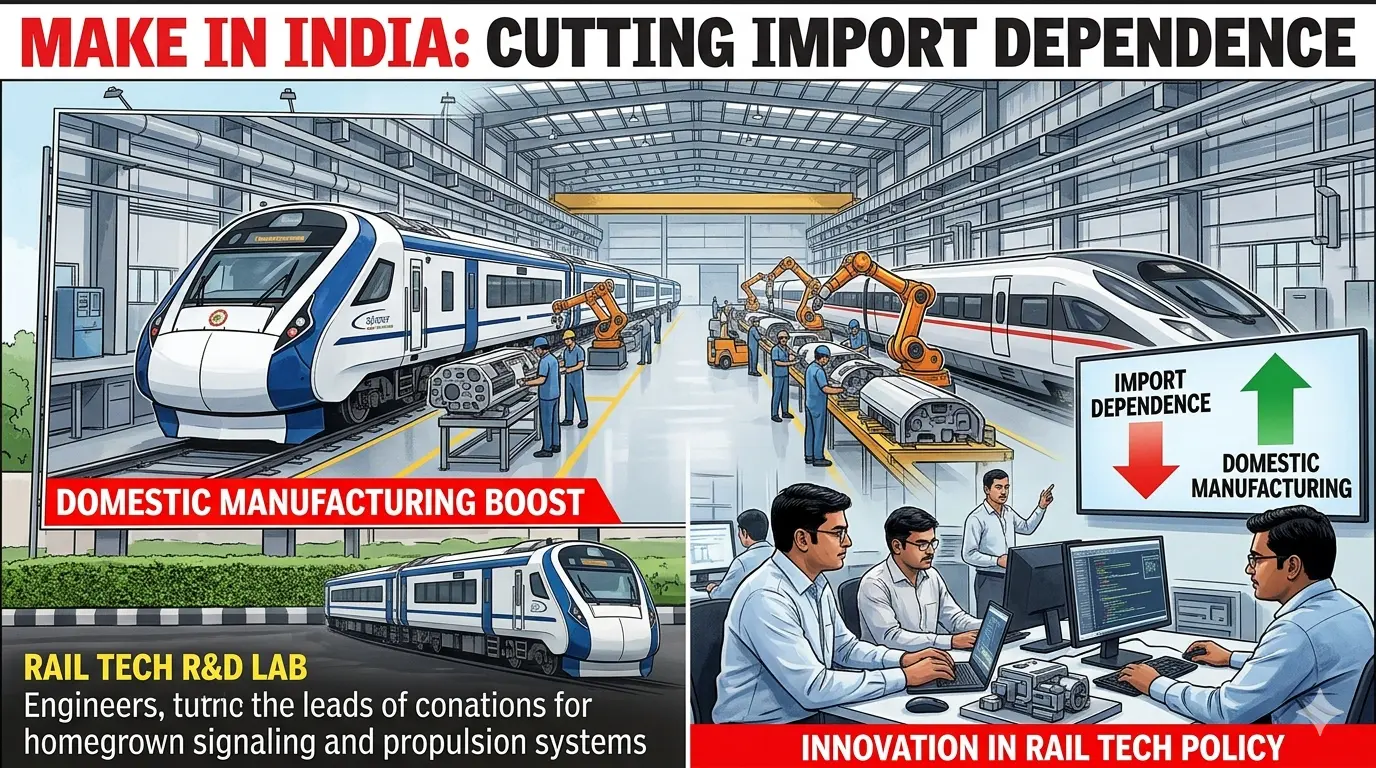
A key pillar of the draft NEP 2026 is its strong emphasis on rapid technology deployment and indigenous capability building. The government proposes to support the acquisition or domestic development of critical equipment, materials and components through foreign direct investment as well as government-to-government partnerships. This approach is reinforced by the Mission on Advanced and High-Impact Research (MAHIR), launched in June 2023, which seeks to accelerate indigenous research, development and demonstration of next-generation power sector technologies, positioning India as a global manufacturing hub. A major objective is the transition to indigenously developed Supervisory Control and Data Acquisition (SCADA) systems by 2030, as existing systems approach the end of their lifecycle and digital self-reliance becomes increasingly important. The Make in India programme continues to play a vital role in strengthening the transmission ecosystem by encouraging domestic manufacturing of high-voltage equipment and critical components, thereby reducing import dependence. The policy also calls for stronger collaboration between industry and academia to drive innovation.
Digital Transformation and Enhanced Grid Modernisation
The draft policy places strong emphasis on the adoption of digital tools and advanced technologies to build a more efficient, flexible and resilient power grid. Utilities are encouraged to deploy Artificial Intelligence (AI), Augmented Reality (AR) and Virtual Reality (VR) for asset management, grid planning and workforce training. Expansion of smart grid technologies is seen as essential for integrating distributed renewable energy, enabling demand-side management and supporting emerging applications such as vehicle-to-grid (V2G) systems. India’s National Smart Grid Mission (NSGM) remains a key driver, with ambitious targets for large-scale smart meter deployment. Cybersecurity has also been identified as a critical priority, with provisions for mandatory domestic storage of power sector data and the development of robust frameworks to safeguard critical infrastructure.
Conference
Conference
Sectoral Reforms and Future Energy Pathways
The policy directly addresses long-standing challenges in the distribution segment, including persistent losses and rising debt among DISCOMs, with a focus on achieving financial sustainability through measures such as cost-reflective tariffs and demand-based charges. It sets ambitious targets for per capita electricity consumption, aiming for 2,000 kWh by 2030 and over 4,000 kWh by 2047, while remaining aligned with India’s climate commitments, including the net-zero emissions target for 2070. The draft advocates faster expansion of non-fossil fuel capacity, greater use of nuclear and hydropower, and a significant scale-up of energy storage solutions such as battery energy storage systems (BESS) and pumped storage projects to maintain grid stability and support variable renewable energy. It also introduces structured resource adequacy planning at both national and state levels to ensure round-the-clock power availability.
Sectoral Impact and Investment Landscape
The NEP 2026 presents a strategic framework that will require substantial investment across the power value chain, spanning generation, transmission, distribution and advanced digital technologies. Its focus on indigenous manufacturing and technology development is expected to unlock opportunities for domestic industry while fostering innovation. By prioritising infrastructure modernisation, operational efficiency and energy security, the policy is likely to attract fresh investment and support sustained growth in India’s evolving power sector. The combined push towards cleaner energy and digitalisation will be central to achieving the ambitious objectives outlined in the draft policy.
Explore the latest edition of Journal of Supply Chain Magazine and be part of the JOSC News Bulletin.
Discover all our upcoming events and secure your tickets today.
Journal of Supply Chain is a Hansi Bakis Media brand.
Subscribe to our Daily Newsletter
Subscribe For FreeBy continuing you agree to our Privacy Policy & Terms & Conditions