Article
Viksit Gujarat @2047
 Anamika Mishra,
Sub Editor
Anamika Mishra,
Sub Editor
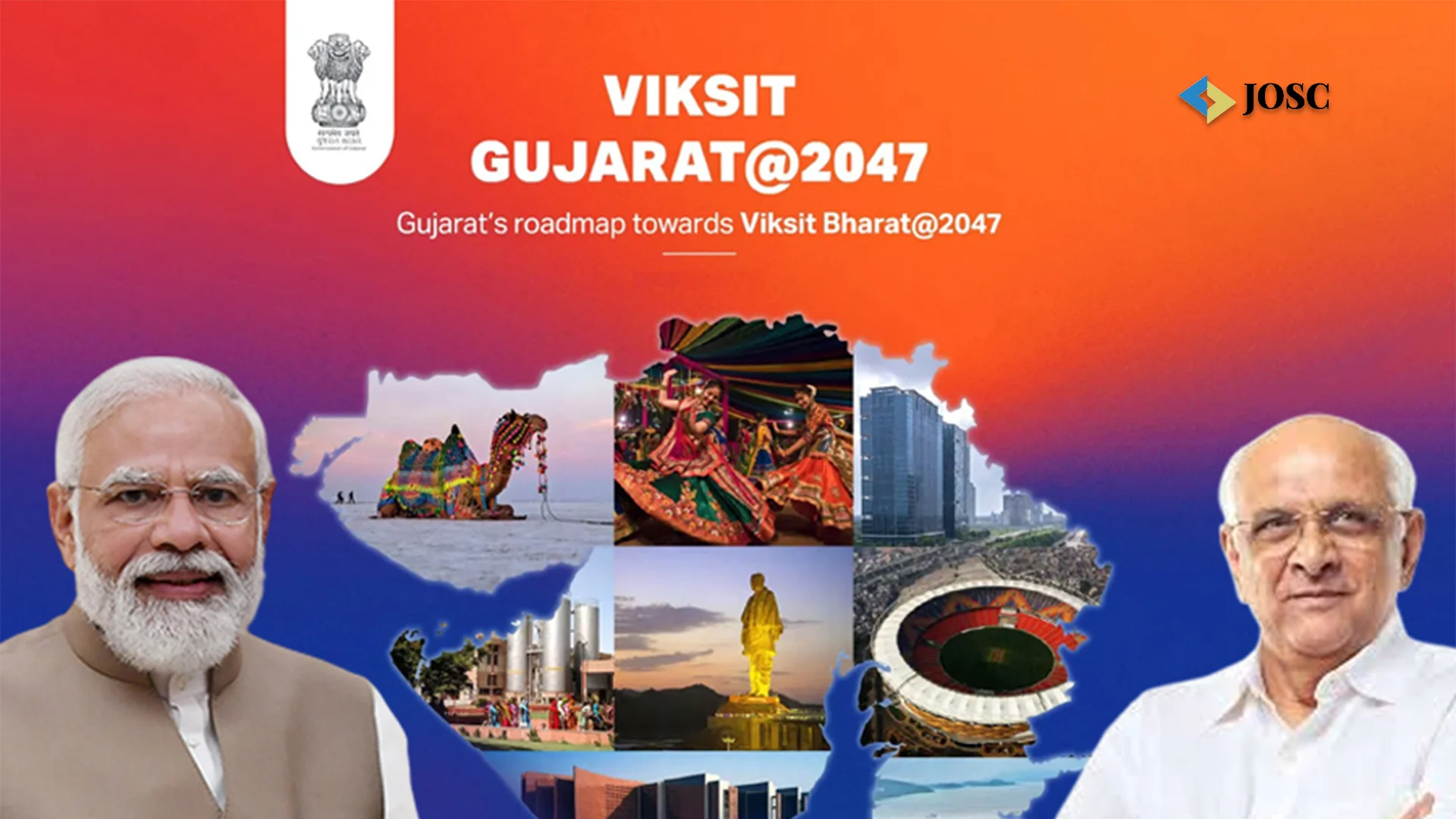
As India marches steadily towards its centenary of independence in 2047, Gujarat, the land of Mahatma Gandhi and Sardar Vallabhbhai Patel, is scripting a compelling development narrative with its ambitious mission: #ViksitGujarat @2047. Rooted in the broader national vision of Viksit Bharat @2047, this initiative embodies a long-term strategy to transform Gujarat into a futuristic, inclusive, and globally competitive state by the mid-century.
Hon'ble Prime Minister has given a coveted vision of Viksit Bharat@2047, i.e., making India a developed country by 2047. It calls for greater efforts from every citizen of the country in the coming 25 years, known as “Amrit Kaal”. This vision mainly encompasses- attaining new heights of prosperity, making the best facilities available both in the villages and the cities, eliminating unnecessary interference by the Government in the lives of citizens, and building the world's most modern infrastructure. Gujarat has been the country’s fastest growing major economy having a substantial share of 8.3% to national GDP and determined to make its best contribution towards achieving the vision of Viksit Bharat@2047.
The Foundation of the Vision
Gujarat is known as an industrially developed state in the country. The state has achieved a tremendous economic growth through port-led development. Further, Gujarat has a series of inherent strengths which can be leveraged to build a successful future. In terms of geographical strengths, the state has the longest coastline in the country and a strategic location, with potential to become even stronger as India’s gateway to Middle East, Africa and Europe, and with vast Indian hinterland. Among cultural strengths, the vibrant Gujarati heritage has a harmonious blend of diverse set of arts, festivals, traditions, and an inherent entrepreneurial culture. Besides, the state has a leading 20-25% share in Indian diaspora which maintains strong links with homeland with respect to business, remittance, philanthropy, etc.
Over the last two decades, Gujarat has taken significant strides towards socio-economic prosperity with key achievements, as mentioned below:
-
$3,728 per capita income (GSDP), over 50% higher than the national per capita average (FY22).
-
18% share in India’s total industrial production, highest among all states (FY20).
-
33% share in total exports, highest among all states (Nov 2023).
-
70% reduction in Maternal Mortality Rate from 2001 to 2020.
-
Ranked 1st in SDG 3, i.e., Good Health and Well-being, as per latest SDG India Index 3.0, NITI Aayog 2020-21.
-
Ranked 1st in NITI Aayog’s Good Governance Index.
Conference

Conference

Leveraging its varied strengths and the continuous progress, Gujarat is ready to set itself on an inspirational path of sustainable and inclusive growth towards Viksit Gujarat@2047, thereby driving the nation towards Viksit Bharat@2047. Going forward, Gujarat will transform itself into a developed state that will be seen as a role model not just for India, but for the entire world.
Viksit Gujarat: What Gujarat has envisioned to be in 2047
Living Well: In Viksit Gujarat@2047, every citizen of Gujarat will have
-
Equitable access to clean environment, breathable air, adequate sanitation, safe drinking water and 24x7 electricity.
-
A Sustainable society to live in, with net-zero achievement by 2047.
-
High quality healthcare coverage for lifetime, ensuring a well-nourished and healthy life for all. Universal access to multidisciplinary education and vocational skilling, led by Phygital approach to teaching, including connected schools, AR/VR in delivery and assessments, etc.
-
Access to high-speed, on-time and safe transport infrastructure, enhancing proximity with quality social facilities like schools, hospitals and sports centers.
-
An inclusive and value-based society where each citizen is a strong contributor and proud resident of state of Gujarat.
-
Access to more transparent, accountable and efficient government services, along with end-to-end e-governance platforms powered by latest technologies such as AI.
Earning Well: In addition to ensuring social development for every citizen, Viksit Gujarat@2047 will be a developed economy with over $3.5 Tn GSDP exhibited by the following:
-
Multi-sectoral employability aided by world-class skilling ecosystem, with access to meaningful employment as per each person's ambition, driving per capita income (GSDP) to $38,000-43,000.
-
Leading share in global industrial economy led by higher contribution from emerging high-value-added sectors such as Semiconductors, Automotive, Aerospace and Renewable Energy.
-
Quantum leap in Services sector with Gujarat being recognised as a hub for areas such as knowledge economy, tourism and financial services.
-
Diverse livelihood opportunities with increasing involvement of rural workforce in non-farm sectors, driving multi-fold increase in rural household incomes.
-
Continued port-led development, making Gujarat as one of the global trade hotspots and a key node of the India Middle East Europe Economic Corridor.
-
Vibrant economic hubs featuring leading brownfield and greenfield cities such as Dholera, GIFT City, DREAM City and new port-led cities, well-connected with upstream and downstream supply chain centres.


Thematic framework for Viksit Gujarat@2047
To achieve the above-mentioned vision for Viksit Gujarat@2047, a guiding framework comprising of 11 overarching themes across 3 key areas has been developed, as depicted below:

Thematic framework for Viksit Gujarat@2047
Empowered citizens: Living Well
Significant strides have been made by Gujarat through various initiatives to improve the availability and affordability of healthcare services leading to noteworthy improvements in health outcomes. The state government has taken proactive measures to elevate nutritional and health status of people living in Gujarat.
Key trends shaping the sector:
Increase in the ageing population
Increasing ageing population across the world and in India necessitate proactive healthcare planning for the elderly with preventive and integrated care model.
Technological advancements
The landscape is continuously evolving with rapid technological advancements such as genome testing, telemedicine, personalized medicine, AR and VR for training, etc.

Gujarat has implemented pivotal policy measures and specific initiatives, across critical domains, including the following:
Extensive Healthcare Network
In Gujarat, 9,9001 Health and Wellness Centers, operational under Ayushman Bharat, are delivering primary healthcare services at the doorstep. The Swasthya Nidhi program aims to further enhance healthcare infrastructure by establishing and upgrading medical colleges, district hospitals, and community health centres.
Telemedicine and "Hub and Spoke" Model
To enhance accessibility, Gujarat has adopted telemedicine model, utilizing Health and Wellness Centers as spokes to extend services to remote areas. Gujarat's 'One Dialysis' program has established high-quality dialysis centers in every taluka, following a hub-and-spoke model.
Maternal and Child Health & Nutrition Initiatives
Aligned with national priorities, Gujarat has implemented key initiatives such as Janani Suraksha Yojana, Pradhan Mantri Surakshit Matritva Abhiyan and Bal Sakha-3, emphasizing maternal and child health. Gujarat addresses child malnutrition through initiatives like Kuposhan Mukt Gujarat Maha Abhiyan, PM POSHAN (MDM), Doodh Sanjivani Yojana and use of Poshak– double fortified salt.
Ayushman Bharat PM-JAY
As part of the world's largest health assurance scheme, Gujarat covers approximately 72.22 lakh families, with over 58 lakh individuals benefiting from claims exceeding INR 11,386 crore1. Under PMJAY- Mukhyamantri Amrutam, Gujarat has provided crucial medical services, including organ transplantation, joint replacements, cancer treatments, and surgical procedures.
Mental Health Initiative
The state initiated the Gujarat Digital Academy for Mental Health, emphasizing mental healthcare in collaboration with National Institute of Mental Health and Neurosciences, Bengaluru.
AYUSH Mainstreaming
Gujarat leads in mainstreaming AYUSH, with medical officers at Primary Healthcare Centers (PHCs) and Rashtriya Bal Swasthya Karyakram (RBSK) teams and AYUSH Health & Wellness Centers. State houses 36 Ayurved colleges, 45 Homoeopathic colleges and WHO Global Centre for Traditional Medicine.
Despite significant improvements in health outcomes, there are areas of further improvement.
-
Women & child health and nutrition outcomes: Malnutrition remains a significant challenge among children (under 5 year) with 39% being stunted, 40% underweight and 25% wasted (vs. national average of 19.3%)2. In addition, 65% of women (aged 15-49) are anaemic.
-
Prevalence of Non-communicable diseases (NCDs): Gujarat’s proportion of total disease burden from NCDs is 56.7%4. As per NFHS-5 survey, in Gujarat, 22.6% female and 19.9% male are obese (BMI ≥25.0 kg/ m2), and 43.5% female and 40.9% male have high risk waist-hip ratio. Cancer cases are also on the rise– with an estimated incidence of 73,382 cases in Gujarat in 2022.
-
Need for strengthening workforce and infrastructure: Gujarat has around 12 doctors per 10,000 population (vs 20 in middle income countries and 40 in higher income countries). Around 34.2% of PHCs function 24x7 in rural areas, and there was about 52% shortfall in number of urban PHCs as per mid-year population data from July 20216. District hospitals have around 19 beds per 100,000 population, lower than other states such as Karnataka (33), Kerala (22), and Odisha.
-
Rising ageing population: By 2046 the population size of the elderly in India will be higher than the population size of children aged 0–14 years. In Gujarat too, the share of the elderly population is projected to increase to 15.4% (in 2036) from 10% (in 2021)8, rising further by 2047. Specific care networks would be required to cater to this rising segment.
Rising elderly population in Gujarat

Vision for 2047
By 2047, Gujarat envisions healthy and productive citizens, empowered by quality nutrition and affordable access to world class multi-disciplinary health facilities. Health sector of Gujarat would not just serve the citizens, but also be a hub for medical tourism as well as global delivery of health services.

Macro goals for 2030 and 2047

The Institutional Push
To guide the long-term vision in a structured and dynamic way, the Gujarat government is setting up Gujarat State Institution for Transformation (GRIT), modelled after NITI Aayog. It will drive the strategic planning and execution of Viksit Gujarat initiatives through data-backed governance and expert consultations.
One of the most notable steps is the creation of a Gujarat Urban Professional Service Cadre. Over 2,100 urban planning professionals are being inducted, supported by a state-wide urban knowledge network. This initiative is expected to revolutionise how cities and towns are planned, managed, and made climate-resilient.
Financial Planning and the Viksit Gujarat Fund
To achieve the goals set for 2047, Gujarat is backing its vision with robust financial planning. The 2025–26 state budget has crossed ₹3.70 lakh crore, an 11.4% increase from the previous year, with no additional tax burden on the public. A key highlight is the launch of the Viksit Gujarat Fund, worth ₹50,000 crore over the next five years. This fund will act as a catalyst for developmental projects across infrastructure, tourism, transport, education, and green growth.
Of this, ₹5,000 crore has already been earmarked for FY 2025–26. This investment will support expressway expansions, new water supply systems, tourist infrastructure, and more. It’s a clear signal that the government is committed to executing its plans with speed and scale.
Infrastructure and Urban Development
Infrastructure development lies at the heart of Gujarat’s growth story. Projects like the Ahmedabad–Dholera Expressway, the Dholera International Airport (targeted for completion by late 2025), and the Surat–Mumbai Economic Corridor are opening new doors for connectivity and commerce.
The Dholera Special Investment Region (SIR), a part of the Delhi-Mumbai Industrial Corridor (DMIC), is being transformed into India’s first greenfield smart city. With a massive solar park of 4,400 MW, advanced infrastructure, and land parcels ready for industrial investment, Dholera is poised to become a global manufacturing and innovation hub. Semiconductor giants like Vedanta and Tata are already making multi-billion-dollar investments here, marking Gujarat as the epicentre of India’s electronics manufacturing revolution.
In Surat, a new economic masterplan envisions development through sectors like chemicals, textiles, logistics, and agro-processing. The creation of Bharat Bazaar, India's largest trading hub, along with cruise terminals and a Disneyland-style theme park, shows how the state is integrating traditional strengths with modern aspirations.
Renewable Energy and Green Gujarat
Another cornerstone of the Viksit Gujarat vision is its commitment to sustainable development. The Khavda Renewable Energy Park in Kutch is being developed as the world’s largest hybrid energy park, with a target capacity of 30 GW. Already, 1 GW of solar energy has been commissioned, with wind power also coming online. Once fully operational, this park will create over one lakh jobs and reduce carbon emissions by more than five million tonnes annually.
Gujarat is also a leader in rooftop solar adoption, with over 2.9 GW of residential installations. The state contributes nearly 15% of India’s total renewable energy production. Its Green Gujarat Mission targets the creation of five lakh green jobs by 2030. Through investments in solar, wind, green buildings, eco-tourism, and electric mobility, the state is shaping a sustainable future for generations to come.
In the realm of biofuels, Gujarat is making significant strides. Amul and Banas Dairy are leading the charge with investments in ethanol and compressed biogas (CBG) production. The state has already approved the construction of 30 new CBG plants, and over 32,000 household biogas units have been set up, supporting farmers and rural households in becoming energy independent.
Technology, Innovation and Youth Empowerment
The knowledge economy is another major focus under Viksit Gujarat@2047. Through the Gujarat IT/ITeS Policy 2022–2027, the government aims to create one lakh direct IT jobs and boost exports from ₹3,000 crore to ₹25,000 crore. With support for data centres, AI education, and CAPEX/OPEX incentives, the state is attracting top IT firms and startups.
The i-Hub, based in Ahmedabad, is the state’s flagship innovation incubator. With a ₹500 crore corpus under the Student Startup and Innovation Policy (SSIP 2.0), the hub supports over 800 startups, offering mentoring, workspace, and funding to young entrepreneurs.
Technology is also being deployed for governance. The recent regional conference on space applications, held in Gandhinagar, discussed how satellite-based data can help in agriculture, disaster management, urban planning, and infrastructure monitoring showcasing Gujarat’s tech-forward approach to administration.
The Road Ahead to 2047
Ushering in the auspicious phase of 'Amrit Kaal', the Viksit Gujarat@2047 vision document aims to encapsulate the aspirations of every citizen, guiding towards a future where individuals will not only be 'Earning Well' but also 'Living Well,' contributing to a society that is both 'valued' and 'valuable.' Across the eleven themes covered in this document to achieve these aspirations, three common elements stand out.
The world today is heading towards a technology driven future. Over the next 25 years, Gujarat would need to leverage technology, and drive research and innovation across primary, secondary, and tertiary sectors to continue to grow ahead of national average. Investments in cutting-edge agricultural technologies could revolutionize farming for higher sustainability and productivity. The industrial sector will undergo a shift towards automation and smart manufacturing to enhance efficiency and global competitiveness. In the services sector, technological advancements will drive innovative solutions in healthcare, education, and finance, extending the reach of quality services globally.
Many thrust areas across all themes including physical classrooms, remote healthcare, digitally enabled citizen services, or next-gen transport require a strong focus on leveraging technology for driving higher efficiency and achieving the targeted outcome.
In the next 25 years, addressing climate change impact will be a top priority globally. Gujarat aims to be a key player in India's net-zero commitments through widespread sustainable development. The state is already driving sustainable agricultural practices like natural and organic farming and plans to further expand their footprint. The industries and services sectors will need to pivot to green growth, embracing renewable energy, a robust recycling ecosystem, and adopting clean technologies (such as Green Hydrogen, Carbon Capture, Utilization and Storage, Biofuels). Sustainable practices will be central in the state's infrastructure, urban, and rural development.
Explore the latest edition of Journal of Supply Chain Magazine and be part of the JOSC News Bulletin.
Discover all our upcoming events and secure your tickets today.
Journal of Supply Chain is a Hansi Bakis Media brand.
Leave Comment
Join the community of 150,000+ industry professionals
Subscribe to our Daily Newsletter
Subscribe For FreeBy continuing you agree to our Privacy Policy & Terms & Conditions
Latest




Feature Articles


Related