Article
India File: UK deal sets cautious tone on trade
 Anamika Mishra,
Sub Editor
Anamika Mishra,
Sub Editor
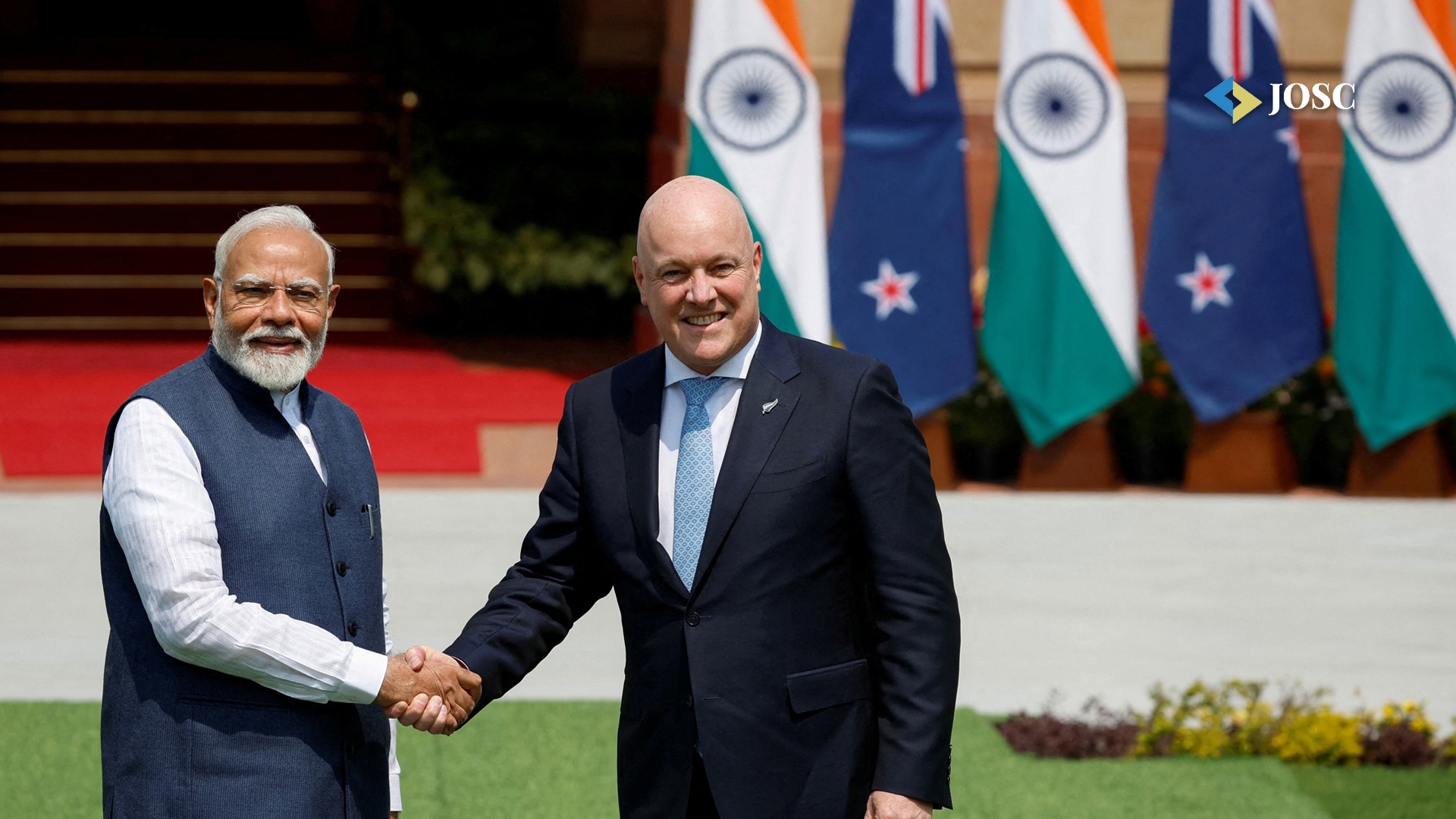
India’s newly minted free-trade agreement with the United Kingdom is taking centre stage. It is the first such deal to emerge from recent bilateral talks with several large trading partners, including the U.S., EU and Australia. Analysts believe this UK pact signals a careful and calculated approach in opening up India’s markets, a template that may shape future negotiations especially with the United States amid threats of friction under President Trump’s reciprocal tariff policy.
A landmark deal but limited scope early on
India and the UK signed their comprehensive economic trade agreement in late July 2025, after more than three years of intensive talks. Average import tariffs on British goods in India will shrink from about 15% to 3% Auto tariffs will plummet from over 100% to around 10% for high-end passenger cars but with quotas and a 15-year phase in period. Importantly, critical sectors like agriculture and dairy remain off the table, a red line for India, given food security and political sensitivities.
But the real story lies in how the deal has been designed. India has deliberately structured it to deliver shorter‑term gains for its exporters duty‑free access from day one for most of its goods and deferred liberalisation of more sensitive sectors over many years. This “developmental asymmetry” is a hallmark shift in Indian trade policy thinking post the RCEP experience.
What it means for India: exporters and beyond
India’s trade volume with Britain is small: the UK is roughly its 7th largest goods export destination, accounting for about 3.5% of total merchandise exports. That means the immediate economic impact will be modest. Still, the gains for Indian exporters could be meaningful: Britain has promised to eliminate tariffs on nearly 99% of Indian export tariff lines, including sectors where India is strong textiles, gems & jewellry, engineering goods, leather, toys, sports goods, auto parts, chemicals and more.
Services exporters also benefits. The UK has opened up more than 130 services sub-sectors including IT, consulting, engineering, telecoms and agreed to exempt Indian professionals posted there from national insurance contributions for up to 36 months. ICICI Direct estimates that close to 60,000 IT professionals could benefit, lowering entry and onsite costs significantly.
The deal also includes India’s first binding commitments to open up federal level public procurement contracts to a foreign partner with procurement worth over Rs 3.3 lakh Cr open to UK firms with local content provisions to protect Indian suppliers.
Conference

Conference

Protection for domestic sectors: Devils in the detail
Under the India-UK Comprehensive Economic and Trade Agreement (CETA), import quotas are strictly enforced. Luxury petrol cars above 3,000 cc and high‑end diesel models over 2,500 cc will see customs duty reduced from around 110 percent to 30 percent in the first year, gradually falling to 10 percent by year five, limited to an in‑quota cap of 10,000 units in year one, growing to 19,000 units by year five. Vehicles in mid and lower engine categories (e.g. petrol up to 3,000 cc or diesel up to 2,500 cc) follow a similar path: 50 percent in year one, dropping to 10 percent by year five with quotas of 5,000 units rising to 9,000 by year five. Overall, duty reductions apply only within quota limits; imports exceeding these thresholds still attract duties ranging 50-95 percent depending on engine size and year. A CIF value of £40,000 translates to roughly Rs 46.7 lakh as of July 2025.
Thus, while headline duty rates may look steeply cut, real benefits are limited in scope with many imports still facing high tariffs, and quotas throttling volume. The structure reflects India’s caution in opening its auto market too far, especially to protect domestic manufacturers.
Agriculture & Dairy: Retained Protection
Indian trade deals deliberately exclude agriculture and dairy from liberalisation, except under long‑term and tightly constrained tariff‑rate quotas (TRQs). Products like milk powder and cheese may receive minimal access, but no broad tariff reductions are granted. This exclusion underscores India’s priority on food security and the political weight of farmer constituencies, especially in states such as Gujarat and Maharashtra (no direct quota data reported publicly, but exclusion widely noted).
Alcohol: Excise Complexity Masks Tariff Cuts
Although central customs on whisky and gin have seen moves toward cutbacks, the impact on consumer prices is muted. Indian alcohol is subject to state‑level excise and other levies, which vary widely. As a result, any reduction in central duty may lead to less than a 10 percent net fall in retail prices and in some states, excise rates may be raised to offset revenue losses. In effect, the tariff cuts are symbolic, while final costs remain nearly unchanged to consumers.
Service Mobility: Hidden Costs of Social Security Waiver
The trade agreement exempts Indian professionals in the UK from paying UK national insurance (social security) contributions for up to three years. Critics point out, however, that these professionals still incur the NHS levy, receive no UK pension entitlements, and could cost UK taxpayers £200 million annually in foregone tax revenues. The waiver does ease some administrative burden, but it does not fully neutralise the cost burden on Indian workers and the claims of mutual benefit are questioned by opposition parties and observers alike.
Together, these measures reveal that India’s “tariff cuts” are mostly controlled openings, carefully structured to balance trade concessions with protection of domestic sectors and political sensitivities. Auto imports remain capped and expensive unless assembled locally agriculture and dairy stay insulated, alcohol price flexibility is limited and the touted service‑mobility gains carry nuanced fiscal impacts in the UK. This layered approach reflects India’s strategic priority on self‑reliance, food security, and domestic industrial protection, particularly in politically sensitive states like Gujarat and Maharashtra.
Will India’s walled garden open to US tariffs?
What does this signal for ongoing talks with the United States now under pressure due to Trump’s threat of “reciprocal tariffs”?
Trump has warned of 25-26% tariffs on Indian imports unless New Delhi relaxes protection in key areas such as agriculture and dairy. Without a deal by August 1, India could face punitive duties costing parts of its export sector dearly especially in pharmaceuticals where US buyers are a major destination. The UK deal suggests Delhi is trying to chart a middle ground making selective concessions in non-sensitive sectors to unlock market access, while protecting domestics interests in politically sensitive domains. That may be the formula for talks with Washington too. But the US is pushing for deeper access in agriculture and dairy areas that India has so far resisted entirely. That raises the stakes and complexity of US negotiations compared with the UK deal.
IIFT Vice-Chancellor Rakesh Mohan Joshi has called Trump’s tariff threats an act of “arm-twisting” and praised the UK agreement as a trendsetter in fair mutually beneficial trade diplomacy.
Currency and investor sentiment under pressure
Even as India courts balanced trade pacts, financial markets are jittery. The Indian rupee slipped nearly 2% in July, under pressure from fears over proposed 25% US tariffs and from ongoing foreign investment outflows. Analysts estimate that worst case tariffs could shave 40 basis points off GDP growth in 2025-26. Around $600 million of foreign equity portfolios exited India recently, as investor sentiment soured. Washington talks or any de-escalation will be critical to stabilize confidence.
Why this cautions template matters for future deals
India’s UK FTA may become a blueprint for forthcoming negotiations with the EU, Australia and the U.S:
- Balanced Liberalization: India has secured frontloaded benefits for its exports. Around 99% of Indian goods now enter the UK duty-free, giving a major boost to industries such as textiles, apparel, gems and jewellery, processed foods, and engineering goods. For example, chemical exports are expected to grow by 30–40% to $650–750 million by FY26. Meanwhile, India has agreed to gradually open up certain protected sectors, like automobiles and alcoholic beverages, over a 10–15-year period with caps and safeguards in place.
- Preserving Policy Space: India successfully avoided investor-state dispute settlement (ISDS) clauses in the FTA. This ensures that foreign investors cannot sue the Indian government in international arbitration, allowing India to retain control over its domestic regulations. Additionally, the agreement does not require forced liberalization in agriculture, dairy, or pharmaceuticals sectors considered critical to India's food security and public health.
- Modern Governance Norms: The FTA includes 27 chapters covering modern trade areas such as digital commerce, transparency, environmental and labour standards, regulatory cooperation, and gender equality. It establishes clear procedures for digital trade, discourages forced data localization, and promotes cooperation on intellectual property. These measures aim to build trust and align India with global trade standards.
- Challenges for MSMEs: While the FTA opens doors for Indian exports, small and medium enterprises (MSMEs) may face difficulties. Many lack the resources or knowledge to meet UK standards such as OEKO-TEX certification and sustainability audits. According to recent surveys, over 60% of Indian MSMEs are unclear about the FTA’s rules of origin and compliance requirements. There are also concerns that UK firms might dominate public procurement tenders, potentially outbidding smaller Indian suppliers.
- Strategic Shift: Despite these concerns, the FTA is widely seen as a strategic win for India. By securing export growth and safeguarding domestic interests, India is moving toward a model of “calibrated openness.” Gems and jewellery exports, for instance, are expected to double from $941 million in FY24 to over $2.5 billion by FY28. The FTA also improves India’s image as a reliable trade partner and aligns with its broader goal of integrating into global supply chains.
As Indian trade officials continue intensive talks with the U.S., they may seek to apply the same template defending key domestic sectors while unlocking access for garments, textiles, engineering goods, IT and even public procurement in return for specific U.S. concessions.
India’s trade deal with Britain marks a major policy shift. It shows that New Delhi is prepared to open its economy selectively and strategically, not broadly. The UK pact provides a cautious, calibrated roadmap: immediate gains for Indian exporters, while protecting vulnerable sectors and giving domestic industries time to adapt.
That model may well guide upcoming negotiations with the U.S. and EU. But as Trump's "reciprocal tariffs" loom, India will have to navigate a difficult balance: resisting pressure to open agriculture and dairy, yet securing enough market access in goods and services to avoid punitive duties.
In short, the UK deal is not just a trade agreement, it is a template for India’s future trade diplomacy. How India applies its lessons in tougher negotiations with more powerful partners like the U.S. will determine whether the cautious opening delivers growth, jobs, and resilience in its increasingly global economy.
Explore the latest edition of Journal of Supply Chain Magazine and be part of the JOSC News Bulletin.
Discover all our upcoming events and secure your tickets today.
Journal of Supply Chain is a Hansi Bakis Media brand.
Leave Comment
Join the community of 150,000+ industry professionals
Subscribe to our Daily Newsletter
Subscribe For FreeBy continuing you agree to our Privacy Policy & Terms & Conditions
Latest





Feature Articles

Related