Article
Countries with the Most Satellites Fueling Next-Gen Logistics Solution
 Anamika Mishra,
Sub Editor
Anamika Mishra,
Sub Editor
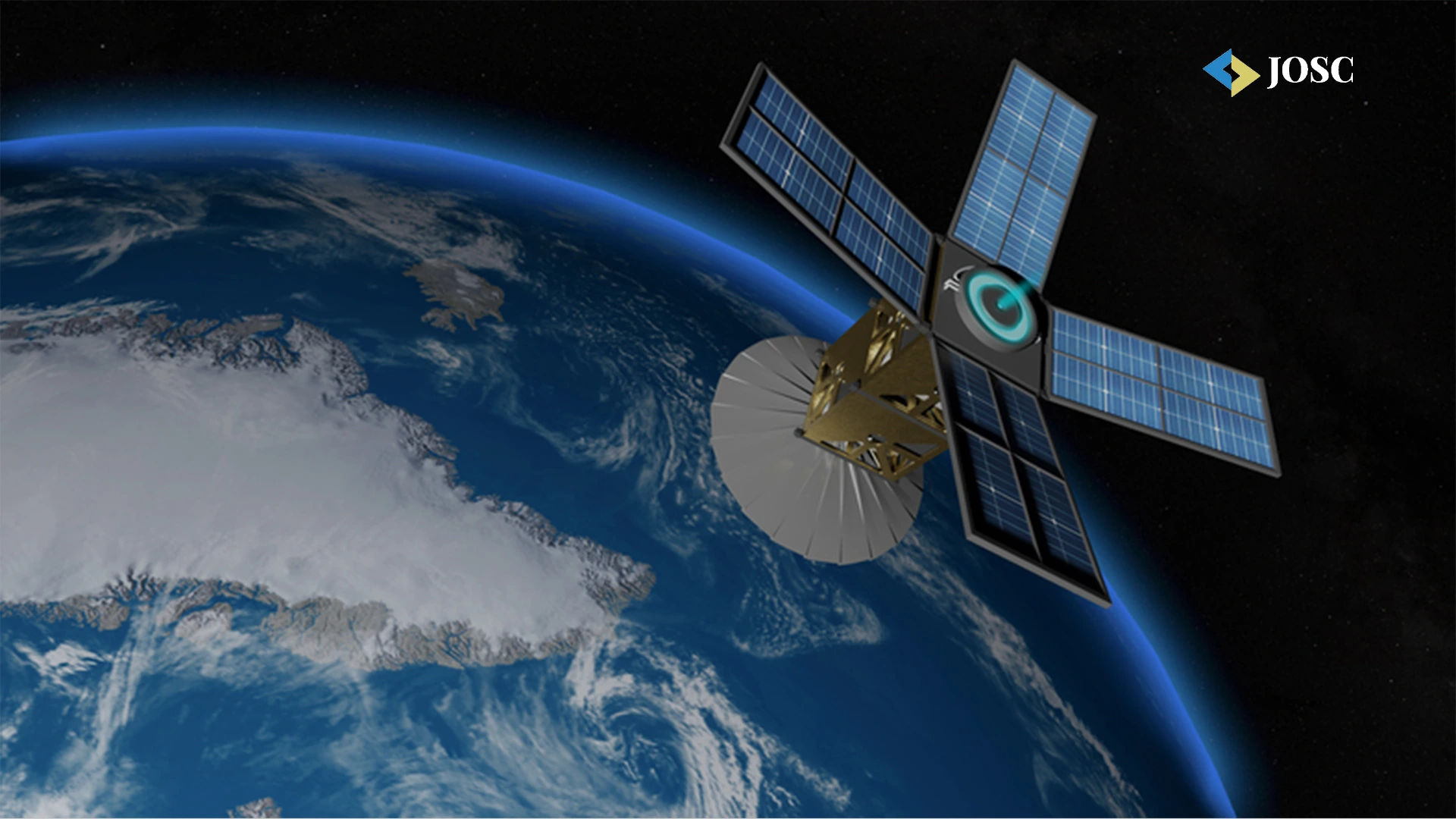
By the end of March 2025, Earth’s orbit had never been busier, with nearly 14,900 satellites quietly circling above us. That’s a remarkable 31.5% jump since mid-2023, marking an exciting new chapter in how quickly we’re putting technology into space. Out of these, about 11,700 satellites are actively doing their jobs, most of them flying in Low Earth Orbit (LEO), the band closest to our planet, between 160 and 2,000 kilometers up. This area is especially popular because it offers faster communication and sharper images, making it perfect for everything from tracking shipments and connecting remote communities to monitoring the environment and powering the growing world of IoT devices. It’s a bustling space highway that’s quietly shaping how we live and work every day. Between January and April 2025 alone, more than 1,200 satellites were launched globally, a 50% year-over-year increase and a testament to the growing reliance on space-based infrastructure. Leading the charge is the United States, which accounted for 506 of these payloads in the first half of the year. China followed with 49 launches, while Russia contributed 10, underscoring a sharp contrast in launch capabilities and frequency. The primary driver behind this explosive growth is the rise of mega-constellations. These vast networks of interconnected satellites are revolutionizing global connectivity and logistics. At the forefront is Elon Musk’s Starlink project, which now operates over 7,300 active satellites, as of mid-2025. With a vision of deploying up to 40,000 units, Starlink alone accounts for nearly 60% of all active satellites orbiting Earth today. Its impact on logistics is profound enabling real-time tracking, global internet coverage, and rapid data transmission across even the most remote corners of the world. Meanwhile, China is making significant strides with its own satellite constellations. The Guowang system, initiated in 2022, has 46 operational satellites and is steadily expanding. More notably, the Qianfan constellation, also known as “Thousand Sails”, is expected to reach around 648 satellites by the end of 2025. These systems are part of China’s strategy to create an independent space-based communication and surveillance network. Not to be left behind, Amazon has entered the race with Project Kuiper. In mid-2025, the company successfully launched its first 54 production satellites, signaling the beginning of a competitive satellite broadband push aimed at rivalling Starlink and strengthening global logistics capabilities through advanced connectivity infrastructure.This rapid expansion of orbital assets is laying the groundwork for the next generation of supply chain innovation. Who’s in the Lead? 1. United States Led by SpaceX, the United States has solidified its dominance in satellite deployments for 2025. In the first quarter alone, SpaceX launched an impressive 573 Starlink satellites, significantly boosting the nation’s presence in orbit. This surge played a major role in the U.S. accounting for a total of 506 payloads in the first half of the year, far surpassing other countries. Beyond SpaceX, several other American entities are contributing to this momentum. Amazon’s Project Kuiper has begun its own satellite deployment efforts, while numerous government agencies continue to launch satellites dedicated to defense, communications and navigation. Together, these initiatives reinforce the United States’ leadership in the global space and logistics ecosystem. 2. China China’s satellite programs, Guowang and Qianfan, are rapidly scaling up in 2025 as the country pushes to establish its own robust space-based infrastructure. Despite facing some early technical challenges such as a reported glitch rate of around 14% compared to Starlink’s less than 0.5% both constellations are progressing steadily. Qianfan, also known as “Thousand Sails,” is leading the charge, with the first phase targeting the deployment of 648 satellites by the end of the year. This is part of a much larger vision to launch up to 15,000 satellites in the coming years, positioning China as a major player in the global satellite communications and logistics ecosystem. 3. India India has continued to strengthen its space capabilities in early 2025, launching six satellites, including one aboard a SpaceX Falcon 9. The country’s regional navigation system, NavIC, now operates
The only supply chain registration you need
Unrivaled context behind every news and article for free.
RegisterJoin the community of 150,000+ industry professionals
Subscribe to our Daily Newsletter
Subscribe For FreeBy continuing you agree to our Privacy Policy & Terms & Conditions
Latest