News
India Emerges as Key Swing Vote in IMO's Global Shipping Decarbonisation Decision
 Vatsal Patel,
Founder
Vatsal Patel,
Founder
India could play a decisive role in the upcoming International Maritime Organization discussions on shipping decarbonisation, with government sources indicating that the country has yet to finalise its position. The meetings are scheduled to begin in London on November 23, with the crucial vote expected on December 4, according to The Hindu.
Industry stakeholders are looking to India to play an active role in keeping the global shipping industry's transition towards net zero moving forward. However, officials have indicated that the final decision will depend on preparatory discussions addressing technical requirements and financial arrangements. India had supported the adjournment of the vote last year.
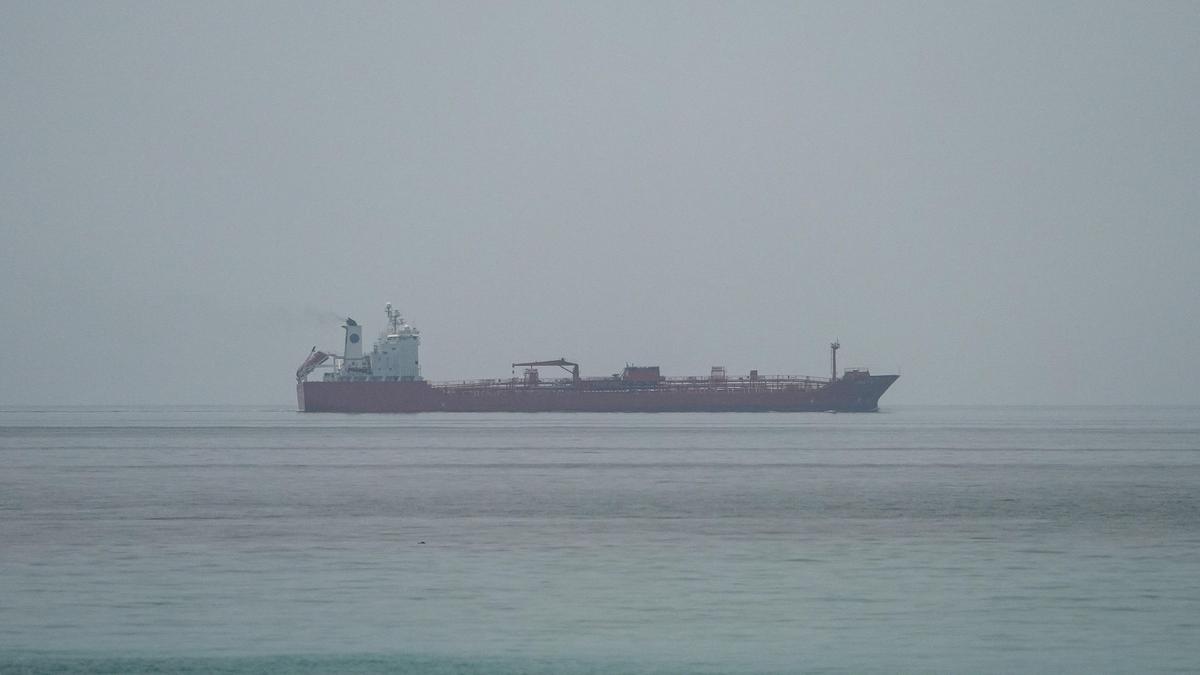
The negotiations faced a major setback in October 2025, when the United States intervened during an IMO meeting convened to decide on global shipping decarbonisation. It threatened retaliatory measures and sanctions, including the possibility of restricting vessels from accessing US ports. Although a simple majority at the relevant IMO committee had already established a proposed pathway towards net zero in April, US intervention resulted in the vote being postponed by a year.
In 2023, the IMO committed to achieving net-zero greenhouse gas emissions by 2050, with support from the then US administration led by Joe Biden. In April 2025, the relevant committee proposed a regulatory framework requiring ships to reduce their greenhouse gas intensity within specified timelines. The proposal also included a carbon levy on non-compliant vessels, incentives for better-performing ships and the creation of a fund to finance alternative fuels.
Under the proposed framework, ships would be required to achieve a 43 per cent reduction in greenhouse gas intensity by 2035. Part of the compliance shortfall would be addressed through payments into an IMO-administered fund.
Where the US, EU and Other Countries Stand on Shipping Emissions
In its submission to the IMO this year, the United States has indicated its willingness to participate through the organisation's established procedures while maintaining firm objections on several important issues. Washington opposes an IMO-managed fund, carbon pricing mechanisms and regional regulatory systems such as the EU ETS and FuelEU Maritime.
The US has also questioned the commercial readiness and affordability of alternative fuels, including green ammonia and green methanol. Instead, it supports the continued use of conventional bunker fuels while promoting LNG and biofuels, sectors in which it has potential commercial interests as a supplier.
The European Union has shown some flexibility on fuel-intensity requirements and indicated a willingness to consider less demanding initial targets. However, its broader commitment to achieving net-zero emissions remains unchanged. Meanwhile, Canada, Australia, the UK and South Africa have jointly revised the framework proposed in April 2025, while Japan and Brazil have advocated a more gradual introduction of the measures.
Summit
India's Climate Justice Approach to Maritime Decarbonisation
According to Cmde Debesh Lahiri, advisor at the National Centre of Excellence in Green Ports and Shipping, India's position in the negotiations is guided by the principle of CBDR-RC, or Common But Differentiated Responsibilities and Respective Capabilities.
He explained, “India’s position in climate change mitigation negotiations has always been based on CBDR-RC, advocating climate justice and just transition. Who pays for the transition and who gets supported in the transition are key questions for India”.
Why India May Oppose a Uniform Carbon Levy
Lahiri indicated that India would probably resist a uniform carbon tax applied equally to every vessel. He highlighted concerns around the global availability, cost and scalability of alternative green fuels, suggesting that a preparatory phase would be necessary to establish whether the proposed arrangements are commercially practical.
He further stated, “An imposition of a financial levy should make a reference to the concept of who is principally responsible for climate change”.
Another challenge is the complex ownership structure of the global shipping industry. Lahiri pointed out that vessel ownership is not always transparent, while flags of convenience such as Guinea-Bissau, Liberia and the Marshall Islands account for a substantial share of global shipping tonnage. This makes it difficult to draw clear distinctions between developed and developing countries based solely on vessel registration.
Despite these concerns, India could benefit from the growing demand for biofuels and other alternative marine fuels. Lahiri noted that the country's ethanol blending programme in road transport has largely been driven by the objective of reducing foreign exchange expenditure and directing more investment into the domestic economy.
He also highlighted India's ongoing green fuel initiatives, including several green ammonia projects that are under development and have secured offtake agreements. However, significant groundwork remains before these plans translate into actual investment and production.
India's geographical proximity to Singapore, one of the world's major bunkering centres, could provide another commercial advantage. With the right infrastructure and supply arrangements, the country has an opportunity to develop into a supplier of green fuels for international shipping.
Explore the latest edition of Journal of Supply Chain Magazine and be part of the JOSC News Bulletin.
Discover all our upcoming events and secure your tickets today.
Journal of Supply Chain is a Hansi Bakis Media brand.
Subscribe to our Daily Newsletter
Subscribe For FreeBy continuing you agree to our Privacy Policy & Terms & Conditions