Article
Jaishankar Sees Scope for India in Post-Election US Results for Supply Chain Industry
 Anamika Mishra,
Sub Editor
Anamika Mishra,
Sub Editor
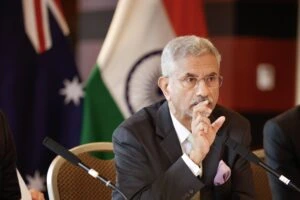
External Affairs Minister S. Jaishankar, reflecting on the implications of recent US presidential elections for India, views it through a strategic lens, especially in terms of supply chains and the wider economic relationship with the United States. Here, as political changes begin to assert themselves in the global landscape, whether driven by economic considerations or technology shifts, India is geared up to avail whatever opportunity now comes out of these change dynamics.
Context of the US Elections and Global Supply Chains
What has been implicit in US presidential elections has not been limited to the implication for the country's domestic policies alone, but also how the shape of global economic dynamics change. This one tends to herald trends in trade policies, immigration regulations, and international relations that play crucial roles in turning all channels of supply chains in the world around. With the newness of administration, companies all around the world, including Indian ones, are reassessing their systems of supply chains in terms of changing geopolitics.
The COVID-19 pandemic has already exposed vulnerabilities in global supply chains, and this has led businesses to seek more resilient and adaptable frameworks. Indeed, according to a report by McKinsey, 93% of the executives of supply chains believe that the pandemic laid bare weaknesses in their supply chains, going so far as to reassess their strategies to incorporate agility and flexibility.
Jaishankar's Insights on Supply Chain Opportunities
While speaking at a Sydney, Australia, event of business leaders, Jaishankar listed several key areas in which India was likely to gain from the evolving supply chain direction:
1. Speedier Supply Chain Reordering
Jaishankar noted that the shift in global supply chains is only going to get more intense once the US elections result is known. As companies start focusing more on regional supply chains, India can establish itself as a critical node in the Asia-Pacific region. Nearshoring, or bringing in production lines closer to end markets, has emerged as a trend, with companies keen on reducing their reliance on long suppliers.
As indicated in the report of the World Economic Forum, nearly 80% of executives will reshore or nearshore a portion of their production in response to supply chain disruptions. India, as one of the most versatile manufacturing sectors with a large labor force, continues to attract companies to set up or expand their business presence.
2. Geopolitical Hedging
The election results are also most likely to increase geopolitical hedging among businesses. Companies will diversify their supply chains in order to reduce the risks from such political uncertainty and trade tensions. This will create a tremendous opportunity for India, which has been proactively enhancing relations with its various countries and associations, including the Quad-the US, Japan, Australia, and India-and ASEAN.
The manufacturing sector in India has made spectacular strides over the past few years with ideas such as "Make in India" and "Atmanirbhar Bharat," which focused on reducing imports and augmenting a robust production base in the country. According to the report by the Ministry of Commerce and Industry, India's manufacturing sector is expected to touch $1 trillion by 2025, which creates wonderful potential for foreign investment and cooperation.
3. Digitization and Technology Adoption
Jaishankar discussed the need for digitization for supply chains. Digital technologies have gradually become a vital necessity for supply chain management reforms in the process of enhancing efficiency, transparency, and responsiveness in business services. The Indian government has initiated a large number of initiatives toward digitization across sectors—for instance, the Digital India program, through which technology is planned to empower citizens.
A report by Deloitte cited that business organizations that invest in digital supply chain technologies experience a 25% increase in efficiency levels and cut the expenses for the supply chain to at most 20%.
There is an enhancement in resiliency and flexibility because of the adoption of modern technologies such as AI, blockchain, and IoT technologies for supply chains.
He again emphasized that talent mobility was going to be an essential component in a re-globalized world. More than ever, businesses would move towards their goal of becoming more globally competitive, and it would involve a lot of skill mobility across borders. Competitiveness on the global stage included attracting and retaining talent-for the ambition to locate the country at the heart of innovation as well as manufacturing.
The Indian government has also taken initiatives in talent mobility by establishing the programs for visas that encourage more skilled professionals to migrate. This includes, for instance, the Startup India initiative, which encourages foreign talent to collaborate with Indian startups about innovation. The government's National Policy on Skill Development and Entrepreneurship aims to arm the workforce with appropriate skills to grapple with the rapidly changing economic landscape.
Conference

Conference

India's Economic Growth and Infrastructure Development
Since the dynamics in supply chains shift, India would only be able to prosper with these new developments if the direction of more attention to economic growth and infrastructure development continues. In the past decade, India has profoundly improved its infrastructure, which is a vital support system for supply chains.
1. Infrastructure Investments
Infrastructure development is very significant for the efficient supply chain. The Indian government has set very ambitious targets for investments in infrastructure: investing USD 1.4 trillion in five years in infrastructure projects, both within and outside the budget. A significant investment will be done in roads, railways, airports, and ports as these will play a fundamental role in improving connectivity between the regions of the country and reducing the costs associated with logistics.
According to the report of the World Bank, India ranks 44 among 160 countries in terms of logistics performance. Therefore, India can increase its competitiveness as a manufacturing hub and attract foreign investment through improved logistics infrastructure. The dedicated freight corridors and modernized airport capacity, along with port modernization, are key initiatives that will expand the supply chain capacities of India.
2. Educational Advancements
Education plays an important role in building a skilled workforce for an evolving economy. Jaishankar elaborated that India's institutions of education have nearly doubled in capacity over the last decade, setting a new college every day as well. This expansion of infrastructure is important for creating a skilled workforce to push in innovations and productivity.
Technical and vocational institutions have experienced tremendous growth in India, which is critical to enrolling students with skill sets that will be needed in manufacturing and services, said the AICTE. The emphasis on skill development ties in with India's broader goals of fostering a knowledge-based economy and improving employability.
3. Digital Transformation
The digital transformation is another critical factor that would enhance the competitiveness of the supply chain industry in the economy of India. Digital technologies can transform vast sectors such as manufacturing, logistics, and retail through their adoption on an enormous scale.
According to the report, Indian digital economy is expected to reach $1 trillion by 2025, riding on further uptick growth in segments like e-commerce and fintech, besides digital services. The rate at which this is happening is underwritten by the COVID-19 pandemic, which has pushed the uptake of digital solutions by businesses increasingly using technology to make business operations more streamlined and enhancing customer experiences.
4. Sustainable Practices
With increasing globalization of concerns regarding sustainability and environmental impact, companies are increasingly taking part in enforcing sustainable practices within their supply chains. Opportunities for India to lead change in sustainable manufacturing abound by promoting environmentally responsible practices and technologies.
The Indian government has initiated various initiatives that have focused on sustainability, such as NCAP or the National Biodiversity Action Plan. In integrating sustainability into supply chain operations, Indian companies will not only meet requirements regulated but also play a competitive advantage in global markets.
Challenges and Considerations
The opportunities for India in the supply chain industry are vast, but several challenges need to be addressed to fully capitalize on these prospects:
1. Regulatory Environment
The regulatory environment in India is tough, which will keep business house flows away from this country, especially in greenfield investments. Bureaucratic red tape further entangles the complications of regulations that will deter foreign investment and compromise the basis of their supply chains. Simplification of regulations, coupled with improved ease of doing business, shall play an important role in attracting foreign companies looking to invest in India.
According to the Ease of Doing Business Index of the World Bank, India has improved from 142nd rank in 2014 to 63rd rank in 2020. However, there is still scope for reform to make processes simpler and further improve the business environment as a whole.
2. Infrastructure Bottlenecks
Though India has made huge investments as far as infrastructural development is concerned, logistics and transport issues have been some of the ongoing challenges in the country. Slow logistics can impact lead times and may cost more; hence, Indian firms will not be competitive for a long time. Infrastructure bottlenecks, for example congestion at the ports and an insufficiency of roads, will also be required to be addressed for the support of the growth of the supply chain industry.
According to the Indian Chamber of Commerce report, logistics cost in India is estimated to be around 13-14 % of GDP, while in other developed countries, it's estimated around 8-9%. The reduction of such cost caused by logistics will increase India's competitiveness as a market globally.
3. Skill Gaps
India has made considerable improvements in length of educational infrastructure, but challenges exist when it comes to closing the gap of skills. The graduates simply do not have practical skills, which employers-place loads of emphasis on today-need from manufacturing and technology sectors. Gap filling of this kind will be critical in ensuring workforce readiness to adapt to changing supply chain landscapes.
McKinsey Global Institute claims, "By 2022, around 60% of Indian workers will need to be reskilled because of changes in jobs. The gap in skills between industry and schools will have to be filled."
4. Geopolitical Tensions
India would need to navigate even more carefully with a multitude of countries as it seeks, in response to geopolitical tensions while maintaining its supply chain strategies, to manage its relationships with the US, China, and other Southeast Asian nations for easier market and resource access.
Border disputes and trade tensions with other countries have been recurring issues in recent years. Stable geopolitical relationships will be an enabler of a favorable business and investment climate.
In the conclusion, S. Jaishankar has mentioned the opportunities that arose from the supply chain reappraisal by this reordering in the US presidential elections as a singular opportunity for India to lead the world in manufacturing and supply chain management through digitization.
Explore the latest edition of Journal of Supply Chain Magazine and be part of the JOSC News Bulletin.
Discover all our upcoming events and secure your tickets today.
Journal of Supply Chain is a Hansi Bakis Media brand.
Leave Comment
Join the community of 150,000+ industry professionals
Subscribe to our Daily Newsletter
Subscribe For FreeBy continuing you agree to our Privacy Policy & Terms & Conditions
Latest



Feature Articles


Related