News
Uber Launches Connected Journeys in Delhi to Simplify Metro and Last-Mile Travel
 Vatsal Patel,
Founder
Vatsal Patel,
Founder
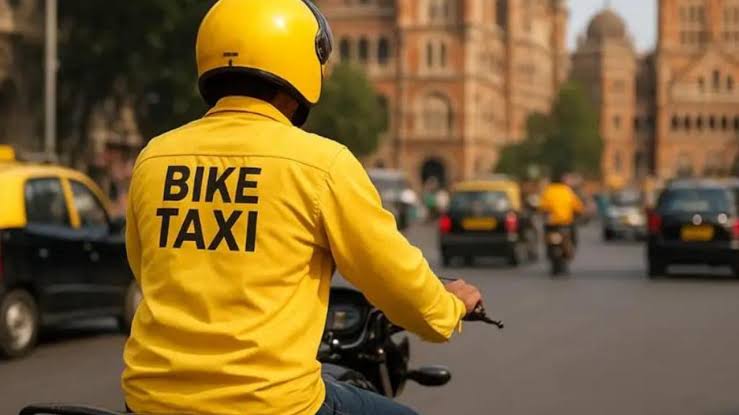
Uber has introduced its Connected Journeys feature in Delhi, allowing commuters to plan Metro travel alongside first- and last-mile transport options, including three-wheelers and two-wheelers, through a single app. Announced on November 23, the launch follows findings from Uber's One Less Car experiment in Delhi-NCR. The study found that 20 participants, representing 59 per cent of the group, continued avoiding personal vehicles during the week after the trial, even after incentives ended and access to their vehicles was restored. The number of participants relying exclusively on personal vehicles also declined by 83 per cent, according to ET Online.
What Connected Journeys Brings to the Uber App
The new feature allows commuters to compare different travel routes, estimated journey times and fares across multiple transport options. Users can plan their trips and book the required services directly through the Uber app. By bringing Metro services together with first- and last-mile options such as three-wheelers and two-wheelers, the feature aims to make multimodal commuting more convenient.
The Delhi-NCR Experiment Behind Uber's New Feature
Uber's One Less Car experiment in Delhi-NCR was designed to understand whether commuters would continue choosing alternative transport options after giving up their personal vehicles for a limited period. The initiative was conducted in partnership with The Quantum Hub (TQH) and Young Leaders for Active Citizenship (YLAC).
The four-week programme involved 34 regular users of personal vehicles, who agreed to leave their cars or two-wheelers aside and depend on a combination of ride-hailing services, Metro trains, autos, bikes and walking to complete their daily journeys.
Key Changes in Commuting Habits After the Trial
The follow-up survey found that 32 participants, or 94 per cent, used at least one alternative mode of transport during the week after the experiment. Another 23 participants, accounting for 68 per cent, said commuting without their personal vehicles had become easier.
On average, participants used three different modes of transport each week during the experiment, compared with 1.8 modes before the trial. Ride-hailing adoption increased from 15 participants in the baseline week to 28 in the follow-up period. Walking also recorded a significant rise, increasing from 11 to 27 participants. Auto usage grew from 15 to 22 participants, while Metro usage doubled from nine to 18.
Summit
First- and Last-Mile Connectivity Remains a Major Challenge
Despite the encouraging results, the study identified several shortcomings in the existing public and shared transport network. A total of 22 participants reported difficulties accessing first- and last-mile connectivity, while 30 experienced at least one instance of prolonged waiting, ride cancellation or booking refusal.
Participants also found certain journeys more difficult without personal vehicles, particularly late-night travel, school drop-offs and medical appointments. Concerns around personal safety, especially during evening and night-time travel, further influenced their transport decisions.
The experiment also indicated environmental benefits from changing commuting patterns. Modelled estimates suggested that emissions from participants' overall motorised travel declined by approximately 30 per cent, falling from around 4.8 kg to 3.3 kg of carbon dioxide per participant per day during the trial. Emissions associated with personal vehicles dropped from an estimated 4.0–4.4 kg to 0.8–1.1 kg per participant per day. Participants additionally covered 4,517 km using Metro and bus services throughout the experiment.
Aditya Kapoor, Director - Supply Operations, Uber India & South Asia, said: "One Less Car experiment is our attempt at reimagining urban mobility ground up. The experiment showed us that Delhi-NCR already has many of the building blocks for multimodal travel, but the connections between them matter. Connected Journeys is one way we can help bring those modes together, making it easier for riders to combine Metro with Uber for the first and last mile and complete their journeys more seamlessly."
The report recommends addressing gaps in first- and last-mile connectivity, improving transport reliability and strengthening passenger safety. It also highlights the importance of making better use of vehicles already operating on Delhi's roads. However, the findings point to early signs of lasting changes in commuting preferences rather than confirming that these behavioural shifts will continue over the longer term.
Explore the latest edition of Journal of Supply Chain Magazine and be part of the JOSC News Bulletin.
Discover all our upcoming events and secure your tickets today.
Journal of Supply Chain is a Hansi Bakis Media brand.
Subscribe to our Daily Newsletter
Subscribe For FreeBy continuing you agree to our Privacy Policy & Terms & Conditions