News
India Still Leans on China for 65% of Pharma Ingredients, NITI Aayog Warns
 Our Correspondent,
Our Correspondent,
Our Correspondent,
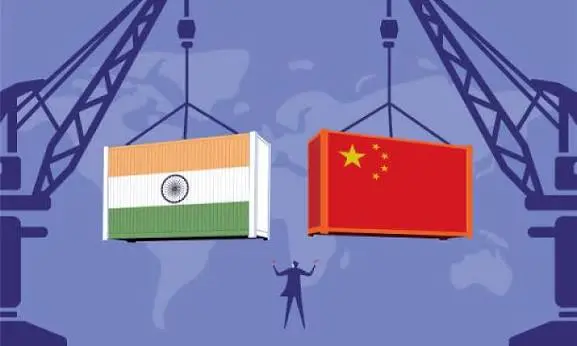
New Delhi: India's pharmaceutical sector remains deeply dependent on China for the bulk of its critical raw materials, with nearly 65 per cent of the country's requirements for active pharmaceutical ingredients (APIs), key starting materials (KSMs), and intermediates continuing to be sourced from its neighbour, according to NITI Aayog.
The government's premier policy think tank flagged this persistent vulnerability in the eighth edition of its Trade Watch Quarterly report, released on Tuesday. The report drew particular attention to supply chain fragility in fermentation-based products and pointed to rising environmental compliance costs that are pushing up manufacturing and research expenditures for Indian drugmakers.
Beyond raw material dependence, NITI Aayog identified a broader structural challenge: a weak innovation and commercialisation ecosystem that continues to create uncertainty for drug developers and dampen long-term investment appetite in the sector.
To address these gaps, the think tank recommended that India diversify aggressively into high-value pharmaceutical segments and deepen collaboration between industry and academic institutions to speed up the commercialisation of research and support startup growth.
Conference
Conference
It also called for greater regulatory transparency and the creation of well-developed life sciences clusters capable of facilitating technology transfer, nurturing research partnerships, and driving patent commercialisation.
Speaking at the report launch, NITI Aayog Vice Chairman Ashok Kumar Lahiri acknowledged India's global standing while underscoring the need for a strategic upgrade. "NITI Aayog has found out that while we are doing all right in terms of volume in the pharmaceutical sector, we need to move up the value chain," he said.
Lahiri noted that India already commands credibility in international markets, and argued that if domestic pharmaceutical companies can develop high-quality, competitively priced branded products, there is every reason to expect them to capture a significantly larger share of global demand.
India's stature as a supplier of affordable generic medicines remains formidable. The country meets approximately 50 per cent of Africa's generic drug requirements, 40 per cent of demand in the United States, and 25 per cent in the United Kingdom. Global demand for drugs and pharmaceuticals reached USD 1.3 trillion in 2025, comprising USD 1.02 trillion in finished pharmaceuticals and USD 261 billion in APIs, according to the report.
The report also offered a wider view of India's trade health. Total trade grew 5.4 per cent year-on-year in the fourth quarter of FY26, reaching USD 1.84 trillion. Merchandise exports slipped 2.8 per cent to USD 112.03 billion during the quarter, while merchandise imports climbed 12 per cent to USD 195 billion. On the services side, exports rose 9 per cent to USD 111 billion, and imports edged up 4.1 per cent to USD 50.7 billion. India maintained its position as the world's eighth-largest exporter of services in 2025.
Explore the latest edition of Journal of Supply Chain Magazine and be part of the JOSC News Bulletin.
Discover all our upcoming events and secure your tickets today.
Journal of Supply Chain is a Hansi Bakis Media brand.
Subscribe to our Daily Newsletter
Subscribe For FreeBy continuing you agree to our Privacy Policy & Terms & Conditions