News
Andhra Pradesh Approves Rs 2,550 Crore Cathode Material Plant in Chittoor to Boost India's Battery Supply Chain
 Our Correspondent,
Our Correspondent,
Our Correspondent,
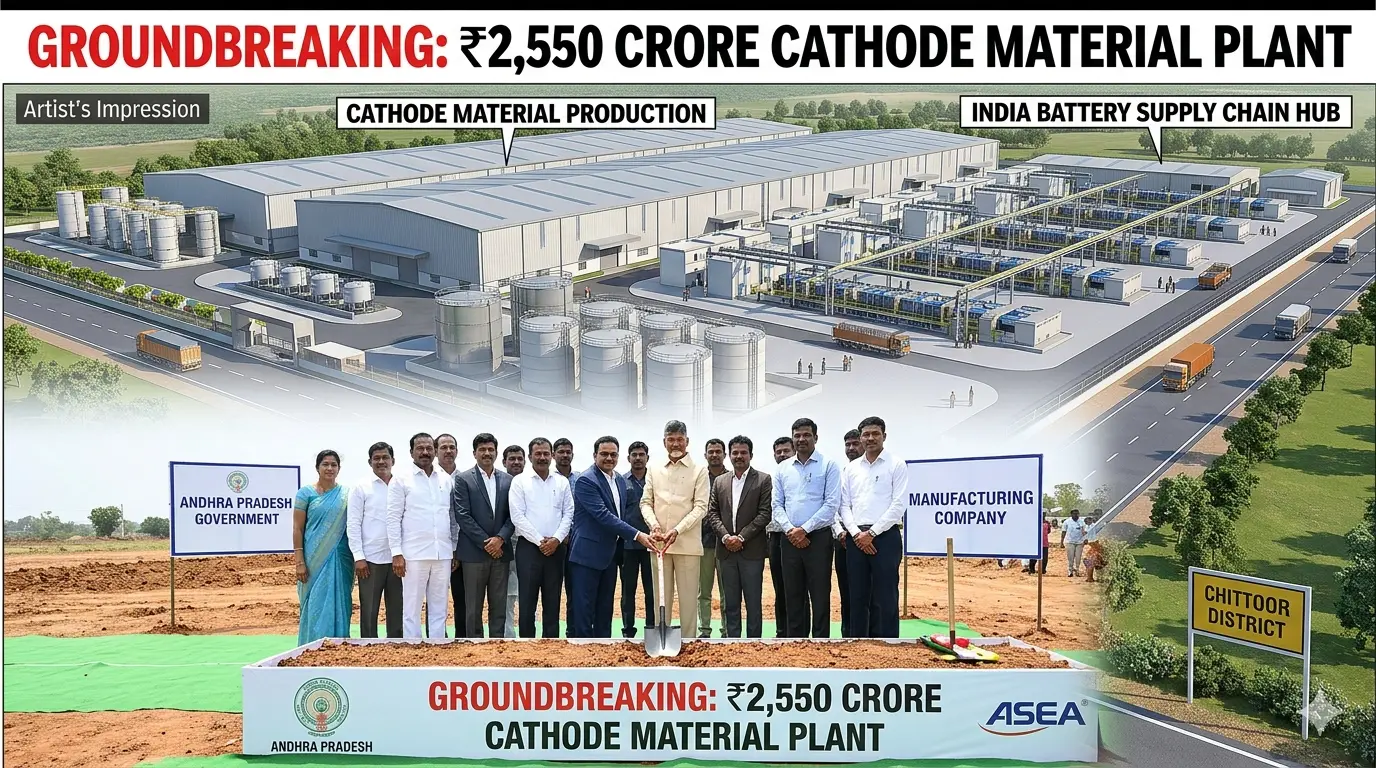
In a significant move to strengthen India's domestic battery manufacturing ecosystem, the Government of Andhra Pradesh has greenlit a Rs 2,550 crore investment by NPSPL Speciality Chemicals to establish a cathode material manufacturing facility in Chittoor district. The proposed plant will come up across 105 acres in Gudupalle Mandal and is poised to become a cornerstone of India's growing electronics and battery value chain.
Cathode materials play a pivotal role in battery technology — they are the primary determinants of a battery's performance, energy density, and overall lifespan. These materials are indispensable across a wide range of applications, from electric vehicles (EVs) and consumer electronics like smartphones and laptops, to battery energy storage systems (BESS) that support renewable energy infrastructure. Given their critical function, cathode materials also account for a substantial share of total battery cost and serve as a key point of technology differentiation among manufacturers.
By building domestic production capacity for cathode materials, India takes a meaningful step toward reducing its dependence on imports, particularly from supply chains that are currently concentrated in a handful of countries.
Conference
Conference
This strategic localization is expected to reinforce India's competitive position in high-growth sectors including electric mobility, renewable energy, and electronics manufacturing — areas where supply chain resilience is increasingly vital.
The project has been approved under the Andhra Pradesh Electronics Component Manufacturing Policy (4.0) 2025-30, a forward-looking framework designed to attract investment into the electronics components and sub-assembly space. Notably, the facility has been classified under the supply chain of sub-assemblies and bare components, underscoring its foundational importance to the broader electronics manufacturing ecosystem. The project is also among the first ten to be approved under this policy, positioning NPSPL Speciality Chemicals as an early mover that stands to benefit from a range of preferential incentives and advantages.
To support the capital-intensive nature of the project, the Andhra Pradesh state government has extended a comprehensive incentives package. This includes capital subsidies, a 100 percent exemption on electricity duty for a period of 10 years, power cost reimbursement, and a special classification as a high energy-intensive industry — all designed to make the facility economically viable and globally competitive.
Beyond its industrial significance, the project carries considerable socio-economic implications for the region. The facility is expected to generate approximately 400 direct employment opportunities, while also catalysing growth in adjacent industries such as battery manufacturing, EV supply chains, and electronics production. The investment marks a concrete step in India's broader ambition to develop robust capabilities in advanced battery materials and position itself as a key player in the global electronics manufacturing landscape.
Explore the latest edition of Journal of Supply Chain Magazine and be part of the JOSC News Bulletin.
Discover all our upcoming events and secure your tickets today.
Journal of Supply Chain is a Hansi Bakis Media brand.
Subscribe to our Daily Newsletter
Subscribe For FreeBy continuing you agree to our Privacy Policy & Terms & Conditions