Leaders Opinion
Geopolitics and the New Supply Chain Reality

Introduction | When Global Politics Reaches the Factory Floor
A manufacturing facility in India may source machinery from China, precision components from Japan, specialised technology from Europe and critical materials processed across several continents. Its finished products may ultimately serve customers in the United States, Europe and emerging markets. On paper, this represents the efficiency of a globally integrated supply chain. In practice, it also reveals an increasingly complex network of geopolitical dependencies.
A change in export-control regulations can delay machinery. Tensions along an international shipping corridor can disrupt vessel schedules. Trade restrictions can affect industrial inputs, while sanctions can complicate payments, insurance and commercial transactions. What begins as a geopolitical development can quickly become a procurement constraint, logistics bottleneck or manufacturing delay.
For India, these challenges are emerging at a consequential moment. The country is expanding manufacturing ambitions across electronics, semiconductors, renewable energy, batteries, pharmaceuticals and industrial equipment. Government incentives, infrastructure investment and diversification of international production networks offer opportunities to deepen India's role in global value chains.
Yet an important question remains: can India's manufacturing ambitions translate into sustained industrial competitiveness without addressing the geopolitical vulnerabilities embedded in its supply chains? The answer requires looking beyond installed capacity and conventional procurement efficiency. The challenge is to distinguish international interdependence that creates value from concentration that creates unmanaged risk.
1 | The Changing Architecture of Global Trade
For decades, global supply chains were optimised for cost, scale and specialisation. Production clustered where established supplier networks, infrastructure and labour economics offered competitive advantage. China became central to many industrial ecosystems; other regions specialised in advanced machinery, chips, chemicals and technology.
That architecture remains economically important, but national security and industrial policy now influence commercial flows more directly. Tariffs, investment screening, export controls and sanctions increasingly shape which technologies and materials can be traded, by whom and under what conditions. At the same time, maritime chokepoints expose otherwise distant supply chains to regional conflict.
The result is not the end of globalisation but a more conditional form of it. Supply-chain design must account for the probability and consequences of political disruption alongside traditional cost and quality considerations. For Indian industry, the key management question is no longer simply where an input is cheapest; it is whether the input will remain available, compliant and deliverable when conditions change.
2 | US–China Competition and the China-Plus-One Paradox
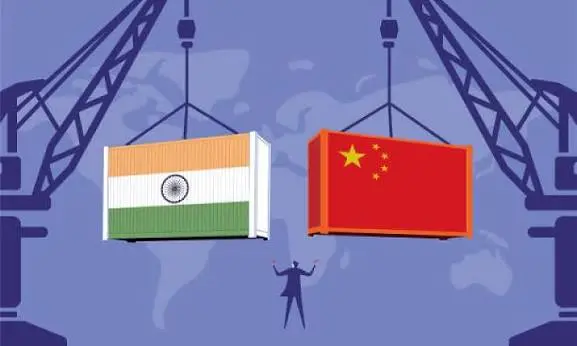
US–China strategic competition has accelerated reconsideration of manufacturing concentration. Trade restrictions, technology controls and industrial subsidies have encouraged businesses to diversify production. India is well placed to attract investment through its market size, engineering workforce and expanding manufacturing base.
But relocating assembly does not automatically relocate the underlying supply chain. An electronics plant in India may still depend on imported semiconductors, printed circuit boards, production equipment and specialised components. A battery-cell factory may rely on overseas electrode materials, formation systems, automation and spares. A second manufacturing geography can therefore add borders and logistical interfaces without removing the original upstream dependency.
This creates an important distinction between manufacturing localisation and supply-chain localisation. The first concerns where the final product is made; the second concerns where critical materials, equipment, processing capacity and intellectual property originate.
Diversification can also be superficial. Three suppliers in different countries may all depend on the same upstream processor. A meaningful resilience programme must map tier-two and tier-three suppliers, identify shared dependencies and assess substitute production capacity. The objective is not to eliminate trade with China, which would be commercially unrealistic, but to reduce unmanaged concentration while preserving competitive sourcing.
3 | Critical Minerals: The New Strategic Chokepoints
The energy transition and advanced electronics are creating intense demand for lithium, graphite, nickel, cobalt, rare earths and specialised chemicals. Strategic vulnerability often lies less in mineral deposits than in refining, processing and component manufacturing. The International Energy Agency reported that the three largest refining countries accounted for an average 86% of refined production across key energy minerals in 2024.
For Indian battery and electric-vehicle manufacturing, exposure spans mineral extraction, battery-grade chemicals, cathode and anode materials, separators, cell equipment and industrial components. Export controls may apply to a specific material, processing technology or end use rather than an entire product category. Consequently, procurement teams need product-level classification and licensing visibility, not just country-level import data.
The operational significance can be disproportionate to purchase value. A low-cost specialised part can stop commissioning of an expensive manufacturing line. Delayed licences can affect shipment readiness, project milestones and working capital long before the plant produces its first unit.
India's response should combine overseas resource partnerships, domestic processing, recycling, alternative chemistries and strategic buffers for genuinely critical inputs. Resource security should be understood as access to usable industrial capability, not merely ownership of mineral reserves.
4 | Maritime Security and the True Cost of Disruption
Maritime transport is the backbone of international merchandise trade. Yet corridors around the Red Sea, Suez Canal, Bab el-Mandeb and Strait of Hormuz are vulnerable to conflict and security concerns. The Red Sea disruption illustrated how regional instability can reshape global vessel deployment: UNCTAD reported a 5.9% rise in shipping ton-miles in 2024 as longer routes absorbed capacity.
The impact on India varies by trade lane. A direct China-to-western-India shipment does not normally transit Suez, but can still face indirect consequences through equipment imbalance, vessel redeployment, transshipment congestion and revised shipping schedules. Exporters to Europe may face more direct route extensions and transit uncertainty.
The consequences are particularly severe for project cargo and heavy industrial equipment. Breakbulk shipments may require specialist vessels, marine warranty approvals, lifting plans, port captains and dedicated inland transportation. A delayed vessel can disrupt customs planning, berth arrangements, trailer mobilisation, warehouse availability and site installation sequences.
The true exposure is therefore not simply a freight surcharge. It can include detention, storage, equipment standby, financing costs and deferred commissioning. Contract management becomes essential: charter-party terms, laytime, notices of readiness, berth availability, cargo readiness and liability allocation must be documented precisely. Geopolitical disruption does not automatically establish contractual entitlement to additional charges.
Conference

Summit

5 | Energy, Sanctions and Transaction Executability
India's dependence on imported energy makes West Asian instability a direct industrial concern. Disruption to oil and gas routes can influence bunker fuel, transport expenditure, petrochemical feedstocks and energy intensive manufacturing. Volatility is often more difficult to manage than a stable increase in cost, particularly for fixed-price contracts and long-duration projects.
The Russia–Ukraine conflict demonstrates another dimension of risk: a commercially agreed shipment may still face difficulty because of banking restrictions, vessel ownership, insurance exclusions or sanctions screening. The relevant question is not only whether goods exist and a supplier can ship them, but whether the transaction can be executed legally and reliably.
Indian companies need coordinated checks across counterparties, beneficial ownership, product classifications, vessels, banks, insurers and payment channels. Exposure should be assessed against applicable jurisdictions and specific transactions rather than assuming every trade relationship with a sanctioned geography is prohibited.
6 | Sectoral Exposure: One Country, Different Vulnerabilities
Geopolitical risk is not uniform across industries. Solar photovoltaics face dependencies in polysilicon, ingots, wafers, cells, production equipment and specialised materials. India may expand module capacity faster than its upstream ecosystem. The IEA's India Renewable Energy Market Report 2026 highlighted continuing dependence on imported cells and equipment, demonstrating why installed capacity alone is an incomplete measure of industrial resilience.
Battery manufacturing faces critical-mineral processing and machinery dependencies. Semiconductors depend on internationally distributed design tools, lithography, fabrication equipment, chemicals, specialty gases and packaging technologies. Pharmaceuticals remain exposed to imported active pharmaceutical ingredients and intermediates, even as India is highly competitive in finished formulations.
Automotive manufacturers face potential bottlenecks in electronics, permanent magnets and precision components. Infrastructure projects depend on large equipment, marine logistics and site readiness. Each sector therefore needs a different resilience strategy. A generic instruction to diversify suppliers will not address the underlying technological, logistical and regulatory constraints.
7 | From Logistics Cost to Enterprise Financial Risk
Traditional sourcing evaluations emphasise purchase price, freight, insurance, duties, handling and inland transportation. Geopolitical disruption requires a wider perspective: expected delay cost, interruption risk, inventory carrying cost and contractual exposure.
Consider an illustrative project importing ₹500 crore of machinery. An 8% increase in landed logistics expenditure would add ₹40 crore. Yet the greater loss could arise if a critical shipment delays production commissioning, triggers idle contractor costs or defers revenue. These figures are hypothetical, but the management principle is important: cost exposure can cascade across functions.
Risk-adjusted total cost can be expressed conceptually as landed cost plus expected delay and interruption losses plus resilience investment, with care taken not to double-count costs already embedded in quotations or insurance. This makes a higher-priced but more dependable supplier potentially more economical at enterprise level.
The same logic applies to inventory. Lean replenishment is appropriate where supply is substitutable and reliable. Critical imported parts with long replenishment cycles may warrant targeted buffers. Resilience should be selective and quantified, not an excuse for indiscriminate stock accumulation.
Operational Playbook | Turning Intelligence into Decisions
A practical geopolitical-risk programme should translate intelligence into predefined actions. For each critical material or shipment, teams can document the primary source, upstream processing geography, alternative supply, export-licensing requirements, shipping corridor, inventory coverage and recovery lead time. The result is a decision register, not merely a risk heat map.
When a disruption occurs, procurement should establish whether an alternative supplier is technically qualified; trade compliance should verify whether licensing or sanctions restrictions apply; logistics should assess alternate ports, vessel services and inland capacity; finance should quantify cash-flow and commissioning exposure. Clear decision rights are essential because uncertainty is often amplified by fragmented ownership.
For project cargo, a weekly integrated readiness review should align cargo completion, export documents, vessel nominations, loading and discharge arrangements, customs requirements, trailer availability, warehousing capacity and construction milestones. This reduces the risk of optimising one leg while creating congestion at the next.
Companies should also conduct controlled stress tests: what happens if a critical supplier stops shipments for thirty days, if a vessel is delayed by two weeks, or if an export licence takes an additional month? Each scenario should identify the operational trigger, accountable executive, mitigation cost and acceptable recovery period.
Resilience becomes measurable when leaders can answer three questions: where are we exposed, how long can operations continue, and what action will restore supply?
8 | Building India’s Strategic Response
India's policy direction includes manufacturing incentives, infrastructure development, semiconductor investment and critical-mineral initiatives. The National Critical Mineral Mission, approved in 2025, provides a framework for exploration, overseas sourcing, processing and related capabilities. International trade partnerships can support diversification, although market-access agreements alone cannot eliminate upstream concentration.
Three policy priorities are especially important. First, incentives should encourage deeper value addition and supplier ecosystems rather than only final assembly. Second, ports, industrial corridors, warehouses and inland transport must function as integrated systems serving manufacturing clusters. Third, critical industries require coordinated technology partnerships, skills development, regulatory clarity and materials security.
At the company level, resilience must be operationalised rather than described abstractly. Leadership teams should maintain multi-tier supplier maps, monitor export-control exposure, run disruption scenarios, define alternative suppliers and quantify time-to-recover for critical materials.
Integrated logistics control towers can connect supplier readiness, vessel schedules, customs documentation, port operations, warehousing and site requirements. Their purpose is not simply tracking containers but enabling intervention before a missed shipment becomes a production failure. Performance dashboards should include concentration exposure, recovery time, shipment reliability, compliance readiness and risk adjusted cost alongside savings and inventory turns.
Conclusion | From Manufacturing Ambition to Dependable Industrial Capability
India's emergence as a manufacturing economy is occurring while the foundations of international trade are being reconsidered. The advantages of global specialisation remain substantial, but geopolitical competition means access to materials, technology, transportation and finance can no longer be treated as unconditional.
For India, this is both a challenge and an opportunity. The challenge is to reduce excessive dependency without undermining the economics that make domestic manufacturing competitive. The opportunity is to offer international customers something increasingly valuable: dependable production and continuity of supply.
Achieving this requires a shift in perspective. Procurement must look beyond purchase prices. Logistics must look beyond freight rates. Manufacturing must look beyond installed capacity. Policy must look beyond headline investment commitments towards the depth and reliability of the supporting industrial ecosystem.
Digital tools and predictive analytics can improve visibility, but resilience ultimately depends on commercial judgement, operational expertise, regulatory understanding and coordination across suppliers, transport providers, manufacturers and government.
The goal is neither complete self-sufficiency nor unlimited redundancy. It is to build supply chains that are economically efficient in normal conditions and capable of sustaining essential operations when disruption occurs.
Over the coming decade, countries will compete not only on manufacturing cost and scale but also on the dependability of their industrial ecosystems. India can become a trusted global manufacturing partner if it translates supply-chain diversification into lasting domestic capability.
The next phase of India's manufacturing growth will not be defined solely by how many factories it builds, but by how reliably those factories operate when global supply chains are disrupted. That is where resilience becomes a national competitive advantage.
Explore the latest edition of Journal of Supply Chain Magazine and be part of the JOSC News Bulletin.
Discover all our upcoming events and secure your tickets today.
Journal of Supply Chain is a Hansi Bakis Media brand.
Leave Comment
Join the community of 150,000+ industry professionals
Subscribe to our Daily Newsletter
Subscribe For FreeBy continuing you agree to our Privacy Policy & Terms & Conditions
Latest




Feature Articles


Related