News
Tata Power Plans ₹6,500 Crore Investment in 10 GW Solar Ingot and Wafer Manufacturing Plant
 Our Correspondent,
Our Correspondent,
Our Correspondent,
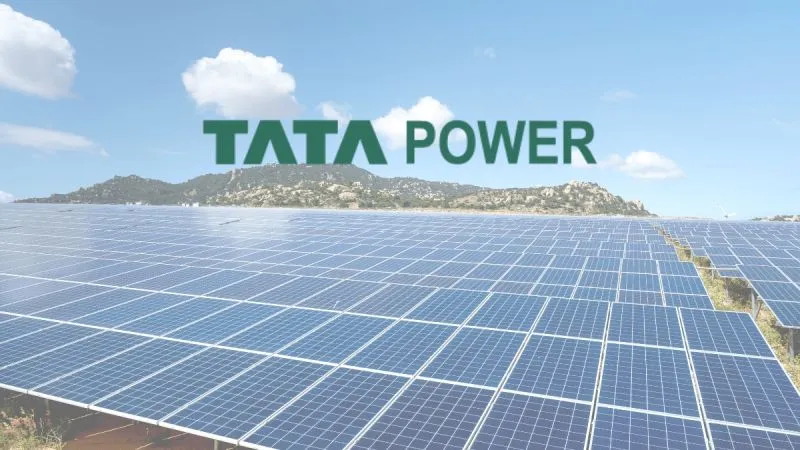
Tata Power Renewable Energy Limited has unveiled an ambitious plan to invest up to ₹6,500 crore in building a photovoltaic ingot and wafer manufacturing facility with a total installed capacity of 10 GW. The proposal has received formal approval from the company's board and represents a significant step in its strategy to expand upstream into the solar manufacturing value chain.
The move signals Tata Power's entry into one of the most critical segments of the solar supply chain — the production of ingots and wafers, which serve as essential raw inputs for the manufacture of solar cells and modules. This vertical expansion aligns closely with India's broader national push to deepen domestic solar manufacturing capabilities under the Approved List of Models and Manufacturers (ALMM) framework. The ALMM framework is expected to be extended to cover wafers by 2028, subject to sufficient capacity development and localisation conditions being met by industry players.
Phased Development and Capacity Rollout
The planned facility will be developed in two distinct phases, each with a capacity of 5 GW, ultimately scaling up to a combined total of 10 GW. This phased approach allows the company to manage capital deployment prudently while progressively building out production infrastructure. The output from the facility is expected to serve both captive internal demand — supporting Tata Power's own solar project pipeline — as well as external sales to the broader domestic market.
At the heart of this initiative is a drive toward backward integration. By producing ingots and wafers locally, Tata Power aims to reduce its dependence on imported solar components, particularly those sourced from China, which continues to hold a dominant position in global solar supply chains.
Conference
Conference
Establishing homegrown production capabilities is expected to improve supply chain resilience, reduce cost exposure to global price fluctuations and currency risks, and ensure more reliable and consistent access to key upstream inputs over the long term.
Competitive Landscape and Industry Context
This strategic investment places Tata Power firmly alongside other large Indian conglomerates that are racing to build vertically integrated solar manufacturing ecosystems. Competitors such as the Adani Group, Reliance Industries, and ReNew Energy Global are also actively expanding their footprints in integrated solar manufacturing, spanning everything from polysilicon and wafers to cells, modules, and beyond.
The competitive dynamics within India's solar manufacturing sector are intensifying as policy incentives, domestic demand growth, and export opportunities converge. India's policy framework currently mandates a minimum combined wafer manufacturing capacity along with corresponding ingot production as part of its localisation requirements. However, meeting these thresholds within the stipulated timelines continues to pose execution challenges for many industry participants, given the capital intensity involved and the technical complexity of scaling upstream manufacturing.
Strategic Positioning Across the Value Chain
With this investment, Tata Power is deliberately positioning itself to capture value at multiple points along the solar manufacturing chain — from upstream raw material processing through to downstream power generation. As India's installed renewable energy base continues to grow rapidly and domestic policy increasingly favors locally manufactured components, having a fully integrated supply chain becomes a meaningful competitive and operational advantage.
The scale of the planned investment also underscores the confidence that Tata Power and its parent group have in the long-term trajectory of renewable energy demand in India. With government targets calling for massive additions in solar capacity over the coming decade, securing a stable and cost-competitive upstream supply will be critical for developers looking to protect margins and maintain project execution timelines.
Explore the latest edition of Journal of Supply Chain Magazine and be part of the JOSC News Bulletin.
Discover all our upcoming events and secure your tickets today.
Journal of Supply Chain is a Hansi Bakis Media brand.
Subscribe to our Daily Newsletter
Subscribe For FreeBy continuing you agree to our Privacy Policy & Terms & Conditions