News
Qualcomm–Tata Electronics Tie-Up to Manufacture Automotive Modules in India Boosts Make in India Push
 Anamika Mishra,
Sub Editor
Anamika Mishra,
Sub Editor
Anamika Mishra,
Sub Editor
Anamika Mishra,
Sub Editor
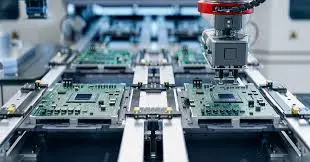
Qualcomm Technologies and Tata Electronics have entered into a strategic partnership to manufacture Qualcomm Automotive Modules in India. These automotive modules are system-in-package solutions engineered to support next-generation vehicles with advanced digital, connected and intelligent capabilities.
With Qualcomm partnering Tata Electronics to produce these modules in Assam, India is taking a meaningful step into the global automotive semiconductor supply chain, strengthening domestic capabilities while supporting the government’s “Make in India” initiative. The collaboration stands out for several key reasons:
Key Highlights
Manufacturing Location: Production will be undertaken at Tata Electronics’ upcoming outsourced semiconductor assembly and test (OSAT) facility in Jagiroad, Assam.
Scope of Modules: The modules will enable advanced automotive applications such as digital cockpits, infotainment platforms, connectivity solutions and intelligent vehicle systems.
Global Integration: Tata Electronics will become part of Qualcomm’s global network of module manufacturing partners, reinforcing India’s position in the worldwide semiconductor ecosystem.
Economic Impact: The partnership aligns with the “Make in India” programme, strengthening domestic semiconductor capacity and improving overall supply chain resilience.
Investment Scale: Tata’s Assam facility represents a $3 billion investment and is being built for high-volume manufacturing to cater to both Indian and global automakers.
Why It Matters
For India: The collaboration marks a significant milestone in developing a local semiconductor ecosystem, reducing import dependence and positioning the country as a hub for automotive electronics.
For Automakers: Local manufacturing offers quicker supply timelines, lower costs and stronger protection against global supply disruptions.
For Qualcomm: Expanding its manufacturing partnerships helps diversify the supply chain while deepening its footprint in fast-growing markets.
Qualcomm Automotive Modules vs Traditional Automotive Electronics
Below is a comparison highlighting how Qualcomm Automotive Modules compare with traditional automotive electronics such as ECUs and standalone chips:
Conference
Conference
|
Feature / Aspect |
Qualcomm Automotive Modules |
Traditional Automotive Electronics (ECUs / Standalone Chips) |
|
Integration |
Highly integrated system-in-package combining compute, connectivity and software |
Separate ECUs and chips for individual functions such as engine, infotainment and safety |
|
Scalability |
Scalable across multiple vehicle models and segments |
Limited scalability, with ECUs often customised for specific functions |
|
Connectivity |
Native support for 5G, Wi-Fi, Bluetooth and V2X |
Requires additional modules or separate connectivity chips |
|
Software Updates |
Enables over-the-air (OTA) updates for features and security |
Updates often need physical servicing or manual firmware updates |
|
Development Speed |
Faster time-to-market through modular, turnkey solutions |
Longer development cycles due to fragmented integration |
|
Cost Efficiency |
Lowers system costs by consolidating multiple functions |
Higher costs driven by multiple ECUs and duplicated hardware |
|
User Experience |
Supports advanced digital cockpits, immersive infotainment and seamless connectivity |
Typically limited to basic infotainment and control features |
|
Global Supply Chain Role |
Part of Qualcomm’s global manufacturing network, including India |
Generally localised or fragmented supply chains |
Key Takeaway
Qualcomm Automotive Modules signal a shift toward software-defined vehicles by consolidating multiple functions into a single, scalable platform. While traditional ECUs and standalone chips remain in use, they are comparatively less efficient, slower to update and more expensive to integrate in today’s increasingly connected vehicles.
Explore the latest edition of Journal of Supply Chain Magazine and be part of the JOSC News Bulletin.
Discover all our upcoming events and secure your tickets today.
Journal of Supply Chain is a Hansi Bakis Media brand.
Subscribe to our Daily Newsletter
Subscribe For FreeBy continuing you agree to our Privacy Policy & Terms & Conditions