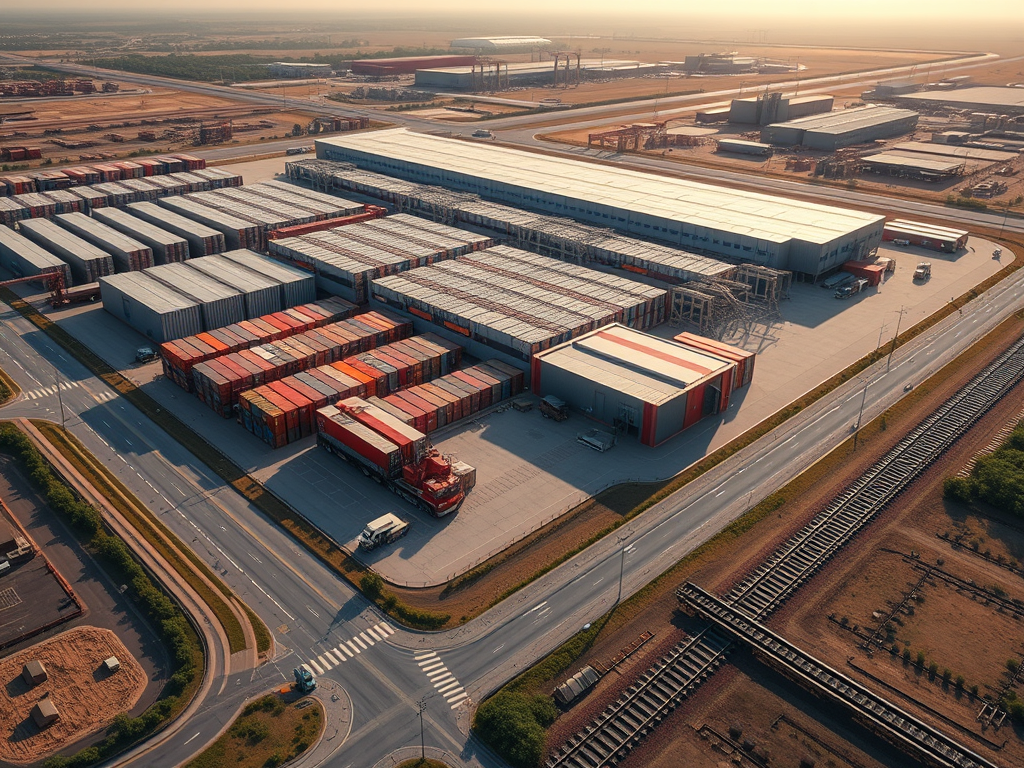
Washington — India is rapidly emerging as one of the most significant players in a worldwide restructuring of supply chains, as governments and corporations alike accelerate their push to reduce overdependence on China. That was the central message delivered by Nisha Biswal, Partner at The Asia Group and former US Assistant Secretary of State for South and Central Asian Affairs, during a high-profile panel discussion at the New India Conference held in Washington.
Biswal, who brings both diplomatic and private-sector perspective to US-India relations, pointed to the remarkable trajectory of bilateral trade as evidence of deepening economic integration. "There has been enormous progress," she noted, highlighting that trade between the United States and India has surged from roughly $50 billion to approximately $212 billion — a milestone achieved even in the absence of a formal trade agreement between the two nations.
The momentum, she argued, is being driven by a fundamental shift in how global businesses think about their sourcing, manufacturing, and distribution strategies. "Companies are now asking what does a de-risking from China look like," Biswal said, underscoring that India's combination of a vast domestic market and a deep, skilled talent pool is positioning the country as an increasingly attractive alternative destination for investment and production.
"It is India's moment in the economic space," she said, pointing to the country's scale, demographic strength, and demonstrated resilience through multiple global disruptions.
Beyond the headline trade figures, Biswal described a broader evolution in the US-India relationship itself. Historically anchored in strategic and geopolitical considerations, the partnership is now expanding with much greater emphasis on commercial engagement. Washington's policy community, she observed, is paying growing attention to economic partnerships and supply chain collaboration as tools of foreign policy and national security.
On the question of a formal trade agreement, Biswal offered a measured but optimistic outlook. While she said a bilateral trade deal is likely in the longer term, she cautioned against expecting an immediate comprehensive agreement. Instead, she suggested the arrangement would more probably take shape as a phased framework — sector-by-sector or issue-by-issue — rather than a sweeping deal negotiated and signed in one go.
She identified three areas as especially ripe for deeper US-India cooperation: energy, advanced technology, and critical minerals. Each of these sectors sits at the intersection of economic development and strategic competition, making them natural focal points as both countries seek to build more secure and diversified supply networks.
Biswal also placed India's rise in the context of a turbulent global environment.
Geopolitical tensions, pandemic-era supply disruptions, and shifting trade policies have collectively forced a reassessment of global value chains. India, she argued, is navigating these headwinds effectively while sustaining its growth trajectory — a combination that makes it stand out among emerging markets.
Other panelists at the New India Conference echoed the optimism but were equally candid about the challenges India must address to fully capitalize on this moment.
Hemang Jani, a Public Policy and Governance expert at the World Bank, zeroed in on structural issues within India's labor market. He flagged skills gaps and persistently low workforce participation rates as what he called "binding constraints" on India's growth potential. Without meaningful investment in workforce development and inclusion, he suggested, India risks leaving significant economic value on the table even as global demand for its capacity grows.
Ashok Malik, also a Partner at The Asia Group, offered insight into the evolution of India's trade policy posture. He noted that earlier trade agreements had exposed certain economic vulnerabilities, prompting a deliberate recalibration. "That did cause a recalibration of approach to trade," Malik said, suggesting that India is now approaching international trade negotiations with greater strategic caution and a sharper focus on protecting domestic industries while pursuing external opportunities.
Richard Rossow, Senior Adviser at the Center for Strategic and International Studies (CSIS), brought the conversation to the subnational level, arguing that India's economic future will be shaped as much by state governments as by New Delhi. "States run the country," he said pointedly, drawing attention to the role that infrastructure quality, regulatory environments, and ease of doing business at the state level play in determining where both domestic and foreign investors ultimately choose to deploy capital.
Together, the panelists painted a picture of an India at a genuine inflection point — one with real structural advantages and genuine international momentum, but also with well-defined domestic reform priorities that must be addressed to translate opportunity into sustained, broad-based growth.
The New India Conference in Washington brought together a diverse group of policymakers, economists, and strategic analysts to examine India's economic trajectory and the evolving architecture of the US-India partnership. The gathering reflected growing interest in Washington in India as not just a strategic ally but a core economic partner in the reconfiguration of global trade and production networks.
As supply chains continue to shift and countries search for more resilient and diversified partnerships, India's large domestic market, youthful workforce, and improving infrastructure make it a compelling destination for businesses rethinking their global footprint. Whether India can fully seize this window, experts agreed, will depend on the speed and depth of economic reforms and the quality of trade engagement with partners like the United States in the years ahead.
Explore the latest edition of Journal of Supply Chain Magazine and be part of the JOSC News Bulletin.
Discover all our upcoming events and secure your tickets today.
Journal of Supply Chain is a Hansi Bakis Media brand.
Subscribe to our Daily Newsletter
Subscribe For FreeBy continuing you agree to our Privacy Policy & Terms & Conditions