News

India's PM GatiShakti Network Advances 6 Major Infrastructure Projects Across Rail, Metro, and Highway Sectors

March 23, 2026 7 min read
author Our Correspondent,
The 110th convening of the Network Planning Group (NPG) took place at the Department for Promotion of Industry and Internal Trade (DPIIT), where stakeholders gathered to assess critical infrastructure initiatives aimed at transforming India's connectivity landscape. This strategic meeting focused on strengthening multimodal connectivity and improving logistics efficiency in accordance with the PM GatiShakti National Master Plan (PMGS NMP), a flagship program designed to integrate infrastructure development across the nation.

During this comprehensive evaluation session, the NPG reviewed six significant infrastructure projects comprising two rail corridor enhancements, two metro expansions, and two road and highway developments. Each project underwent rigorous scrutiny to ensure alignment with PM GatiShakti's core principles: integrated multimodal infrastructure, enhanced last-mile connectivity to vital economic and social hubs, and a coordinated 'Whole of Government' implementation approach. These ambitious initiatives are projected to dramatically improve logistics efficiency, cut down travel times substantially, and generate considerable socio-economic advantages for communities within the project catchment areas.

Rail Infrastructure Development in Tamil Nadu and Karnataka

The Ministry of Railways has put forward a proposal for doubling the existing single broad-gauge railway line between Chengalpattu (CGL) and Arakkonam (AJJ) in Tamil Nadu. This extensive project covers approximately 67.794 kilometres and traverses three districts: Chengalpattu, Kanchipuram, and Ranipet, all falling under the administrative oversight of the Chennai Division of Southern Railway. The railway alignment encompasses twelve stations along its route, including the major junction stations at Chengalpattu and Arakkonam, five crossing stations that facilitate train operations, and five halt stations serving local communities.

The proposed doubling initiative aims to substantially enhance line capacity, improve operational efficiency across the network, and enable smoother movement of both passenger and freight traffic along this strategically important corridor. Transportation experts anticipate that the project will reduce congestion significantly, minimize operational delays, and strengthen regional connectivity, thereby supporting economic growth and delivering improved rail services across the entire region. This enhancement will prove particularly beneficial for industrial areas and residential zones that depend on reliable rail connectivity for daily operations and commuting needs.

In Karnataka, the Ministry of Railways has proposed the quadrupling of railway infrastructure between Whitefield and Bangarpet stations, covering approximately 47 kilometres. This ambitious quadrupling project for the Whitefield-Bangarpet section is designed to significantly enhance logistics efficiency along the crucial Bengaluru-Chennai corridor, one of India's most economically vital railway routes. Under this strategic plan, the existing double line will be prioritized exclusively for passenger services, while the additional two lines will be dedicated primarily to handling freight traffic, thereby reducing detention times, improving punctuality metrics, and augmenting overall line capacity.

This strategically important corridor provides vital inter-state connectivity between Karnataka and Tamil Nadu while supporting substantial freight movement across diverse sectors. The project is expected to lower transportation costs considerably and enhance the global competitiveness of Indian industry by facilitating efficient movement of containerized EXIM cargo, steel products, cement, petroleum products, fertilizers, and agricultural produce. With robust support from key freight terminals and railway sidings, this initiative will strengthen supply chains, optimize logistics operations, and contribute meaningfully to sustained industrial and regional economic growth.

Metro Expansion Projects in Maharashtra

The Ministry of Housing and Urban Affairs has proposed the construction of Mumbai Metro Line-11, running from Anik Depot to the iconic Gateway of India in Maharashtra, spanning a total length of 17.41 kilometres. This fully underground corridor will feature multiple interchange stations connecting both operational and upcoming metro lines, further strengthening the integrated metro network of approximately 337 kilometres across the Mumbai Metropolitan Region. The alignment will provide high-capacity connectivity to key residential, commercial, institutional, and heritage areas of South and Central Mumbai, including densely populated and commercially significant areas such as Wadala, Byculla, Nagpada, Crawford Market, CSMT (Chhatrapati Shivaji Maharaj Terminus), Horniman Circle, and the Gateway of India.

This transformative project is expected to deliver significant benefits by easing road congestion substantially and enhancing overall urban mobility throughout the city.


It will result in measurable savings in travel time, vehicle operating costs, and fuel consumption for daily commuters, while also contributing to reduced road accidents and lower air pollution levels across the metropolitan region. The implementation of Metro Line-11 will substantially augment Mumbai's public transport infrastructure and support the development of a more efficient, sustainable, and environmentally responsible urban transport system that can accommodate the city's growing population.

In Pune, the Ministry of Housing and Urban Affairs has proposed the development of Pune Metro Line-4 extensions, specifically Line-4B and Line-4C, in Maharashtra, covering a combined total length of 16.67 kilometres. These proposed corridors are aimed at strengthening connectivity in Pune's eastern and south-eastern regions by linking key residential, industrial, and emerging township areas along the Pune-Solapur Highway and Saswad Road. The project will serve important localities including Hadapsar, Manjari, Lonikalbhor, Phursungi, Bhekrai Nagar, and Wadki, areas experiencing rapid urbanization and industrial development.

Line-4B (Hadapsar-Lonikalbhor) will run along the Pune-Solapur Highway, providing direct connectivity to industrial zones and residential townships, while Line-4C (Hadapsar Bus Depot-Saswad Road) will extend along Saswad Road with seamless integration at Hadapsar station. The project is expected to significantly enhance Pune's public transport infrastructure by improving connectivity with major bus depots and the Pune-Daund railway line, creating an integrated multi-modal transport ecosystem. These extensions will facilitate smoother urban mobility, reduce road congestion and travel time substantially, and contribute to lower vehicular emissions. The initiative will support sustainable urban growth and provide efficient, reliable public transport options for the expanding metropolitan region, benefiting hundreds of thousands of daily commuters.

Highway and Road Development Initiatives

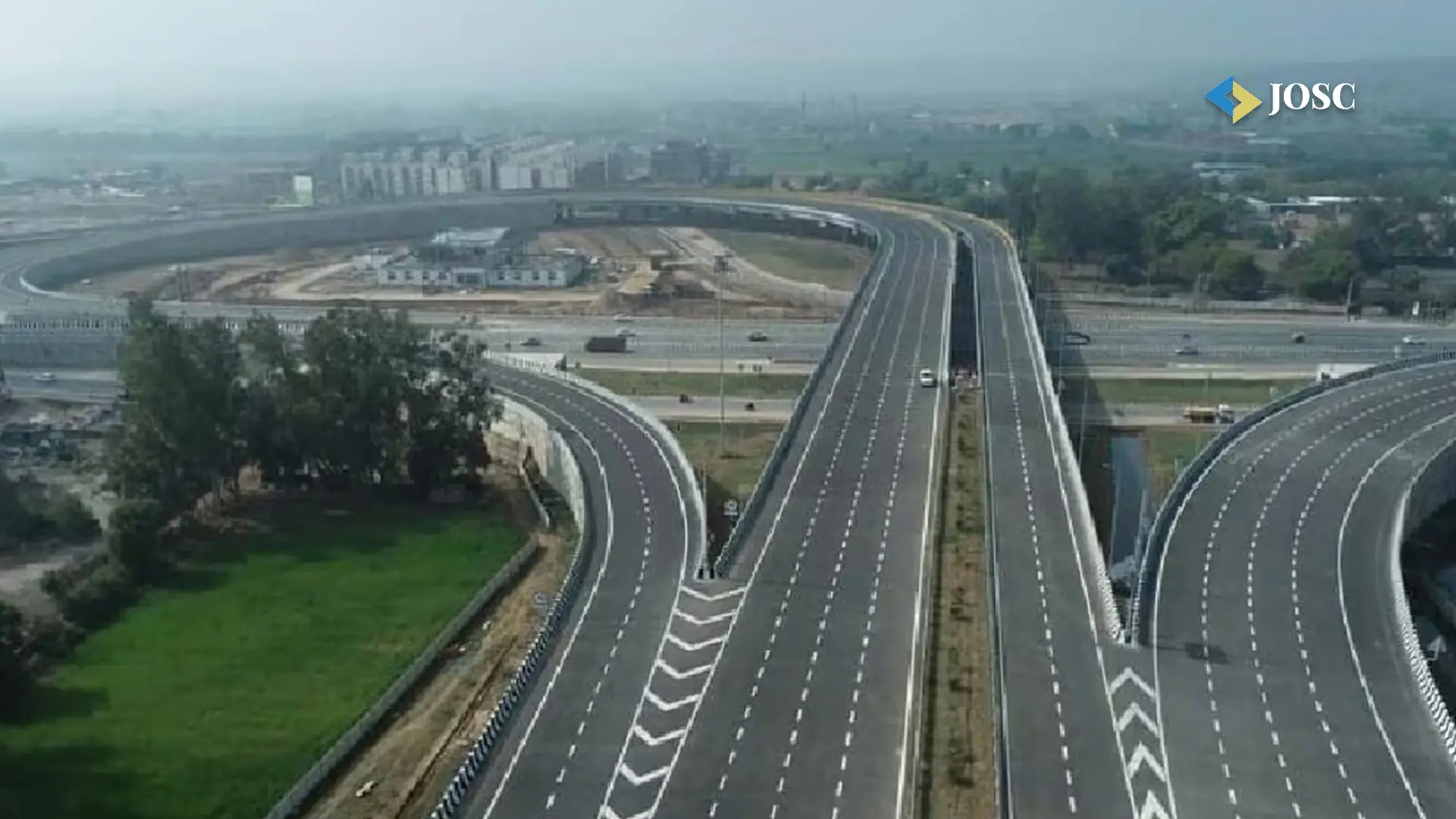
The Ministry of Road, Transport and Highways has proposed the four-laning of the 80.450 kilometre Badnawar-Petlawad-Thandla-Timarwani corridor in Madhya Pradesh to enhance regional connectivity and strengthen economic integration across this developing region. The upgraded highway will improve linkages between important towns such as Badnawar, Petlawad, and Thandla and major cities including Ujjain, Dewas, Bhopal, Indore, Ratlam, Dahod, and Godhra, facilitating better access to essential services, markets, and employment opportunities for residents across multiple districts.

This transformative project will also provide seamless connectivity to the PM MITRA (Pradhan Mantri Mega Integrated Textile Region and Apparel) Park near Dotriya village in Dhar district, along with improved access to the Delhi-Mumbai Expressway and the Pithampur logistics hub, a major industrial center. The enhanced corridor is expected to boost industrial growth substantially, improve freight efficiency across sectors, and contribute significantly to the socio-economic development of the region by reducing transportation costs and improving market access for local businesses.

In a strategically critical development for the Union Territory of Ladakh, the Ministry of Road Transport and Highways has proposed the construction of the 2.65 kilometre Fotu La Tunnel with approaches on the Srinagar-Leh corridor (NH-1). The tunnel will bypass one of the highest and most weather-sensitive stretches of the highway, preventing frequent winter closures caused by heavy snowfall, avalanches, and hazardous black ice conditions that have historically isolated the region for months.

The project is expected to reduce travel distance by approximately 8.5 kilometres and cut travel time by around 23 minutes, significantly enhancing safety and operational efficiency for all road users. Strategically important for national security, the tunnel will facilitate uninterrupted movement of defence convoys and essential supplies, strengthening logistics along this critical route that serves India's border regions. It will also promote socio-economic development by ensuring stable connectivity between Leh, Kargil, and Srinagar, benefiting key locations such as Kargil, Khaltsi, Budhkharbu, Lamayuru, and Leh throughout the year.

Year-round access will improve connectivity to Leh Airport substantially, support remote communities that have traditionally faced isolation during winter months, and drive sustained economic growth in Ladakh by maintaining continuous linkage with the rest of the country. This infrastructure development will open new opportunities for tourism, trade, and economic development while ensuring that essential services and supplies reach the region reliably regardless of seasonal weather conditions.

These six infrastructure projects evaluated by the Network Planning Group represent a comprehensive approach to modernizing India's transportation infrastructure across multiple modes. By focusing on integrated planning, enhanced connectivity, and sustainable development, the PM GatiShakti National Master Plan continues to drive transformative changes that will benefit millions of citizens while strengthening India's economic competitiveness on the global stage.


Explore the latest edition of Journal of Supply Chain Magazine and be part of the JOSC News Bulletin.

Discover all our upcoming events and secure your tickets today.


Journal of Supply Chain is a Hansi Bakis Media brand.

Leave Comment

logo

Subscribe to Our Newsletter

The week’s best stories, handpicked by JOSC editors in your inbox every week.

Stay informed with exclusive content