News
India Urges Immediate Halt to Black Sea Shipping Attacks, Warns of Global Supply Chain Risks
 Vatsal Patel,
Founder
Vatsal Patel,
Founder
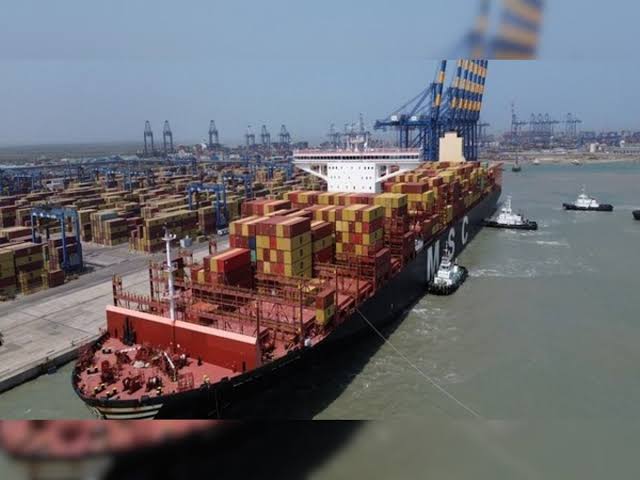
India has urged an immediate halt to attacks on commercial shipping and seafarers in the Black Sea, calling for the early restoration of safe navigation through international waterways amid the ongoing Russia-Ukraine conflict. Harish Parvathaneni, India's Permanent Representative to the United Nations, raised the issue during a high-level briefing of the United Nations Security Council on Monday local time, ANI first reported.
Why India Says the Black Sea Conflict Matters for Global Supply Chains
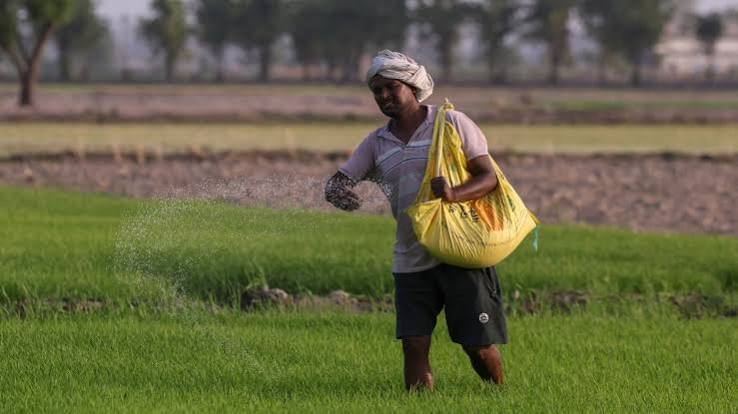
Parvathaneni said the conflict has entered its fifth year and continues to create serious challenges because of the close connections between global supply chains. He explained that armed conflicts disrupt agricultural activities, force communities to leave their homes, damage critical infrastructure and restrict humanitarian assistance. The resulting impact extends to energy, fertiliser, transportation and agricultural trade, with developing countries in the Global South facing a particularly heavy burden.
He stressed that the Security Council should give priority to humanitarian access, civilian infrastructure protection and freedom of navigation. These measures are essential to ensure that humanitarian shipments and legitimate commercial trade can continue without disruption.
Highlighting the Black Sea's importance to global food security, Parvathaneni noted that the region, together with India, accounts for nearly one-fifth of worldwide cereal production.
He added that countries across the Global South are facing the consequences of rising food, fuel and fertiliser costs, along with growing energy shortages. According to him, diplomatic engagement, secure commercial shipping and uninterrupted grain and energy supplies are not optional measures but essential requirements for India and other developing economies.
Attacks on Commercial Vessels and Loss of Indian Seafarers
Parvathaneni highlighted attacks on four commercial vessels in the Black Sea, which resulted in the loss of Indian lives. He said the MV Omorfi came under attack on July 18, resulting in the death of an Indian crew member.
He further stated that three Indian nationals were aboard the MV Royad Mammadov when the vessel was attacked in October. The MV Golden Leo and MV AGN RAGNAR were also struck, leaving four Indian seafarers dead and two missing.
India expressed its appreciation to partner countries for assisting in the repatriation of Indian crew members from the affected vessels and providing medical support to those injured in the attacks.
"We call for an end to the targeting of commercial shipping and seafarers and for safe navigation through international waterways to be restored at the earliest," Parvathaneni said.
Summit
India Strengthens Its Diplomatic Efforts on Maritime Safety
India and Liberia recently established the Group of Friends on Safety and Security of Shipping and Seafarers at the United Nations during the high-level week earlier this month.
The voluntary initiative is designed to support the work of the International Maritime Organisation and the International Labour Organisation in addressing security concerns affecting commercial vessels and seafarers.
Parvathaneni said India is engaging with both sides to promote the safety of commercial shipping and seafarers in the Black Sea, including along important grain export routes. He added that India's leadership has consistently called for an early resolution to the conflict and a lasting peace.
India Warns of the Human Cost of War and Disrupted Trade
Emphasising the wider consequences of the conflict, Parvathaneni said, "Every day of the war pushes humanity backwards." He also reiterated Prime Minister Narendra Modi's message that "the world has to move from 'endless war to the end of war'."
He referred to comments made by External Affairs Minister Dr. S. Jaishankar during last month's G20 Foreign Ministers' Meeting (FMM), where the minister highlighted how fertiliser shortages are linked partly to disruptions in the Black Sea region and partly to developments in the Gulf and Red Sea.
Parvathaneni also recalled the Bengal famine of 1943, which claimed more than three million lives in India. He said the tragedy remains a powerful reminder of how distant conflicts and wartime decisions can have devastating consequences for civilian populations.
"The pain and suffering caused by the devastating Bengal famine of 1943 in India that killed over 3 million people in India is a stark reminder of the terrible human cost of a distant conflict caused by unchecked wartime priorities and calculations," he said.
Reinforcing India's position on global peace and the concerns of developing nations, Parvathaneni added, "My Prime Minister was firmly on the side of the Global South when he noted that 'this is not an era of war'. For the Global South, peace is not in the abstract. It is achieved when hungry mouths are fed, when a ship reaches the port, and when a seafarer returns home safe."
Explore the latest edition of Journal of Supply Chain Magazine and be part of the JOSC News Bulletin.
Discover all our upcoming events and secure your tickets today.
Journal of Supply Chain is a Hansi Bakis Media brand.
Subscribe to our Daily Newsletter
Subscribe For FreeBy continuing you agree to our Privacy Policy & Terms & Conditions