News
India Likely to Join U.S.-Led Pax Silica Initiative to Secure Global Semiconductor and AI Supply Chains
 Anamika Mishra,
Sub Editor
Anamika Mishra,
Sub Editor
Anamika Mishra,
Sub Editor
Anamika Mishra,
Sub Editor
• India is likely to receive an invitation to join the U.S.-led Pax Silica initiative, which focuses on securing global supply chains for semiconductors, artificial intelligence (AI), and critical minerals.
Understanding Pax Silica
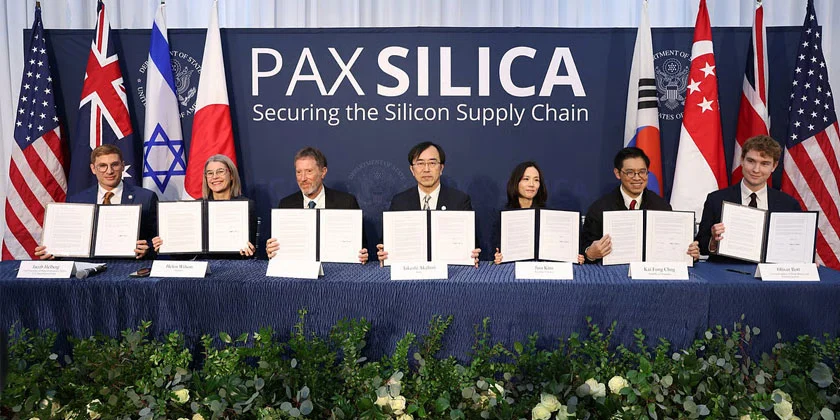
• Pax Silica is a multilateral initiative launched by the United States in December 2025 to strengthen supply chains of critical technologies such as semiconductors, artificial intelligence (AI), and rare earth elements (REEs).
The term “Pax” signifies peace, while “Silica” refers to silicon-based semiconductor technologies, symbolising a stable, cooperative global technology framework.
The Pax Silica Declaration outlines three core objectives:
Reducing coercive economic dependencies,
Ensuring secure global technology and AI supply chains, and
• Building trusted digital infrastructure.
• The initiative reflects rising concerns that excessive reliance on a single country for critical inputs can leave economies vulnerable to geopolitical pressure.
Global Context Behind Pax Silica
• The global economy is undergoing a transition in which advanced technologies such as AI, semiconductors, and digital infrastructure are increasingly central to economic and strategic influence.
• At the same time, supply chains for rare earths and critical minerals remain highly concentrated.
• China currently dominates global rare earth element supply and processing capacity.
• In recent years, it has used export restrictions as a strategic lever, including halting REE exports after tariff disputes with the U.S. India also experienced disruptions in rare-earth magnet supplies, impacting its automobile and electronics sectors.
• The COVID-19 pandemic further highlighted vulnerabilities in fragmented and concentrated global supply chains, prompting nations to pursue diversification and resilience strategies.
Key Members of Pax Silica
The Pax Silica grouping brings together technologically advanced and resource-rich nations.
• Key participants include the United States and Japan as technology leaders; Australia as a major lithium and rare-earth exporter; the Netherlands for advanced lithography technologies; South Korea for memory chip manufacturing; and Singapore for semiconductor fabrication.
• Israel contributes expertise in AI software, defence technologies, and cybersecurity, while the United Kingdom hosts one of the world’s largest AI markets.
• Gulf countries such as Qatar and the UAE add financial strength through sovereign investment funds.
• Canada, the European Union, OECD, and Taiwan currently participate as observers.
India’s Strategic Relevance
• India is not yet a formal member but is expected to be invited shortly. India brings several strengths to Pax Silica.
• It possesses one of the world’s most robust digital public infrastructures, a rapidly expanding AI market, and a large pool of skilled technology professionals.
• The Government of India has also launched the India Semiconductor Mission and national AI initiatives backed by significant financial support.
• Investments by Indian firms such as the Tata Group and foreign companies like Micron reflect growing confidence in India’s semiconductor ecosystem.
• In addition, the steady return of skilled Indian professionals trained overseas could further strengthen domestic capabilities.
Conference
Conference
Existing Supply Chain Initiatives Involving India
• India has already taken steps to enhance supply chain resilience. In 2021, it joined Australia and Japan in launching the Supply Chain Resilience Initiative.
• India is also part of the Quad’s Critical Minerals Initiative, aimed at securing supply chains for emerging technologies.
• Collaborations with Japan, Singapore, and Israel in semiconductor manufacturing further position India as a credible partner in Pax Silica-aligned ecosystems.
Challenges for India in Joining Pax Silica
• Despite the opportunities, India faces challenges. Pax Silica members are largely high-income U.S. allies, while India would be the first developing country and a non-ally strategic partner in the grouping.
This could create expectation gaps regarding policy alignment and strategic responses.
• India also places strong emphasis on strategic autonomy and may resist frameworks that limit independent foreign or economic policy choices.
• Moreover, India may seek to protect its emerging semiconductor and AI industries through subsidies, procurement preferences, and calibrated import controls, policies that may not fully align with the current U.S. policy environment.
Strategic Implications and the Road Ahead
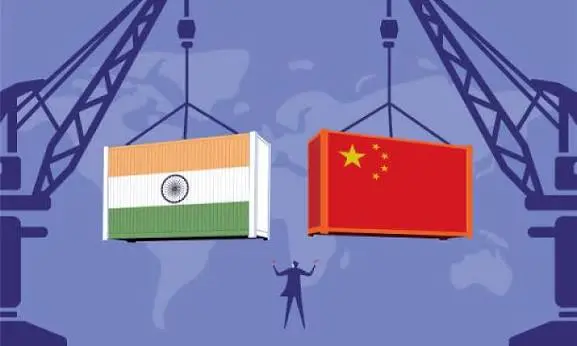
• The emergence of Pax Silica points to the development of two parallel global technology supply chains, one centred on China and the other around Pax Silica nations.
• Given India’s long-standing technological engagement with Western economies and recent supply disruptions linked to China, alignment with Pax Silica appears strategically beneficial.
• However, India is expected to move cautiously, engaging in dialogue to ensure that participation strengthens domestic capabilities without compromising strategic autonomy or development priorities.
Explore the latest edition of Journal of Supply Chain Magazine and be part of the JOSC News Bulletin.
Discover all our upcoming events and secure your tickets today.
Journal of Supply Chain is a Hansi Bakis Media brand.
Subscribe to our Daily Newsletter
Subscribe For FreeBy continuing you agree to our Privacy Policy & Terms & Conditions