New Delhi : India on Friday formally joined Pax Silica, the United States’ flagship initiative focused on artificial intelligence collaboration and supply chain security, a move widely viewed as part of broader efforts to counter growing Chinese influence in critical technologies. Announcing India’s inclusion, US Ambassador Sergio Gor described the coalition as a strategic partnership among some of Washington’s closest allies and trusted partners. According to him, the initiative represents a defining effort to ensure that free and open societies retain control over the most influential sectors of the global economy and technological landscape in the decades ahead.
The formal announcement came during an event attended by senior officials from both countries. Secretary of the Ministry of Electronics and Information Technology (MeitY) S Krishnan, US Undersecretary for Economic Growth Jacob Helberg, and Ambassador Gor signed the Pax Silica Declaration along with a supplementary joint statement outlining the scope of cooperation. The statement emphasized that the partnership marks the beginning of a new phase in relations between the world’s largest and oldest democracies. It underlined that the two countries are aligning not only in defense of democratic values but also in the pursuit of economic growth, technological leadership, and greater prosperity for their citizens.
Officials from both sides highlighted that the collaboration aims to shape an artificial intelligence ecosystem that benefits society while strengthening economic resilience. The joint statement noted that the partnership seeks to build an AI-driven future that supports innovation, enhances economic opportunities, and reflects shared democratic principles such as openness, freedom, and respect for the rule of law. By combining technological strengths and policy coordination, the countries aim to develop systems that serve public interests while maintaining transparency and accountability.
Ambassador Gor described Pax Silica as a coalition designed to strengthen trusted industrial bases and reduce dependence on supply chains that may be vulnerable to geopolitical pressure. He said the initiative encourages cooperation among partners that share common values and market-based economic systems. According to him, India’s entry into the alliance is not merely symbolic but strategically important because of the country’s vast engineering talent pool and growing technological capabilities. Gor, who extended the invitation for India to join the initiative shortly after assuming office last month, said India’s participation strengthens the group’s ability to develop reliable technology ecosystems.
For India, participation in Pax Silica also signals another step toward deeper economic engagement with the United States, especially following recent progress on an interim trade agreement framework between the two countries. Gor pointed out that India brings important capabilities to the coalition, particularly in areas such as engineering expertise and critical mineral processing, which are essential for advanced manufacturing and technology supply chains. These capabilities, he said, will play a key role in building resilient industrial ecosystems that reduce the risks of supply disruptions.
Speaking about the broader objective of the partnership, Gor emphasized that economic security and technological strength are closely linked to national sovereignty. He said durable peace and stability often emerge from strong alliances and secure economic foundations rather than reliance on uncertain external dependencies. According to him, India’s understanding of strategic autonomy and regional dynamics makes it an important contributor to the initiative. Discussions between the two countries, he added, are also exploring ways to build supply chains that are more diversified and less vulnerable to geopolitical disruptions.
The Pax Silica Declaration highlights the need to reduce excessive dependencies on single sources and instead create new connections with trusted suppliers and partners. The agreement encourages collaboration among member nations to promote fair market practices, strengthen innovation ecosystems, and address non-market practices that may distort competition or hinder technological advancement. By encouraging transparent economic cooperation, the initiative aims to create a more balanced and resilient global technology landscape.
Welcoming India’s participation, Gor also framed the initiative as a broader debate about where the future of technological innovation will be shaped. He suggested that global leadership in emerging technologies could either remain with open societies known for entrepreneurship and innovation, such as Bengaluru and Silicon Valley, or shift toward systems where technology is used primarily for surveillance and control. Emphasizing the importance of democratic cooperation, he said the choice made by partner nations is to strengthen innovation through collaboration, openness, and shared strategic interests.
The joint statement released during the event also outlined several priority areas for cooperation, including economic security, pro-innovation regulatory frameworks, stronger physical AI infrastructure, and support for free enterprise. Officials said both sides believe that one of the greatest risks facing democratic nations is not the rapid advancement of artificial intelligence itself, but the possibility of failing to lead its development responsibly and competitively.
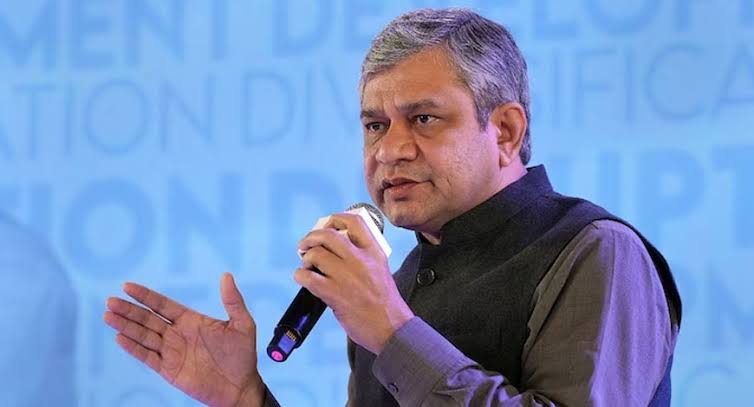
India’s Minister for Electronics and Information Technology Ashwini Vaishnaw highlighted that cooperation under Pax Silica would further expand bilateral engagement in critical and emerging technologies. He noted that technology collaboration has already become a central pillar of the India-US Comprehensive Global Strategic Partnership, and initiatives like Pax Silica will help deepen that relationship by focusing on innovation-driven sectors and resilient supply chain networks.
Echoing this view, India’s Ministry of External Affairs said in a statement that India’s participation in Pax Silica represents a meaningful step toward strengthening cooperation in advanced technologies. The ministry noted that the initiative reinforces the shared commitment of both countries to building trusted, resilient, and future-ready supply chains that can support sustainable economic growth. As global competition intensifies in areas such as artificial intelligence, semiconductor technologies, and advanced manufacturing, partnerships like Pax Silica are expected to play a growing role in shaping the next phase of the global technology and economic order.
Explore the latest edition of Journal of Supply Chain Magazine and be part of the JOSC News Bulletin.
Discover all our upcoming events and secure your tickets today.
Journal of Supply Chain is a Hansi Bakis Media brand.
Subscribe to our Daily Newsletter
Subscribe For FreeBy continuing you agree to our Privacy Policy & Terms & Conditions