News

India Advances Rare Earth Corridors and Nationwide Infrastructure Development Initiatives

March 12, 2026 4 min read
author Anamika Mishra, Sub Editor
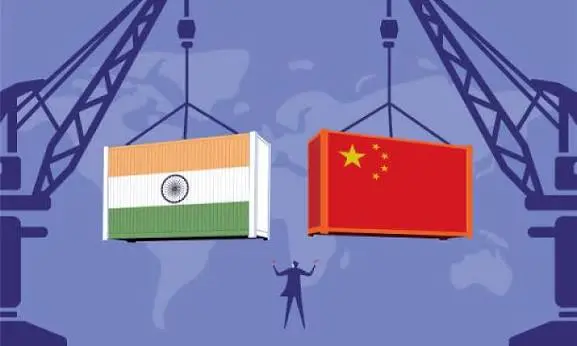
India is taking significant steps to bolster its domestic rare earth materials supply chains through strategic government initiatives. The Union Budget 2026-27 unveiled plans to support mineral-rich coastal states—Odisha, Kerala, Andhra Pradesh, and Tamil Nadu—in establishing dedicated rare earth corridors. These corridors will focus on mining, processing, research, and manufacturing activities.

According to Jitendra Singh, Minister of State for Personnel, Public Grievances and Pensions and Prime Minister's Office, these Rare Earth Corridors aim to build a resilient and globally competitive rare earths ecosystem within India. The initiative will enhance production of Neodymium-Praseodymium (NdPr) and Samarium oxides while stimulating domestic demand for rare earth magnets. Additionally, the corridors will facilitate the establishment of industries along the value chains of Titanium and Zirconium, among other critical materials, as Singh informed the Lok Sabha.

On the weather monitoring front, the India Meteorological Department (IMD) maintains a robust early warning system for natural disasters. The department prepares and updates district-wise early warnings for heavy rainfall and cyclone-related events four times daily, with forecast validity extending up to seven days. IMD generates real-time weather warnings and graphical products to enable timely monitoring and information dissemination.

These warnings encompass all vulnerable districts to ensure communities receive timely information for preparedness and mitigation efforts. The IMD distributes warnings through multiple channels including the Common Alerting Protocol (CAP), mobile applications, official websites, WhatsApp, and various social media platforms.

However, the responsibility for warning communications involving automated siren and alert infrastructure lies with state disaster management authorities and state emergency operation centres. The IMD provides crucial support to the Central Water Commission by supplying both observed and forecasted rainfall data, Singh explained.

Addressing public health concerns, the Union Ministry of Health & Family Welfare has implemented the Integrated Disease Surveillance Program (IDSP) to strengthen early warning capabilities and enable rapid responses to disease outbreaks nationwide. The program tracks several common zoonotic diseases including Scrub typhus, Leptospirosis, Human Rabies, Kyasanur Forest Disease, Crimean Congo Haemorrhagic Fever, Nipah Virus Disease, and West Nile Fever, according to Singh's statement.

Regarding food security, the National Food Security Act of 2013 provides coverage for up to 75 percent of India's rural population and up to 50 percent of the urban population. Based on Census 2011 figures, this translates to 81.35 crore (813.5 million) persons. States are actively cleaning up their beneficiary databases to remove ineligible ration cards and ensure better targeting of rightful beneficiaries.


Nimuben Jayantibhai Bambhaniya, Minister of State for the Union Ministry of Consumer Affairs, Food & Public Distribution, informed the Lok Sabha that the deletion of ineligible beneficiaries and addition of eligible beneficiaries under the Act is an ongoing process. This makes the beneficiaries' database dynamic in nature, constantly evolving to reflect accurate entitlements.

In the digital connectivity sphere, the BharatNet project is being rolled out in phases to deliver broadband connectivity to all Gram Panchayats (GPs) across the country. The total number of GPs covered under BharatNet Phase-I and Phase-II stands at 2,22,341, of which 2,14,921 GPs are currently Service Ready.

The government approved the Amended BharatNet Program on August 4, 2023, which will provide Optical Fiber Connectivity to approximately 2.64 lakh (264,000) Gram Panchayats and approximately 3.8 lakh (380,000) non-GP villages on a demand basis, as stated by Pemmasani Chandra Sekhar, Minister of State for Communications and Rural Development, to the Lok Sabha.

On environmental sustainability, the government has developed the Voluntary Vehicle Fleet Modernization Program (V-VMP), also known as the Vehicle Scrapping Policy, to create an ecosystem for phasing out unfit and polluting vehicles in an environmentally responsible manner. The government has notified the Motor Vehicles (Registration and Functions of Vehicle Scrapping Facility) Rules, 2021, which establish guidelines for creating a formal scrapping ecosystem in the country.

As of March 10, 2026, there are 134 Registered Vehicle Scrapping Facilities (RVSFs) operational across 22 states and Union territories throughout the country. These facilities are instrumental in formalizing the vehicle scrapping ecosystem, Union Minister of Road Transport and Highways Nitin Jairam Gadkari informed the Rajya Sabha.

In disaster management education, the government has established the India Universities and Institution Network for Disaster Risk Reduction (IUINDRR) under the National Institute of Disaster Management. This initiative aligns with point number 6 of the Prime Minister's 10-point agenda on Disaster Risk Reduction, which calls for developing a network of universities to work on disaster-related issues.

IUINDRR serves as a network of universities and institutions conducting education and research in fields related to disaster risk reduction. Currently, 352 universities and institutions are members of this network, Minister of State in the Union Ministry of Home Affairs Nityanand Rai informed the Rajya Sabha. This collaborative platform enables knowledge sharing and coordinated research efforts to strengthen India's disaster preparedness and response capabilities.


Explore the latest edition of Journal of Supply Chain Magazine and be part of the JOSC News Bulletin.

Discover all our upcoming events and secure your tickets today.


Journal of Supply Chain is a Hansi Bakis Media brand.

Leave Comment

logo

Subscribe to Our Newsletter

The week’s best stories, handpicked by JOSC editors in your inbox every week.

Stay informed with exclusive content