News
Ganga Expressway: How India's Largest Greenfield Highway is Reshaping Uttar Pradesh's Economic Landscape
 Anamika Mishra,
Sub Editor
Anamika Mishra,
Sub Editor
Anamika Mishra,
Sub Editor
Anamika Mishra,
Sub Editor
Named after the sacred river that has nourished one of the world's most densely populated and fertile regions for millennia, the Ganga Expressway is quickly becoming a landmark infrastructure achievement in India. This massive corridor is designed to transform connectivity across Uttar Pradesh while jumpstarting economic development, industrial expansion, logistics optimization and tourism across the entire region.
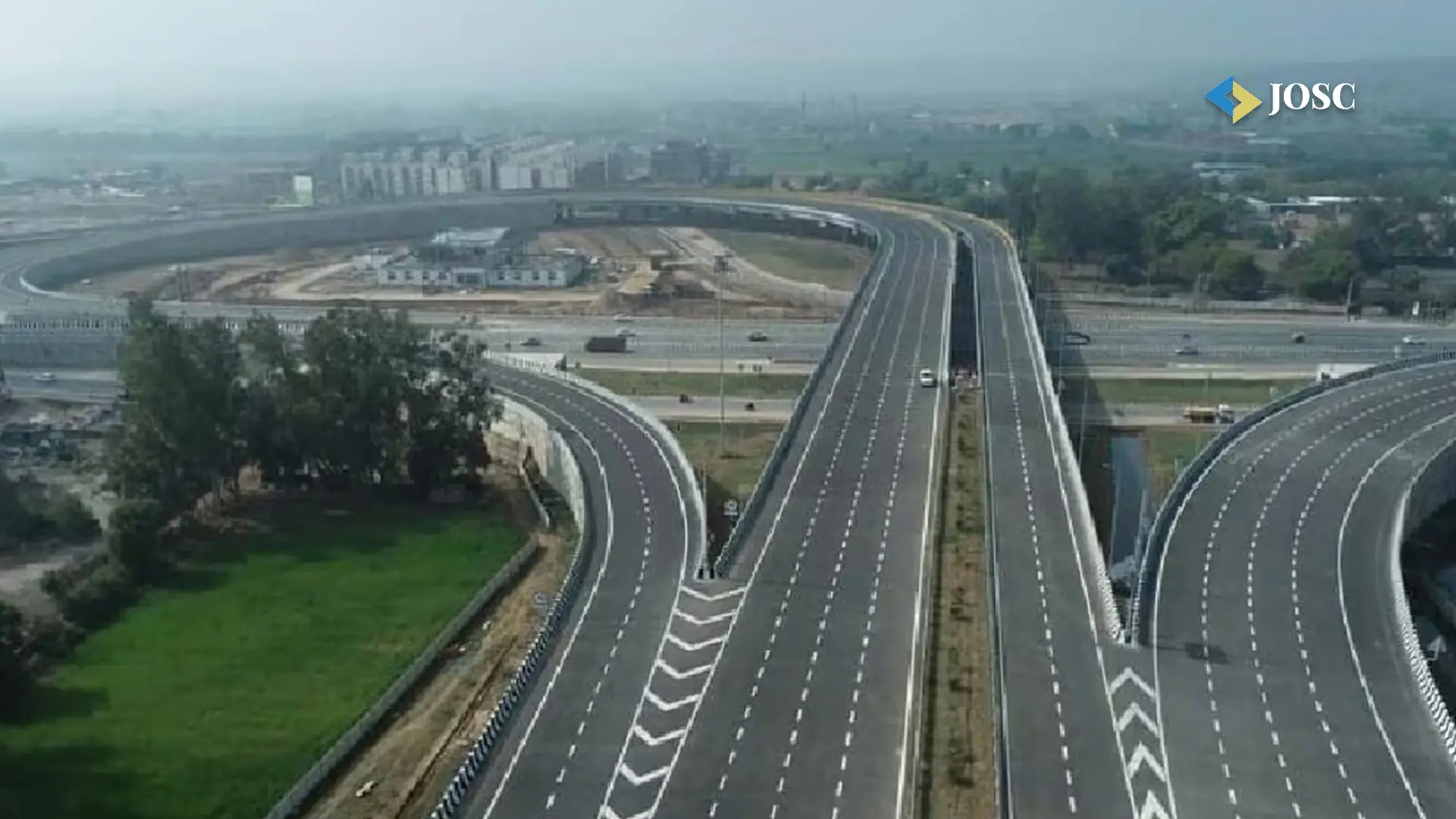
Spanning an impressive 594 kilometres from Meerut in western Uttar Pradesh to Prayagraj in the east, this expressway will link 12 districts and pass through 519 villages, directly impacting the lives of approximately 8 crore people. The project carries a hefty price tag of over ₹36,000 crore, making it India's largest greenfield expressway to date. It also stands as the country's biggest Build-Operate-Transfer (BOT) road project, featuring a 30-year concession arrangement where traffic risk rests with the developer.
The lion's share of construction—464 kilometres, representing nearly 80% of the total distance—is being executed by Adani Road Transport Ltd., a wholly owned subsidiary of Adani Enterprises Ltd. (AEL). The balance of 130 kilometres is under development by IRB Infrastructure Developers. For Adani Enterprises, this expressway marks a strategic milestone in establishing an integrated logistics and transportation network spanning India. AEL is nurturing the roads division as part of the group's broader transport and logistics platform, with the ultimate goal of enhancing national productivity through superior infrastructure networks.
India currently faces logistics costs that consume roughly 14% of GDP, a figure substantially higher than what developed nations experience. Countries like the United States, China and Germany maintain logistics costs closer to 8-9% of their GDP. Through strategic investments in highways, ports, airports and logistics parks, the Adani group seeks to bring down these costs while enabling faster and more efficient transportation of goods and people throughout the country.
The company has already proven this business model through Adani Ports and Special Economic Zone, which was initially incubated within AEL before being demerged in 2007. Today, that entity manages approximately 27% of India's port cargo volume, backed by 12 multimodal logistics parks, dedicated railway connectivity and a continuously expanding integrated logistics framework. Adani is simultaneously growing its aviation footprint through Adani Airports Holdings Ltd., which presently operates eight major airports across the nation and processes roughly 25% of domestic passenger traffic along with 31% of domestic air cargo.
The Ganga Expressway serves as a vital artery within this comprehensive ecosystem, creating crucial connections between industrial centers, logistics nodes and rapidly expanding urban areas.
The construction timeline for the Ganga Expressway deserves special recognition. The project was completed in a remarkable three years and three months, showcasing both the ambition and execution capabilities driving modern infrastructure development in India today.
Engineers have designed this highway as a six-lane expressway with provisions for expansion to eight lanes, encompassing 3,564 lane kilometres in total. Its expansive 120-metre right-of-way width provides ample space for future expansion and the addition of complementary infrastructure along the corridor.
Conference
Conference
To maintain smooth traffic movement while ensuring connectivity for nearby communities, the engineering team incorporated crossing structures at intervals of approximately 860 metres throughout the Adani-developed section. These crossings enable lateral movement on either side of the highway without interfering with expressway traffic flow.
The corridor features an extensive array of structures including 437 underpasses, 21 flyovers, and 76 minor bridges. As protection against seasonal flooding, engineers elevated the roadway six metres above ground level—a full metre higher than the highest flood level ever recorded in the region.
Cutting-edge construction materials have been deployed to maximize durability and enhance the driving experience. The expressway incorporates Polymer Modified Bitumen (PMB) in its pavement layers, a technology that extends road lifespan while delivering a smoother ride for all vehicle types.
Beyond raw speed and connectivity, the Ganga Expressway integrates contemporary infrastructure and comprehensive safety features throughout its length.
The corridor will be equipped with 20 electric vehicle charging stations positioned on each side of the highway, along with world-class facilities including food courts, fuel stations, motels, cafeterias, shopping plazas and vehicle service centers. Recognizing the needs of commercial transport operators, dedicated dormitories and dhabas for truck drivers have been incorporated into the design. Round-the-clock CCTV surveillance ensures continuous monitoring for safety and security, while trauma centers stand ready for emergency medical response.
Digital infrastructure has been woven into the project from the ground up. Dark fibre cables run along the entire expressway length to facilitate faster and secure data transmission, creating a foundation for smart highway technologies that could be deployed in the years ahead.
Environmental considerations have not been overlooked. Nine lakh saplings have been planted along the median across the 464-kilometre stretch developed by Adani, while the forest department has contributed an additional 4.5 lakh trees through avenue plantations alongside the highway.
The expressway promises to dramatically compress travel times across Uttar Pradesh. What currently requires about 11 hours to travel between Meerut and Prayagraj will shrink to roughly six hours, shaving nearly five hours off the journey.
Beyond time savings, the enhanced corridor is projected to deliver approximately 30% in fuel savings thanks to smoother traffic patterns and more direct routing.
The project has been conceived as an economic catalyst for industrial development across the region. The Uttar Pradesh government has outlined plans to establish 11 industrial corridors spanning all 12 districts served by the expressway. These districts include Meerut, Hapur, Bulandshahr, Amroha, Sambhal, Badaun, Shahjahanpur, Hardoi, Unnao, Rae Bareli, Pratapgarh and Prayagraj.
These industrial corridors are anticipated to draw new manufacturing facilities, logistics centers and warehousing operations, ultimately generating millions of employment opportunities over the long term.
Beyond industry and logistics applications, the Ganga Expressway is set to provide a significant boost to spiritual tourism throughout northern India.
The corridor will dramatically improve access to several prominent pilgrimage destinations including Garhmukteshwar, Kalkidham, Belhadevi, Chandrika Shakti Peeth, and the Triveni Sangam in Prayagraj, one of Hinduism's holiest confluence points.
By connecting these religious and cultural landmarks more efficiently, the expressway is expected to energize tourism, hospitality services and local businesses all along the route.
With its enormous scale, advanced engineering and strategic positioning, the Ganga Expressway is positioned to become a critical infrastructure backbone across northern India. By strengthening connectivity between major districts, supporting industrial corridor development and enabling more efficient logistics operations, this project represents a substantial leap toward building a more productive and efficient economy.
As India continues channeling significant resources into transport infrastructure, projects like the Ganga Expressway illustrate how modern highways can transcend their traditional role as simple roads to become powerful engines of regional development, commerce and economic opportunity for millions of people.
Explore the latest edition of Journal of Supply Chain Magazine and be part of the JOSC News Bulletin.
Discover all our upcoming events and secure your tickets today.
Journal of Supply Chain is a Hansi Bakis Media brand.
Subscribe to our Daily Newsletter
Subscribe For FreeBy continuing you agree to our Privacy Policy & Terms & Conditions