Article
The Shadow Supply Chain: A Hidden Factor in Operational Risk
 Anamika Mishra,
Sub Editor
Anamika Mishra,
Sub Editor
1. What Is the Shadow Supply Chain?
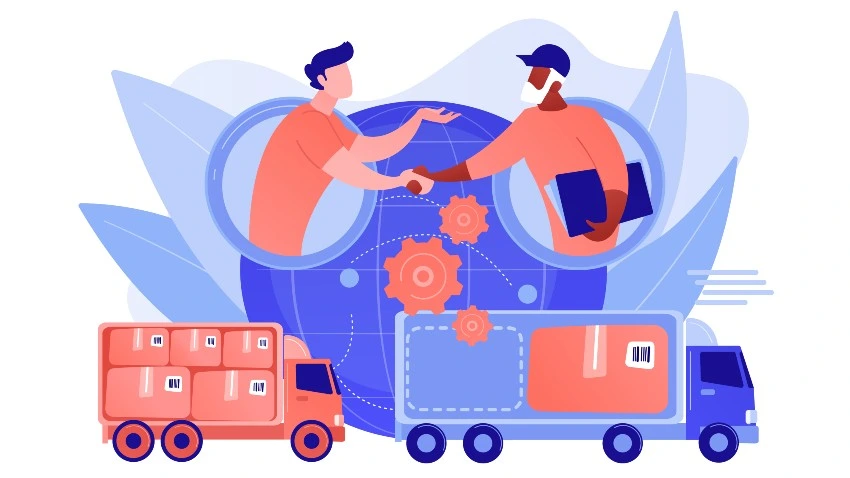
Every company prides itself on a well-oiled supply chain, a carefully orchestrated network of trusted partners, meticulously vetted contracts, and stringent quality controls. Yet, beneath this visible, formal structure often lies a hidden, often perilous, counterpart: the shadow supply chain. This isn't a theoretical concept, it's the untracked, unregulated, and frequently informal segment of a company’s broader supply network, operating entirely outside the purview of official oversight. Imagine an iceberg, with only a fraction visible above the surface, the shadow supply chain represents the vast, submerged mass, silently influencing, and often jeopardizing, the entire enterprise.
At its core, the shadow supply chain encompasses a range of players that exist beyond the reach of formal procurement systems. This includes unauthorized suppliers brought in during a rush without proper vetting, subcontracted vendors operating tiers below direct relationships and often unknown to the primary client, and even third-tier providers whose role might only become apparent when a problem arises. These entities, while critical to the actual delivery of goods and services, function without the benefit of official contracts, bypass standard compliance protocols, and evade established quality controls. They are the unofficial backbone, making things happen in the informal economy, but simultaneously creating significant vulnerabilities.
Unlike the formal supply chain, where every transaction, every partner, and every risk assessment is meticulously documented and managed through structured systems, the shadow supply chain thrives on minimal oversight. Information is scarce, relationships are often informal, and data on performance, ethics, or even existence is virtually non-existent. This glaring lack of visibility isn't just an administrative inconvenience; it’s a gaping hole in a company’s risk management strategy. It’s where unforeseen disruptions, ethical breaches, and quality failures are most likely to originate, creating a domino effect that can cripple operations, damage reputations, and trigger severe legal repercussions, all from a source you didn’t even know existed. Understanding and addressing this invisible web is no longer optional; it’s an urgent imperative for any organization aiming for true resilience and accountability in today's complex global market.
Example:
In 2021, Volkswagen discovered that a Tier-3 supplier linked to one of its Tier-1 vendors was using unauthorized labour practices in China, causing major reputational damage. Volkswagen was unaware of this supplier’s existence until it hit media headlines.
2. Why Does the Shadow Supply Chain Exist?
Several drivers lead to the creation and persistence of shadow supply chains:
Cost Pressure & Outsourcing
Companies demand cheaper, faster solutions, leading Tier-1 or Tier-2 suppliers to subcontract parts of the process to unregistered or informal providers.
Lack of Visibility Beyond Tier-1
According to a 2023 McKinsey report, only 37% of companies have visibility into Tier-2 suppliers, and just 15% track Tier-3. This makes it easy for shadow vendors to enter unnoticed.
Urgency in Fulfillment
In high-pressure environments like apparel fast fashion or semiconductor procurement vendors may bypass formal processes to meet aggressive deadlines.
Fragmented Supply Chains
With globalization, supply chains span multiple geographies. A 2024 WEF report noted that over 60% of supply chains in electronics and automotive sectors now involve more than five countries, increasing the chance of informal linkages.
3. Where Does the Shadow Supply Chain Pose the Most Risk?
Shadow supply chains are especially common and risky in certain sectors and regions:
Sectors
Automotive: Highly tiered supplier networks, often with limited traceability.
Pharmaceuticals: Use of third-party API suppliers with unclear quality control.
Electronics: Informal subcontracting to meet chip shortages.
Textiles: Sweatshops and unregistered units in countries like Bangladesh, India, and Vietnam.
Geographies
South & Southeast Asia (India, Bangladesh, Vietnam)
Eastern Europe
Latin America
These regions often feature informal labour, weak regulatory enforcement, and multi-tier subcontracting models.
Conference

Conference

4. When Does the Shadow Supply Chain Become a Problem?
The shadow supply chain becomes a critical operational risk during:
Crisis Events
COVID-19 (2020–21): Exposed thousands of unauthorized suppliers that couldn’t meet PPE and electronics demand.
Russia–Ukraine War (2022–present): Uncovered informal sourcing links to banned Russian components in EU-bound products.
Red Sea Crisis (2023–2024): Emergency rerouting by logistics providers revealed informal carriers handling time-sensitive medical and food supplies.
Regulatory Changes
New global regulations (like Germany’s Supply Chain Due Diligence Act, 2023) demand deep-tier transparency. Shadow links now pose legal risks.
ESG Reporting
Companies unable to trace ethical practices across their entire chain face investor backlash and ESG score downgrades.
5. Who Is Impacted by the Shadow Supply Chain?
The shadow supply chain affects multiple stakeholders:
Companies
Face fines, penalties, and reputational damage.
According to Accenture (2024), 1 in 5 firms experienced operational disruption due to unknown Tier-3 vendor failure in the past year.
Customers
Product delays, safety issues, or unethical practices can affect trust.
The 2022 baby formula crisis in the U.S. revealed unknown subcontractors in the packaging chain causing contamination.
Governments
Tax evasion, illegal labour practices, and non-compliance with safety standards cause regulatory and economic issues.
Investors
Untracked ESG violations or regulatory non-compliance can impact stock performance and shareholder value.
6. How Can Companies Manage Shadow Supply Chain Risks?
A. Map the Full Supply Chain
Use AI and blockchain-based tools to trace down to Tier-3 and Tier-4. Tools like:
Resilinc and Interos provide real-time multi-tier mapping.
Everstream Analytics and Elementum help detect vendor behaviour anomalies.
B. Integrate Supplier Risk Audits
Regular vendor audits beyond Tier-1 suppliers.
Add clauses in contracts that require disclosure of subcontractors.
C. Adopt Digital Twin Technology
A digital twin of the supply chain helps simulate disruption points and identifies where shadow vendors might emerge.
D. Enforce ESG & Due Diligence Regulations
Implement supply chain transparency checklists.
Follow the EU Supply Chain Law, and Germany’s LkSG which mandates deep-tier responsibility.
E. Build Local Resilience
Consider nearshoring or local sourcing to reduce dependence on shadow subcontractors.
For example, Apple’s India pivot for iPhone assembly aims to bring more traceable, formalized vendor relationships.
F. Encourage Supplier Training
Educate partners on compliance, ethical labour, and digital reporting to reduce informal outsourcing.
Real-Time Data Snapshot (2024–2025)
Industry Shadow Risk Incident (Recent) Impact
Pharma 2023: India-based API maker used unapproved third-party EU shipment ban
Apparel 2024: Bangladesh fire in illegal unit supplying to big brand Brand boycott
Auto 2023: Subcontracted parts from uncertified Chinese vendor found in EVs Recall issued
Electronics 2024: Tier-2 supplier in Vietnam breached ESG policies Shareholder pressure
Make the Invisible Visible
The concept of a "shadow supply chain" is far more insidious than a mere operational oversight; it represents a profound, often overlooked, vulnerability that threatens to unravel the very fabric of an organization. This isn't just about minor delays or unexpected costs; it's a ticking time bomb with the potential to trigger catastrophic disruptions to production schedules, inflict irreparable damage upon carefully cultivated brand reputations, and open the floodgates to severe legal and financial repercussions. In today's interconnected global economy, where information travels at light speed and consumers wield immense power, the notion that simply understanding your Tier-1 suppliers is sufficient is a dangerous delusion.
We live in an era defined by hyper-transparency, where every corporate action, or inaction, can be scrutinized instantly on social media and by investigative journalists. Consumers, now more than ever, demand to know the origins and ethical standing of the products they purchase. This consumer sentiment is amplified by mounting pressure around Environmental, Social, and Governance (ESG) responsibility. Investors are increasingly factoring ESG performance into their decisions, while regulatory bodies across the globe are enacting stricter mandates concerning ethical labour practices, environmental impact, and supply chain due diligence. Simultaneously, a landscape of escalating geopolitical volatility marked by trade disputes, regional conflicts, pandemics, and climate-induced natural disasters can instantaneously expose and exploit any hidden weaknesses within a sprawling, opaque value network. In such an environment, ignoring the deeper tiers of your supply chain isn't just negligent; it's an existential risk.
The imperative, therefore, is clear: companies must actively commit to making the invisible visible. This isn't a simple task but a strategic imperative that demands a multi-faceted approach. It begins with comprehensive mapping, a diligent process of identifying every entity, however small or indirect, that contributes to your product or service, extending far beyond immediate suppliers. This granular understanding must then be validated through rigorous auditing, which involves not just paperwork checks but on-site verifications and third-party assessments to confirm compliance and ethical practices throughout the entire network. Crucially, this static view must be complemented by dynamic, continuous digital monitoring, leveraging advanced technologies like AI, machine learning, and blockchain to provide real-time insights, detect anomalies, and proactively identify potential risks before they escalate. It's about establishing a living, breathing digital twin of your entire value network.
The organizations that embrace this proactive paradigm will not merely avoid pitfalls; they will fundamentally transform their operational capabilities and market standing. They will become inherently safer, building a bedrock of resilience that allows them to absorb shocks, mitigate risks, and ensure business continuity even amidst unprecedented global challenges. This deeper visibility also translates into being demonstrably faster not just in responding to crises, but in seizing opportunities, adapting to market shifts, and accelerating product development cycles through a more informed and agile ecosystem. Ultimately, this transparency fosters a profound level of trust among consumers, investors, and partners alike elevating brand equity and cementing a reputation for integrity and reliability in a marketplace that increasingly values accountability above all else.
In conclusion, moving beyond a superficial understanding of the supply chain is no longer a strategic option but a fundamental requirement for survival and success. By actively illuminating the shadow supply chain through meticulous mapping, robust auditing, and intelligent digital monitoring, companies will move from a reactive stance to a proactive one. This transformation isn't just about compliance; it's about gaining a distinct competitive advantage, fostering innovation, and securing a position as a trusted, resilient, and agile leader in the complex and demanding global economy of tomorrow.
Explore the latest edition of Journal of Supply Chain Magazine and be part of the JOSC News Bulletin.
Discover all our upcoming events and secure your tickets today.
Journal of Supply Chain is a Hansi Bakis Media brand.
Leave Comment
Join the community of 150,000+ industry professionals
Subscribe to our Daily Newsletter
Subscribe For FreeBy continuing you agree to our Privacy Policy & Terms & Conditions
Latest






Feature Articles


Related