Article
India likely to get more entangled in trade war amid supply chain shift
 Anamika Mishra,
Sub Editor
Anamika Mishra,
Sub Editor
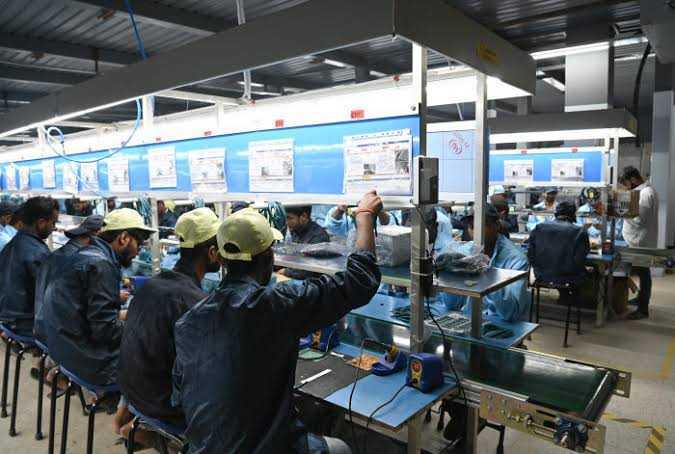
As the global economy continues to reconfigure itself in the aftermath of the pandemic and rising geopolitical tensions, India finds itself at the crossroads of opportunity and risk. The evolving dynamics of global supply chains, triggered largely by the U.S.-China trade war, Russia’s conflict with Ukraine, and shifting trade alliances, have led to significant supply chain realignments. India, with its vast manufacturing potential and demographic advantage, is emerging as a preferred alternative to China. However, this repositioning comes with its own set of challenges—most notably, the increasing risk of being drawn deeper into global trade conflicts.
The Supply Chain Pivot Towards India
In recent years, global companies have been diversifying their manufacturing bases to reduce over-dependence on China, a strategy known as "China Plus One." India, alongside Vietnam, Mexico, and Indonesia, has become a natural candidate for this diversification. Multinational giants such as Apple, Samsung, and Tesla are exploring or expanding their production in India. The government's efforts to support this shift through initiatives like Production Linked Incentive (PLI) schemes, "Make in India," and infrastructure upgrades have further strengthened India’s position.
However, as India integrates more deeply into global supply networks, it must also navigate the rising complexities of global trade politics. Tariff battles, sanctions, and protectionist policies are becoming more frequent, and India’s increased participation in global supply chains might expose it to retaliatory trade actions from major economies.
The U.S.-China Rivalry: A Double-Edged Sword for India
India’s growing alignment with the United States and its strategic partnerships with countries like Japan and Australia under forums such as the Quad make it a critical player in the Indo-Pacific region. These alliances are fostering trade cooperation and technological collaborations, especially in sectors like semiconductors, defence manufacturing, and clean energy.
However, experts warn that as India grows closer to the U.S., it could be perceived as siding against China, thereby complicating its diplomatic stance. “India is walking a tightrope. On one hand, it wants to leverage its position as a manufacturing hub; on the other, it must maintain a non-confrontational trade policy to avoid being seen as taking sides,” says Dr. Abhijit Banerjee, an international trade analyst based in Delhi.
Risks of Retaliatory Trade Actions
India has already faced its share of trade friction. The U.S. removed India from its Generalized System of Preferences (GSP) in 2019, citing market access issues. Meanwhile, India's trade deficit with China remains significant despite calls for reducing dependence. As India starts producing more high-value goods such as electronics and auto components, it will compete directly with Chinese and Southeast Asian exporters in global markets. This competition could provoke trade spats or non-tariff barriers from competing countries.
Moreover, India's decision to stay out of the Regional Comprehensive Economic Partnership (RCEP), citing concerns over Chinese imports, has distanced it from the world’s largest trading bloc. While this protects domestic industry in the short term, it also limits India's influence in regional trade rule-setting.
Conference

Conference

Supply Chain Resilience vs. Trade Vulnerability
The drive toward building resilient and regionalized supply chains has led many nations to consider ‘friend-shoring’ prioritizing trade with geopolitical allies. India fits into this framework for Western economies. However, the very concept of friend-shoring is rooted in political alliances rather than market efficiency, and may increase trade distortions in the long term.
According to Rakesh Mohan, former Deputy Governor of the RBI, “India’s strategy should be to remain flexible and adaptive. We must strengthen our WTO negotiations and invest in trade dispute mechanisms to handle future trade challenges more effectively.”
What Lies Ahead
India must balance its global ambitions with diplomatic tact. While it is wise to capitalize on global supply chain shifts, India should simultaneously hedge against trade risks through multilateral engagements, free trade agreements (FTAs), and diversification of export markets.
Experts also suggest strengthening domestic manufacturing capabilities—not just for exports, but to reduce vulnerability to imports of critical inputs like semiconductors and rare earths. India's push to become a global semiconductor hub is a step in the right direction, but it requires significant investment, policy consistency, and global partnerships to succeed.
In conclusion, while the shift in global supply chains presents India with a historic opportunity, it also increases the chances of being caught in the crossfire of future trade wars. The path ahead demands a balanced strategy that fosters industrial growth while maintaining a neutral and resilient trade posture.
Explore the latest edition of Journal of Supply Chain Magazine and be part of the JOSC News Bulletin.
Discover all our upcoming events and secure your tickets today.
Journal of Supply Chain is a Hansi Bakis Media brand.
Leave Comment
Join the community of 150,000+ industry professionals
Subscribe to our Daily Newsletter
Subscribe For FreeBy continuing you agree to our Privacy Policy & Terms & Conditions
Latest




Feature Articles



Related