News
U.S. Policymaking Shifts Focus to Rare Earths and Semiconductors Amidst Rising U.S.-China Tensions
 Anamika Mishra,
Sub Editor
Anamika Mishra,
Sub Editor
Anamika Mishra,
Sub Editor
Anamika Mishra,
Sub Editor
Rare earth elements and semiconductors have emerged as crucial components for economic development and national security in today's global landscape. These materials and technologies necessitate substantial intelligence and capital for production, making them unique among strategic interests. The geopolitical dynamics, particularly the ongoing U.S.-China competition, heavily influence technology policy, especially following the Trump Administration’s initiation of the tech and trade wars with China.
Rare earth elements and semiconductor chips are pivotal in advancing green technology and next-generation industrial processes, including efficient communication equipment and batteries. Their supply is critical for American economic development and national security. Given that China controls approximately 90% of the global rare earth supply, there are concerns about the potential for political leverage and weaponization. In the semiconductor sector, China aims to develop advanced technology and counter U.S. sanctions while leveraging rare earths to impact global supply chains.
Rare earths are integral to various industrial products, including batteries, computers, wind turbines, and military systems. They are essential in U.S. weaponry, such as lasers, radar, and missile guidance systems. China’s near-monopoly in rare earth extraction and processing poses a significant challenge. Semiconductors, critical for both civilian and military applications, are predominantly manufactured in Taiwan and South Korea, with limited U.S. production capacity. GlobalFoundries, a notable American semiconductor firm, holds only a 6% market share, underscoring U.S. dependence on international allies.
Strategic policy must address these dependencies. According to Paul Kennedy, effective grand strategy involves aligning national resources with long-term interests. For the U.S., this means developing infrastructure for domestic production of rare earths and semiconductors and fostering partnerships to secure these strategic goods.
William Martel outlines three principles for grand strategy: rebuilding domestic power, restraining threats to vital interests through leadership, and forming alliances to address global stability. These principles are relevant for U.S. policy regarding rare earths and semiconductors. Enhancing domestic infrastructure for production, defending values related to global supply chains, and coordinating with international partners are key strategies for reducing reliance on East Asian sources.
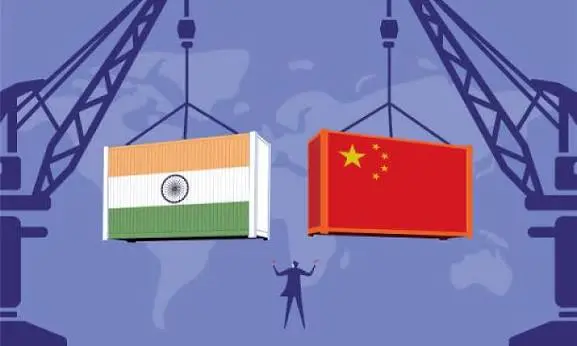
The U.S.-China tech rivalry intensified following the imposition of tariffs on Chinese goods in July 2018, triggered by concerns over China’s technology practices and IP theft. Major Chinese companies like ZTE, Huawei, and SMIC have faced sanctions, impacting their ability to acquire essential technology from U.S. providers. China’s efforts to develop self-sufficient semiconductor production are ongoing, but it remains reliant on international supply chains. The strategic use of rare earths by China could further complicate U.S. efforts to manage its technology dependencies.
China’s semiconductor sector faces challenges in core intellectual properties and equipment, with significant influence from Taiwanese and South Korean firms. However, China’s geopolitical actions and ambitions in the South China Sea and Taiwan could impact the stability of semiconductor supplies. Additionally, China’s state-driven strategy and investment in semiconductor technology could impact global competition and stability.
The U.S. faces several risks, including potential disruptions in semiconductor and rare earth supplies, China’s efforts to close the technology gap, mercantilist practices, and the application of American technology to develop advanced weapons. To address these challenges, the U.S. needs to secure stable sources of rare earths and semiconductors, while mitigating China’s impact on American technological advantages.
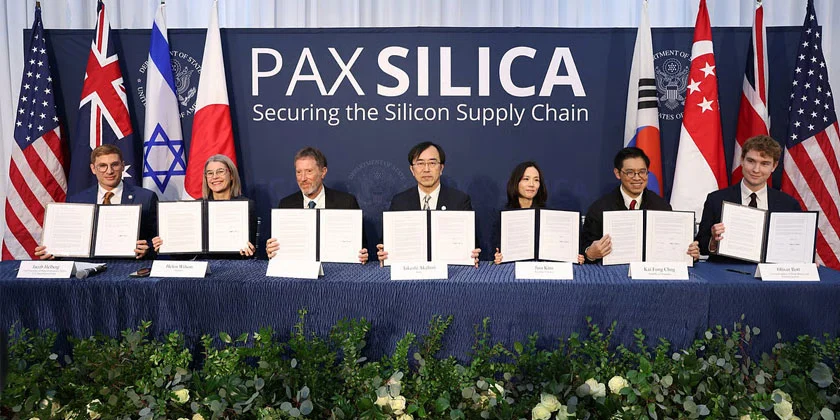
There is bipartisan agreement on the need for increased domestic production to enhance national security. The CHIPS Act, which provides over $50 billion in federal funding, is a step towards boosting domestic semiconductor manufacturing. However, achieving long-term goals will require significant investment in education, research, and development. Strengthening alliances and multilateral coordination is also crucial to stabilize global supply chains and counteract China’s technological advancements.
While some caution against decoupling from China due to potential economic repercussions, leveraging U.S. technological and strategic advantages remains a critical approach for ensuring national security in the evolving global landscape.
Explore the latest edition of Journal of Supply Chain Magazine and be part of the JOSC News Bulletin.
Discover all our upcoming events and secure your tickets today.
Journal of Supply Chain is a Hansi Bakis Media brand.
Subscribe to our Daily Newsletter
Subscribe For FreeBy continuing you agree to our Privacy Policy & Terms & Conditions