News
South Asia's Port Race Heats Up as Hambantota, JNPA, and Mundra Compete for Transhipment Dominance
 Our Correspondent,
Our Correspondent,
Our Correspondent,
Intra-regional port competition across South Asia is intensifying at a pace not seen in years, with Sri Lanka and India emerging as the central battlegrounds in a high-stakes contest for transhipment supremacy. Repeated supply chain disruptions have kept ocean carriers on the lookout for reliable alternatives, and ports across the region are racing to fill that gap.
Hambantota International Port (HIP), long seen as a sleeping giant in Sri Lanka's maritime landscape, is aggressively positioning itself as a credible rival to the congested Port of Colombo. Having officially launched container operations in 2024, Hambantota has already attracted significant liner customers away from Colombo, where capacity strains have become an increasingly persistent problem.
Now, port owner China Merchants Port Holdings (CMPort) is doubling down on that momentum with a fresh capital commitment of $108 million earmarked for container equipment upgrades. The investment comes as the port records a surge in ad-hoc vessel calls, a trend driven in part by overflow demand spilling out of Colombo.
The capital expenditure plan includes six quay cranes, 16 rubber-tyred gantry cranes (RTGs), and 40 trailers, all sourced from Shanghai Zhenhua Heavy Industries, as part of Hambantota's Phase 2 container terminal development program.
The new quay cranes are engineered to handle the world's largest container vessels, boasting a 72-metre outreach, a 55-metre lifting height, and a 65-ton lifting capacity. Meanwhile, the RTGs are designed not only to enhance yard efficiency but also to support the port's broader environmental ambitions, with a gradual transition toward electrification built into their deployment roadmap.
CMPort says the expansion will nearly double Hambantota's annual container capacity, pushing it toward two million TEUs. That target looks increasingly achievable given that the port reported a striking sevenfold increase in box volumes last year alone, signaling robust and accelerating demand.
"The investment comes amid growing demand for alternative logistics hubs as global shipping patterns continue to shift, particularly due to geopolitical tensions in the Middle East," CMPort noted.
Conference
Conference
"HIP's location, just 10 nautical miles from the main east-west shipping route, positions it as a reliable and efficient option for shipping lines seeking minimal deviation and operational stability."
Those same geopolitical pressures reshaping transhipment flows in Sri Lanka are also reverberating along the Indian coastline, where a fierce battle for market share is unfolding between Jawaharlal Nehru Port Authority (JNPA) at Nhava Sheva and Adani Ports-operated Mundra.
JNPA has entered the competition with renewed energy, buoyed by a string of recent capacity expansions, most notably through expanded operations at PSA Mumbai, also known as BMCT. The results are beginning to show. JNPA posted a 12% year-on-year volume growth in fiscal year 2025-26, handling approximately 8.2 million TEUs — a figure that noticeably outpaces the modest growth recorded by Mundra, which moved from 8.5 million TEUs to 8.6 million TEUs over the same period, based on provisional data.
Industry observers interpret this shift as evidence that JNPA has successfully clawed back a portion of the northern hinterland shipper support it had previously ceded to Mundra. That realignment is widely expected to gain further momentum in the months ahead, driven by a significant operational milestone at BMCT.
Sources familiar with the developments indicate that BMCT, JNPA's largest container facility, is now ready to handle container trains through the Dedicated Freight Corridor (DFC). The full-scale launch of this rail connectivity is being described as a potential game-changer for hinterland shippers relying on JNPA, offering faster, more predictable landside movement for cargo destined for or originating from India's vast inland markets.
Mundra, by contrast, is contending with a tightening capacity situation that is beginning to weigh on its landside productivity. Reports suggest that trains are taking longer to turn around at the port, a logistical bottleneck that could erode its competitive appeal among time-sensitive shippers if left unaddressed.
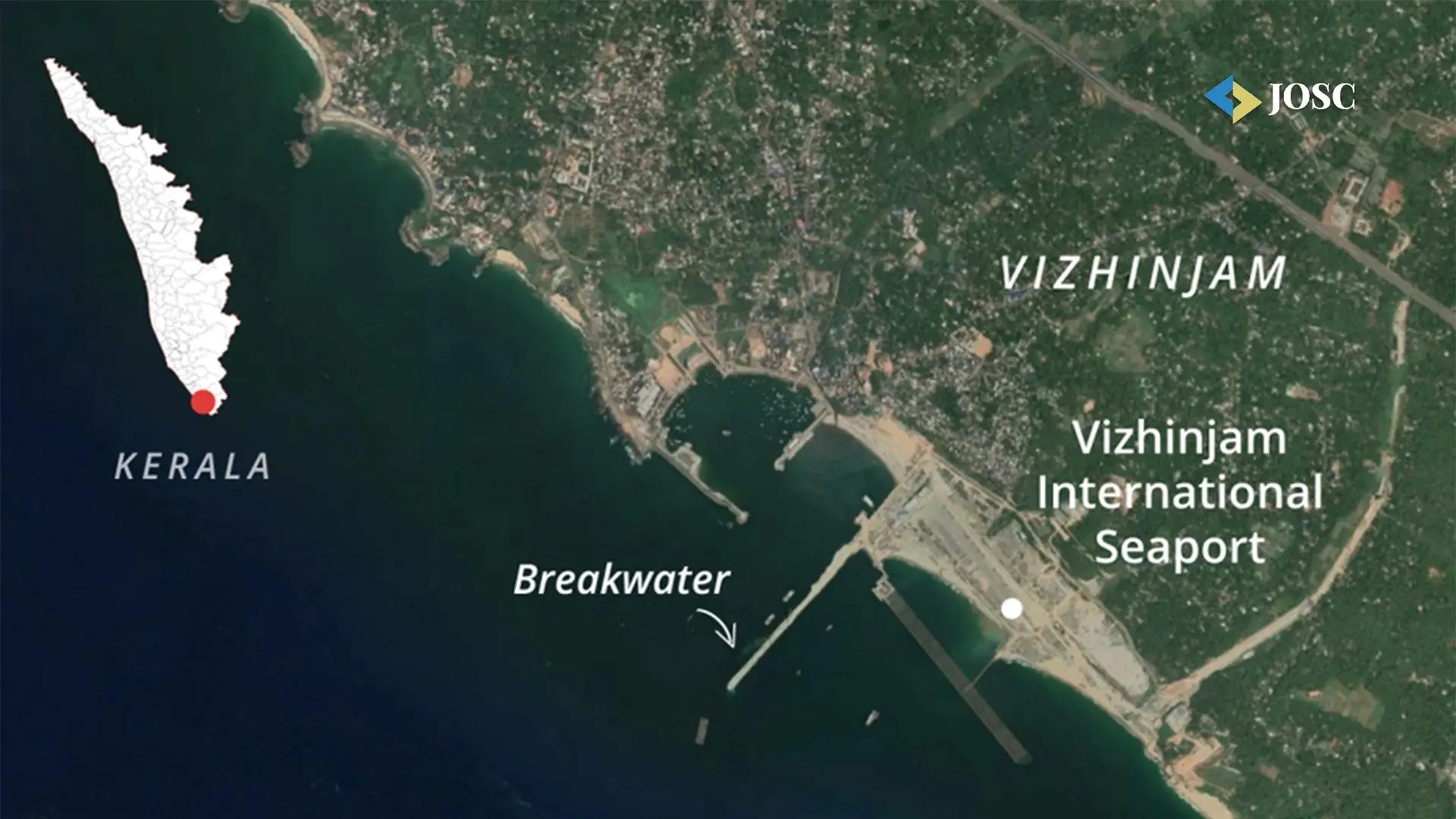
Further south, Vizhinjam Port in Kerala is facing its own version of a capacity crunch. Container storage yards at the port are reportedly operating at their maximum handling capacity, with the ongoing Middle East crisis contributing to a surge in container relaying activity by Mediterranean Shipping Company (MSC), according to industry sources.
Taken together, these developments paint a picture of a South Asian maritime region in active transformation. From Hambantota's Chinese-backed expansion push to JNPA's freight corridor milestone and Mundra's growing congestion challenges, the strategic contours of regional port competition are shifting quickly — and the carriers, shippers, and logistics operators who read these signals correctly will be best placed to benefit.
Explore the latest edition of Journal of Supply Chain Magazine and be part of the JOSC News Bulletin.
Discover all our upcoming events and secure your tickets today.
Journal of Supply Chain is a Hansi Bakis Media brand.
Subscribe to our Daily Newsletter
Subscribe For FreeBy continuing you agree to our Privacy Policy & Terms & Conditions