News
PSA's Proactive Measures to Ensure Supply Chain Resilience
 Anamika Mishra,
Sub Editor
Anamika Mishra,
Sub Editor
Anamika Mishra,
Sub Editor
Anamika Mishra,
Sub Editor
Since early 2024, PSA Singapore (PSA) has greatly improved its operational capabilities to handle greater activity and alleviate the effects of global supply chain disruptions.
The efforts include improving front-line capabilities, opening new berths at Singapore's Tuas Port, and reactivating berths and yard space at Keppel Terminal. The upshot is that port wait times have recently dropped to two days or less on average.
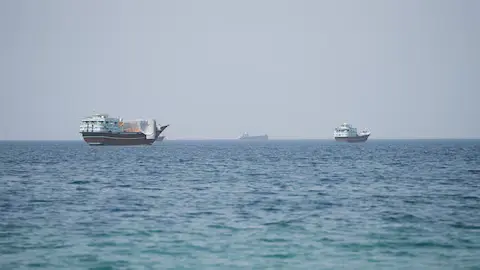
Despite persistent interruptions, such as the situation in the Red Sea, which continue to have an impact on supply chain dynamics, PSA is working with its clients to develop effective solutions during these unpredictable times.
Throughout the year, PSA has experienced strong demand for berths and erratic vessel arrivals, resulting in concentrated vessel influxes on various days of the week. Even when all of PSA's berths are fully utilised, wait times have increased significantly. Larger vessel calls necessitated extended stays and longer container transhipment periods.
These challenges are caused by a variety of factors, including an indirect reduction in global shipping capacity as a result of the Red Sea situation, congestion at upstream and downstream ports, and strategic adjustments by shipping lines to regain schedule integrity, resulting in significant shifts in vessel arrival patterns and call sizes.
"As the flagship project for the Group, PSA Singapore remains committed to meeting the challenges of ongoing volatility and ensuring the port's development and handling capacity align with our customers' needs," said Ong Kim Pong, CEO of PSA International.
He went on to say, "The Red Sea crisis has significantly disrupted global shipping and trade, and we expect this challenging situation to last for a long time, potentially extending port congestion from Asia to Europe." PSA is collaborating with like-minded customers and stakeholders on a number of node-to-network initiatives to improve coordination between upstream and downstream ports, increasing shipping schedule dependability and overall network efficiency."
Ong Kim Pong stated, "At the same time, we are continually looking to expand our network of port facilities and ecosystems in order to increase our worldwide presence in areas where we can offer value and improve cargo flows.
We remain committed to strengthening collaboration with our clients to meet their demands in the ever-changing global landscape by leveraging our port facilities, supply chain capabilities, and, most importantly, our people.
In 2024, almost 90% of container boats arrived off-schedule at Singapore's port, up from 77% in 2023. Concurrently, vessel port stays at PSA have increased by 22% over the same period last year.
This increase is linked to handling more containers per vessel call as demand rises and container re-handling procedures become more common. This operation entails unloading containers from the vessel to make room for others, taking into account criteria such as port of discharge, weight concerns, and vessel stability, and then reloading these containers onto the vessel.
During the first half of 2024, container re-handlings on giant vessels berthed at PSA grew by 8% over the previous year. This increase reflects the increased vessel utilisation caused by the Red Sea situation, prompting shipping lines to use PSA more extensively to optimise container stowage and ensure maritime safety, especially as mega vessels increasingly choose the longer route around the Cape of Good Hope.
These operational changes have increased vessel port stays and are projected to have an impact on incoming vessel berthing schedules, despite PSA's continuous efforts to preserve productivity.
Despite these difficulties, PSA's preemptive actions and efficient communication with shipping lines and other stakeholders have greatly reduced the impact of disruptions. The PSA Singapore management team has worked closely with the unions, with strong backing from Singapore's Maritime & Port Authority and Ministry of Transport, to ensure that the port ecosystem runs efficiently.
Explore the latest edition of Journal of Supply Chain Magazine and be part of the JOSC News Bulletin.
Discover all our upcoming events and secure your tickets today.
Journal of Supply Chain is a Hansi Bakis Media brand.
Subscribe to our Daily Newsletter
Subscribe For FreeBy continuing you agree to our Privacy Policy & Terms & Conditions