News
India May Be Falling Behind in Nuclear Power but It Cannot Afford to Lose the Supply Chain Fight
 Anamika Mishra,
Sub Editor
Anamika Mishra,
Sub Editor
Anamika Mishra,
Sub Editor
Anamika Mishra,
Sub Editor
As India moves closer to another much-anticipated Union Budget, recent American actions in Venezuela offer a stark reminder of a deeper vulnerability. At its core, India’s growth story still rests on imported energy primarily oil to keep its economic engine running. This dependence explains why India has pushed hard on renewable energy, particularly solar, to meet electricity demand. Yet the reality remains uncomfortable: close to one-third of India’s electricity generation today still relies on oil and gas.
India’s dependence on imported energy could climb to a troubling 51% by 2030. As incomes rise, energy use rises with them, and energy-hungry data centres and artificial intelligence infrastructure are only adding to future demand. In this context, nuclear energy stands out as a reliable, safe, and domestically anchored option one that can prevent supply-chain risks from turning into geopolitical crises, and vice versa.
India entered the nuclear arena early, building a formidable scientific ecosystem under the leadership of Homi Bhabha, backed fully by Jawaharlal Nehru. This foundation ensured that the Department of Atomic Energy (DAE), attached directly to the Prime Minister’s Office, enjoyed exceptional autonomy. The DAE ran its own institutions, trained scientists from an early stage, maintained strict merit-based standards, and largely avoided the bureaucratic paralysis that affected much of India’s broader scientific establishment. Through the 1980s, India was genuinely at the frontier both in indigenous nuclear technology and in civilian applications of radioactive materials.
That edge has eroded sharply in an increasingly competitive global environment. China, Russia, and the United States have poured sustained investments into nuclear energy. Alongside enabling regulations, these countries channelled large public funds into research and development aimed at making nuclear power safer, cheaper, and commercially viable. India, by contrast, hesitated largely focusing on reactor construction that delivered only incremental technological gains.
India’s recent attempt to reform the civil nuclear framework through the Sustainable Harnessing and Advancement of Nuclear Energy for Transforming India (SHANTI) Act, 2025, comes far too late. By the time the law was enacted, all three competitors had independently developed small modular reactors (SMRs). The announcement of the Bharat Small Reactor (BSR) followed awkwardly after working SMRs were already operational in both the US and China. In a striking reversal, India is now seeking partnerships with nations that are simultaneously its geopolitical and technological rivals to recover lost ground.
Bhabha had long understood that true energy security lay in exploiting India’s vast thorium reserves, found abundantly in monazite sands along the coastline. India holds the world’s largest thorium deposits. His three-stage nuclear roadmap was designed to eventually transition to thorium-based reactors. Yet progress on this vision has been minimal. Even as India spends enormous sums annually on energy imports, its thorium wealth remains largely untouched.
Conference
Conference
Early concerns around plutonium production for both military and civilian use may have slowed progress. But the neglect of thorium is also tied to nuclear agreements with the US and France beginning in 2005, which prioritised rapid capacity expansion through uranium reactors over long-term thorium research. During this period, Russia advanced faster successfully reaching stage two of Bhabha’s plan with a functioning fast-breeder reactor capable of converting thorium-232 into usable uranium-233. India’s own prototype fast-breeder reactor at Kalpakkam, meanwhile, relied heavily on Russian support.
The decisive blow came just days ago. A US-based firm, Clean Core Thorium Energy, backed by Idaho National Laboratory, announced the successful production and testing of commercially viable thorium-based fuel compatible with pressurised heavy water reactors the same reactor type that dominates India’s nuclear fleet. That this breakthrough came from an American startup rather than India’s DAE raises deeply uncomfortable questions.
With this development, India has effectively ceded leadership in the thorium race. The state-run NTPC has even acknowledged that it is exploring the acquisition of a stake in Clean Core Thorium Energy—an admission that borders on acceptance of defeat. From early pioneer to persistent laggard, India’s nuclear establishment has much to explain.
Even more troubling is the revelation that Clean Core Thorium Energy lists Anil Kakodkar among its advisors. Kakodkar is a former BARC director, former Atomic Energy Commission chairman, and former DAE secretary, who continues to serve on multiple government boards and committees. The involvement of someone who once stood at the very apex of India’s nuclear hierarchy with an entity that outpaced India on its own stated objectives raises serious concerns.
India has paid a heavy price for similar institutional leakages before. The country once led the world in pharmaceutical process chemistry, particularly fermentation-based APIs. Over time, scientists in government labs collaborated closely with private firms, sometimes establishing their own ventures. Knowledge developed in public institutions seeped into these companies. Chinese firms then acquired them, absorbed the know-how, and eventually dismantled operations in India often binding scientists with agreements that prevented further knowledge sharing.
The result was catastrophic. India lost its dominance in fermentation-based APIs, while China achieved overwhelming economies of scale. Today, India is forced to spend billions under schemes like the Production-Linked Incentive to claw back fragments of what it once pioneered and then squandered.
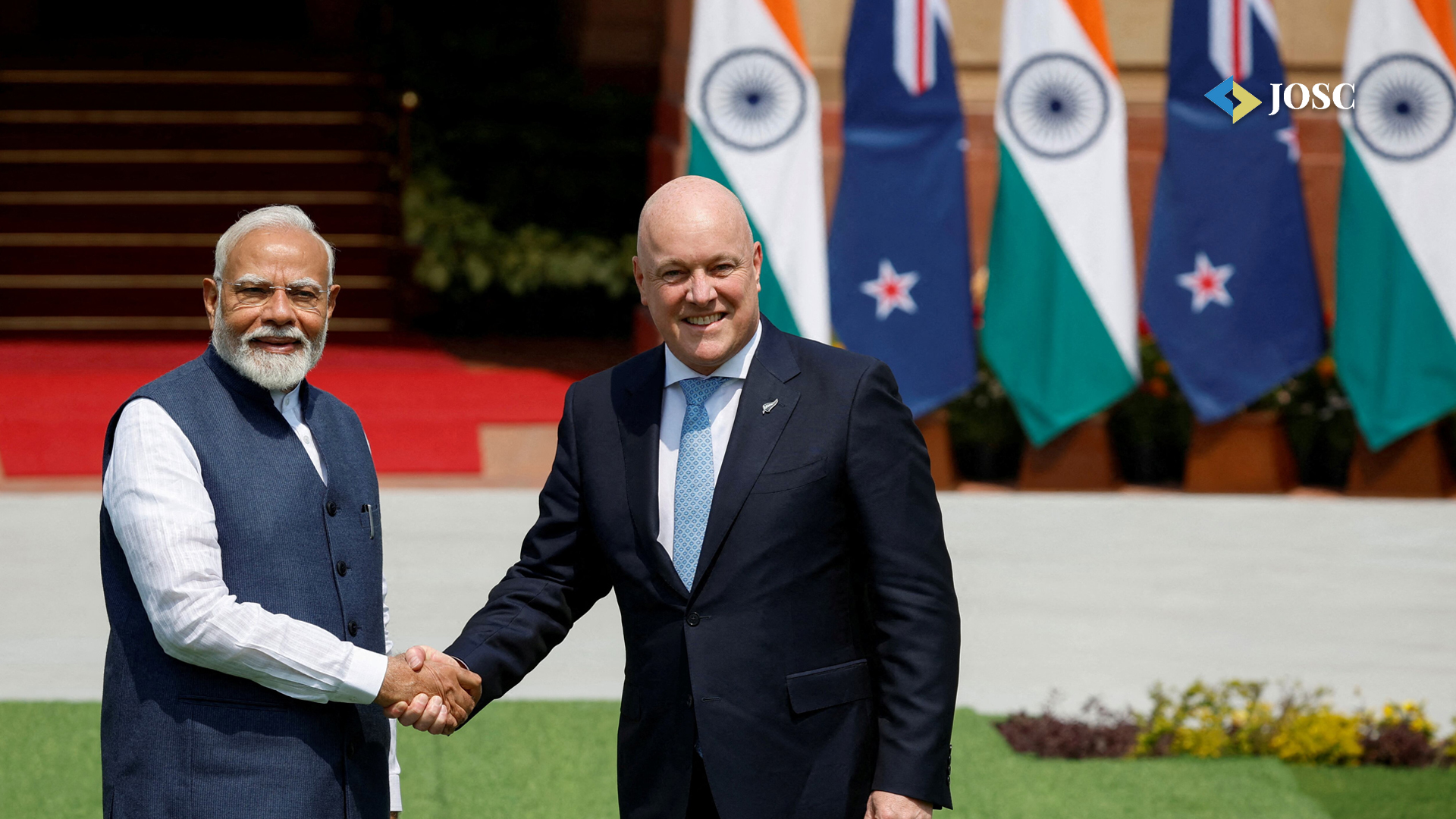
Is India’s civilian nuclear sector headed down the same path? Decades after the civil nuclear deal, the US has begun approving multiple entities, including Clean Core Thorium Energy, to establish operations in India. A 2025 joint statement by the American president and the Indian prime minister explicitly refers to building “US-designed nuclear reactors in India through large-scale localisation and possible technology transfer”.
If the technology stack used to monetise India’s thorium is foreign, the very logic of Bhabha’s three-stage plan collapses form replacing substance. Dependence on the US, itself recognised as a strategic rival, would embed a profound supply-chain vulnerability into India’s nuclear ecosystem, sharply limiting strategic autonomy. Investment is welcome, but dependence in an era of great-power competition is routinely weaponised. In a world governed by matsya nyaya where the big consume the small such vulnerabilities are costly.
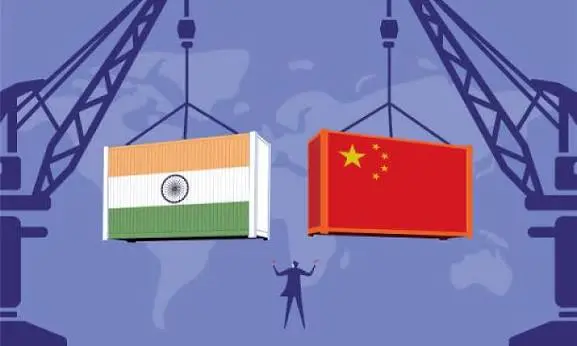
Securing supply chains is no longer just an economic challenge; it is a form of warfare. These issues are explored in detail in the book India’s Supply Chains in a World at War: Trade, Power, Conflict, and Entanglement among Empires in the New Global Order, which includes a dedicated chapter on India’s energy security. The book examines how conflict, commerce, and civilisation have become tightly interwoven, reshaping power in the emerging global order. As resilience replaces efficiency as the guiding principle, real power now lies in controlling routes, resources, and relationships not territory alone.
Gautam Desiraju is at the Indian Institute of Science, Bengaluru. Deekhit Bhattacharya is an advocate based in New Delhi. The views expressed are personal.
Explore the latest edition of Journal of Supply Chain Magazine and be part of the JOSC News Bulletin.
Discover all our upcoming events and secure your tickets today.
Journal of Supply Chain is a Hansi Bakis Media brand.
Subscribe to our Daily Newsletter
Subscribe For FreeBy continuing you agree to our Privacy Policy & Terms & Conditions