News
Budget 2025-2026: Setting up for Viksit Bharat 2047
 Anamika Mishra,
Sub Editor
Anamika Mishra,
Sub Editor
Anamika Mishra,
Sub Editor
Anamika Mishra,
Sub Editor
Quoting Telugu poet and playwright Shri Gurajada Appa Rao’s famous saying, ‘A country is not just its soil; a country is its people.’ the finance minister presented the Union Budget 2025-26 with the theme “Sabka Vikas” stimulating balanced growth of all regions. The Union Budget for 2025-2026 is an important step towards making India a Viksit Bharat (Developed India) by the year 2047, when our country will complete 100 years of independence. The finance minister presented a vision that focuses on growth, welfare, jobs, and technology. This budget is made with long-term planning, keeping in mind the dreams of common people, farmers, youth, and businesses.
Budget 2025-26: Let’s understand
In line with this theme, the finance minister outlined the broad Principles of Viksit Bharat to encompass the following:
a) Zero-poverty;
b) Hundred per cent good quality school education;
c) Access to high-quality, affordable, and comprehensive healthcare;
d) Hundred per cent skilled labour with meaningful employment;
e) Seventy per cent women in economic activities; and
f) Farmers making our country the ‘food basket of the world.
This union budget promised to cater every sector whether it is middle class, industries, unicorn or women growth. With the theme of “Sbka Vikas”, our finance minister made this budget. In recent times, the revenge game took by India for Pakistan was only made possible because of the Budget. The strict rules set by her made this possible.
Conference
Conference
The Budget aims to initiate reformative in Taxation, Power sector, Urban development, Mining, Financial Sector and Regulatory Reforms to augment India’s growth potential and global competitiveness. Union Budget highlights that Agriculture, MSME, Investment and exports are engines in the journey to Viksit Bharat using reforms as fuel, guided by the spirit of inclusivity.
1st Engine: Agriculture
Budget announced ‘Prime Minister Dhan-Dhaanya Krishi Yojana’ in partnership with states covering 100 districts to increase productivity, adopt crop diversification, augment post-harvest storage, improve irrigation facilities, and facilitate availability of long-term and short-term credit.
A comprehensive multi-sectoral ‘Rural Prosperity and Resilience’ programme will be launched in partnership with states to address underemployment in agriculture through skilling, investment, technology, and invigorating the rural economy. The goal is to generate ample opportunities in rural areas, with focus on rural women, young farmers, rural youth, marginal and small farmers, and landless families.
Union Finance Minister announced that Government will launch a 6-year “Mission for Aatma-nirbharta in Pulses” with special focus on Tur, Urad and Masoor. Central agencies (NAFED and NCCF) will be ready to procure these 3 pulses, as much as offered during the next 4 years from farmers.
The Budget has outlined measures to Comprehensive Programme for Vegetables & Fruits, National Mission on High Yielding Seeds, and a five-year Mission for Cotton Productivity amongst other measures to promote agriculture and allied activities in a major way.
Smt. Sitharaman announced the increase in loan limits from Rs. 3 lakhs to Rs. 5 lakhs for loans taken through Kisan Credit Cards under modified interest subvention scheme.
2nd Engine: MSMEs
Finance Minister described MSMEs as the second power engine for development as they constitute for 45% of our exports. To help MSMEs achieve higher efficiencies of scale, technological upgradation and better access to capital, the investment and turnover limits for classification of all MSMEs enhanced to 2.5 and 2 times, respectively. Further, steps to enhance credit availability with guarantee cover have also been announced.
The finance minister also announced the launch of a new scheme for 5 lakh women, Scheduled Castes and Scheduled Tribes first-time entrepreneurs. This will provide term loans up to Rs. 2 crores during the next 5 years.
Smt. Sitharaman announced that the Government will also implement a scheme to make India a global hub for toys representing the 'Made in India' brand. She added that the Government will set up a National Manufacturing Mission covering small, medium and large industries for furthering “Make in India”.
3rd Engine: Investment
Defining Investment as the third engine of growth, the Union Minister prioritized investment in people, economy and innovation.
Under the investment in people, she announced that 50,000 Atal Tinkering Labs will be set up in Government schools in next 5 years.
Smt. Nirmala Sitharaman announced that broadband connectivity will be provided to all Government secondary schools and primary health centres in rural areas under the Bharatnet project.
She said Bharatiya Bhasha Pustak Scheme will be implemented to provide digital-form Indian language books for school and higher education.
Five National Centres of Excellence for skilling will be set up with global expertise and partnerships to equip our youth with the skills required for “Make for India, Make for the World” manufacturing.
A Centre of Excellence in Artificial Intelligence for education will be set up with a total outlay of 500 crore.
Budget announced that Government will arrange for Gig workers’ identity cards, their registration on the e-Shram portal and healthcare under PM Jan Arogya Yojana.
Under the investment in Economy, Smt Sitharaman said Infrastructure-related ministries will come up with a 3-year pipeline of projects in PPP mode.
She added that an outlay of Rs 1.5 lakh crore was proposed for the 50-year interest free loans to states for capital expenditure and incentives for reforms.
She also announced the second Asset Monetization Plan 2025-30 to plough back capital of Rs 10 lakh crore in new projects.
The Jal Jeevan Mission was extended till 2028 with focus on the quality of infrastructure and Operation & Maintenance of rural piped water supply schemes through “Jan Bhagidhari”.
Government will set up an Urban Challenge Fund of Rs.1 lakh crore to implement the proposals for ‘Cities as Growth Hubs’, ‘Creative Redevelopment of Cities’ and ‘Water and Sanitation’.
Under the investment in Innovation, an allocation of ₹20,000 crore is announced to implement private sector driven Research, Development and Innovation initiative.
Finance Minister proposed National Geospatial Mission to develop foundational geospatial infrastructure and data which will benefit urban planning.
Budget proposes Gyan Bharatam Mission, for survey, documentation and conservation of more than 1 crore manuscripts with academic institutions, museums, libraries and private collectors. A National Digital Repository of Indian knowledge systems for knowledge sharing is also proposed.
4th Engine: Exports
Smt. Sitharaman defined Exports as the fourth engine of growth and said that jointly driven by the Ministries of Commerce, MSME, and Finance; Export Promotion Mission will help MSMEs tap into the export market. She added that a digital public infrastructure, ‘BharatTradeNet’ (BTN) for international trade was proposed as a unified platform for trade documentation and financing solutions.
The finance minister mentioned that support will be provided to develop domestic manufacturing capacities for our economy’s integration with global supply chains. She also announced that government will support the domestic electronic equipment industry for leveraging the opportunities related to Industry 4.0. A National Framework has also been proposed for promoting Global Capability Centres in emerging tier 2 cities.
The government will facilitate upgradation of infrastructure and warehousing for air cargo including high value perishable horticulture produce.

Reforms as the Fuel
Defining Reforms as the fuel to the engine, Smt. Sitharaman said that over the past 10 years, the Government had implemented several reforms for convenience of tax payers, such as faceless assessment, tax payers charter, faster returns, almost 99 per cent returns being on self-assessment, and Vivad se Vishwas scheme. Continuing with these efforts, she reaffirmed the commitment of the tax department to “trust first, scrutinize later”.
Financial Sector Reforms and Development
In a demonstrated steadfast commitment of the Government towards ‘Ease of Doing Business’, the Union Finance Minister proposed changes across the length and breadth of the financial landscape in India to ease compliance, expand services, build strong regulatory environment, promote international and domestic investment, and decriminalisation of archaic legal provisions.
The Union Finance Minister proposed to raise the Foreign Direct Investment (FDI) limit for the insurance from 74 to 100 per cent, to be available for those companies that invest the entire premium in India.
Smt. Sitharaman proposed a light-touch regulatory framework based on principles and trust to unleash productivity and employment. She proposed four specific measures to develop this modern, flexible, people-friendly, and trust-based regulatory framework for the 21st first century, viz.:
High Level Committee for Regulatory Reforms
Investment Friendliness Index of States
Mechanism under the Financial Stability and Development Council (FSDC)
Jan Vishwas Bill 2.0
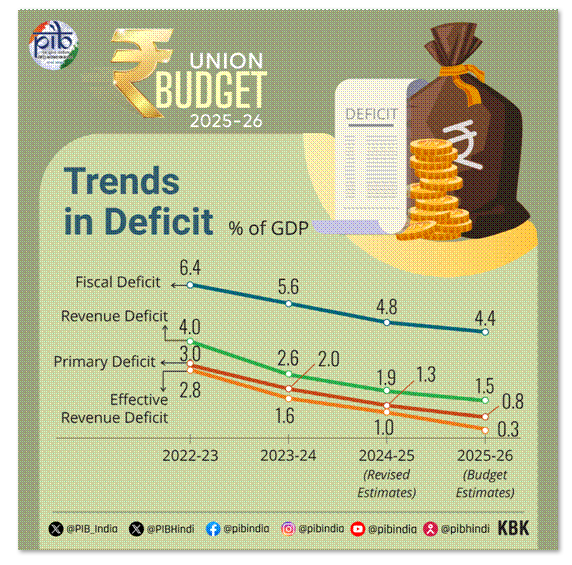
Reiterating the commitment to stay the course for fiscal consolidation, the Union Finance Minister stated that the Government endeavours to keep the fiscal deficit each year such that the Central Government debt remains on a declining path as a percentage of the GDP and the detailed roadmap for the next 6 years has been detailed in the FRBM statement. Smt. Sitharaman stated that the Revised Estimate 2024-25 of fiscal deficit is 4.8 per cent of GDP, while the Budget Estimates 2025-26 is estimated to be 4.4 per cent of GDP.
Paving the Way for Viksit Bharat @2047
The Union Budget 2025–2026 is more than just a financial statement, it is a visionary document that lays the foundation for India's long-term development. With 2047 marking 100 years of India’s independence, the government has set an ambitious but achievable target of making India a Viksit Bharat, a fully developed, strong, and self-reliant nation. This budget is a clear roadmap that aligns the present efforts with the long-term vision of a prosperous future.
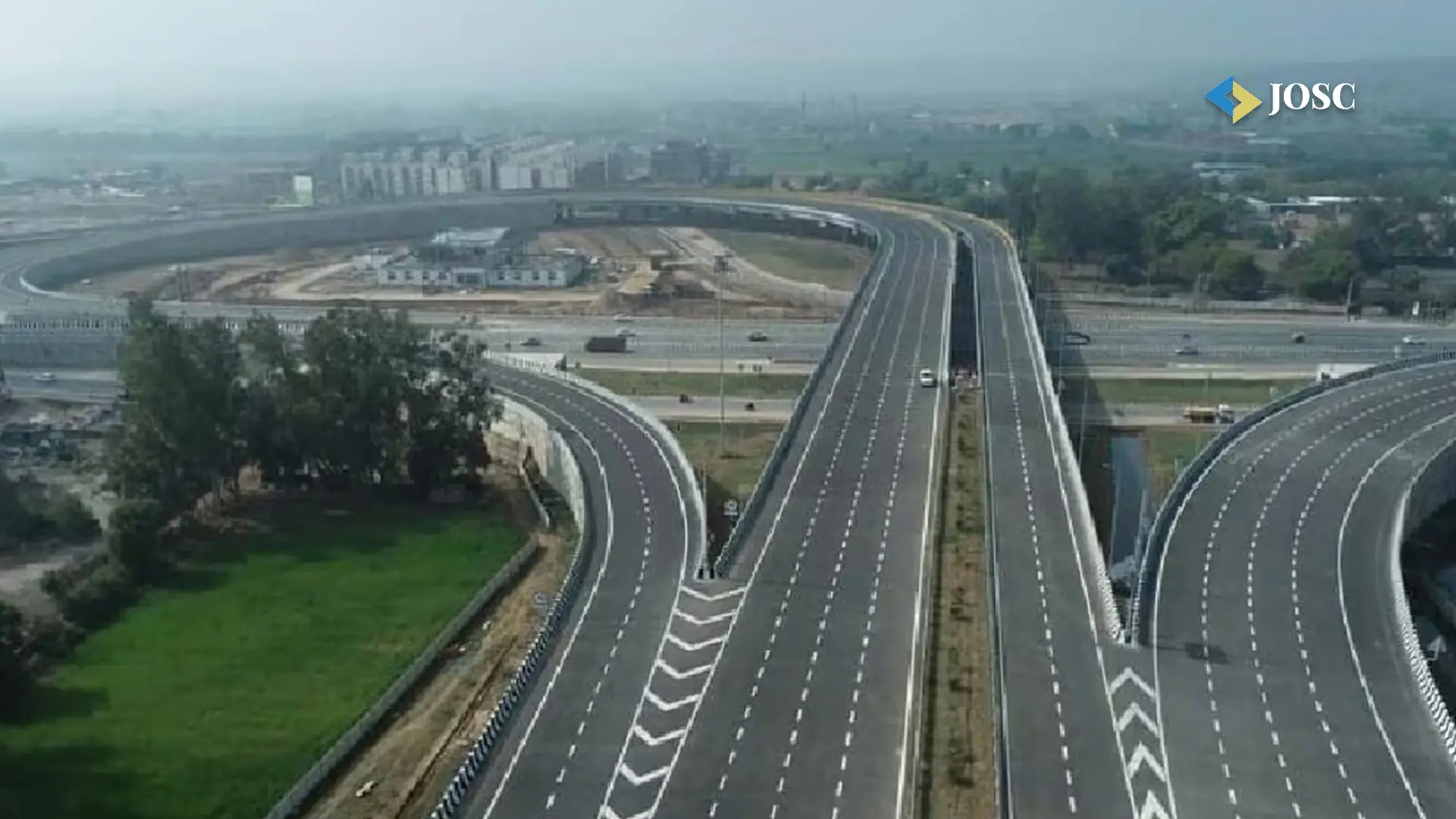
One of the key pillars of a developed nation is robust infrastructure, and this budget gives it top priority. By investing heavily in highways, railways, logistics, and digital connectivity, India is preparing itself for faster economic activity, improved trade, and job creation. These infrastructure investments will not only boost today’s economy but will continue to yield benefits for decades to come, connecting remote areas, improving accessibility, and reducing regional imbalances.
To ensure inclusive growth, the budget focuses on rural development and agriculture. Modern irrigation projects, better storage facilities, and support for agri-tech will empower farmers and reduce their dependence on weather. Over time, this will lead to higher rural incomes, food security, and a stronger rural economy, an essential step for a truly developed nation where no citizen is left behind.
Youth are the builders of tomorrow, and the budget takes concrete steps to prepare India’s young population for the future. By investing in skill development, entrepreneurship, and innovation especially in fields like AI, robotics, and green technology, the government is helping youth become future-ready. This will create a generation of confident, skilled, and job-creating citizens who can lead India into a technology-driven global economy by 2047.
Equally important is human development through quality health and education. The expansion of medical institutions, digital health records, smart classrooms, and teacher training will result in a healthier and more educated population. These are the basic foundations of a developed nation, and the budget rightly prioritizes them to ensure long-term social progress.
Another crucial area is sustainability and clean energy. India has taken the global lead in promoting renewable energy and reducing its carbon footprint. The budget supports this transition with investments in solar energy, green hydrogen, and electric mobility. By 2047, India aims to be not only economically strong but also environmentally responsible, and these steps make that goal achievable.
The budget also focuses on governance, digital services, and ease of living, which will bring transparency, reduce corruption, and empower every citizen. Welfare schemes for women, the poor, and senior citizens ensure that the benefits of development reach every section of society.
In conclusion, Budget 2025-2026 is a forward-looking and inclusive blueprint. It combines economic growth with social welfare, tradition with technology, and sustainability with speed. By addressing current challenges and planting the seeds for future transformation, this budget brings India one step closer to realizing the dream of Viksit Bharat @2047, a nation that is prosperous, inclusive, innovative, and globally respected.
Explore the latest edition of Journal of Supply Chain Magazine and be part of the JOSC News Bulletin.
Discover all our upcoming events and secure your tickets today.
Journal of Supply Chain is a Hansi Bakis Media brand.
Subscribe to our Daily Newsletter
Subscribe For FreeBy continuing you agree to our Privacy Policy & Terms & Conditions