News
Adani Ports Hits 500 Million Tonne Milestone, Eyes 1 Billion by 2030
 Our Correspondent,
Our Correspondent,
Our Correspondent,
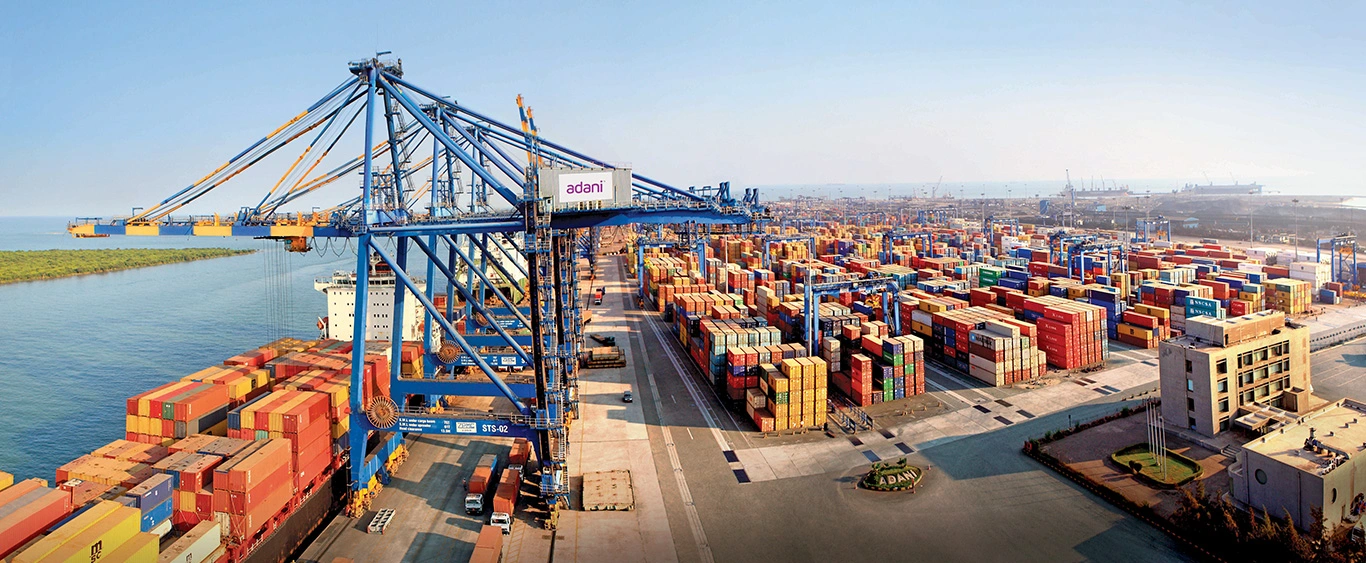
Adani Ports and Special Economic Zone Ltd (APSEZ) has reached a landmark moment in its operational history, having crossed the 500 million tonne cargo handling milestone in recent days. The achievement marks a significant chapter for India's largest private port developer and operator, reflecting decades of infrastructure investment, strategic expansion, and the steady buildup of an integrated logistics network that now spans domestic and international markets.
The company traced the origins of this milestone back to its founding as a single-port operation in 1998. Over the past two and a half decades, APSEZ has transformed that modest beginning into a sprawling multi-location platform comprising 19 ports and terminals spread across key coastal and hinterland-linked trade corridors. This evolution has not been limited to port infrastructure alone. The company has deliberately woven together port operations, rail connectivity, road logistics, warehousing, and cargo handling facilities to create what it describes as an integrated transport ecosystem — one that positions it as a vital artery in India's broader trade network.
The scale of APSEZ's current operations is substantial. The company now commands an annual cargo handling capacity of approximately 633 million tonnes and accounts for nearly 28 percent of India's total port cargo volumes. These numbers reflect a growth trajectory built through both organic expansion and carefully executed acquisitions, each of which has extended the company's reach across new geographies and freight segments.
Perhaps the most telling indicator of APSEZ's accelerating momentum lies in the pace at which it has crossed successive cargo milestones. The company's first 100 million tonnes took roughly 16 years to accumulate — a timeline that underscores just how long building foundational port infrastructure truly takes.
Conference
Conference
By contrast, subsequent milestones have been achieved in progressively shorter intervals, a trend that speaks to measurable improvements in operational efficiency, higher network utilisation, and the compounding effect of an expanding logistics footprint.
Company leadership, in acknowledging the milestone, highlighted the role that ports play as critical gateways for trade and broader economic activity. Management credited sustained investment in infrastructure and logistics capabilities as the foundation of this growth, while also recognising the contributions of customers, commercial partners, and the policy environment that has supported large-scale private sector participation in India's port sector. The emphasis from leadership remains firmly on continuing to strengthen the integrated transport platform rather than resting on the achievement itself.
The timing of this milestone is also noteworthy. It arrives against the backdrop of rising cargo movement and growing logistics demand across India, fuelled by expanding industrial activity, increasing trade flows, and accelerating infrastructure development. APSEZ's integrated model — combining owned port assets with end-to-end logistics services — has allowed it to capture a disproportionately large share of cargo volumes relative to standalone port operators, while simultaneously improving vessel turnaround times and broader operational efficiencies across its network.
Looking further ahead, APSEZ has set an ambitious target of handling 1 billion tonnes of cargo annually by 2030. Achieving that goal will require continued expansion of port capacity, accelerated development of logistics infrastructure, and the deepening integration of multimodal transport systems across the company's existing and future network. It is a target that, if met, would further cement the company's position as the dominant private logistics and port operator in the country.
The broader significance of this milestone extends beyond APSEZ itself. It reflects a structural shift in how India's port and logistics sector is evolving, with large integrated private operators increasingly taking on the role of facilitating trade flows that were once dependent almost entirely on public sector port infrastructure. As industrial output grows and India's ambitions as a global trade hub deepen, the role of operators like APSEZ in enabling that vision becomes ever more central to the country's economic story.
Explore the latest edition of Journal of Supply Chain Magazine and be part of the JOSC News Bulletin.
Discover all our upcoming events and secure your tickets today.
Journal of Supply Chain is a Hansi Bakis Media brand.
Subscribe to our Daily Newsletter
Subscribe For FreeBy continuing you agree to our Privacy Policy & Terms & Conditions