Leaders Opinion
The Algorithm Knows Before You Do: Why India's Supply Chain Transformation Is an AI Story, and Why Leaders Must Own It

Let me tell you about the morning I stopped trusting my gut.
It was the peak of a festive season. We had made our inventory calls the way we always had experience, historical data, and what I would charitably call ‘informed intuition’. By noon, three of our fastest-moving SKUs had stocked out in Tier 2 cities we had systematically underestimated. Meanwhile, a warehouse in the NCR region was holding six weeks’ worth of a variant nobody was buying. The result was lost sales and heavy markdown pressure. The cause was not bad luck. It was an outdated decision-making model facing a world it was never built for.
That experience changed how I think about supply chain decision-making. I am not, at the core, a technology leader. I am a business leader who happens to understand that technology, specifically, artificial intelligence, is the most powerful competitive instrument a supply chain organisation in India has ever had access to. The question I now ask every single day is not: ‘Are we investing in AI?’ The question is: ‘Are we moving fast enough?’
|
$4.6B Projected AI in Supply Chain market in Asia-Pacific by 2028 (MarketsandMarkets, 2024) |
30–50% Reduction in forecasting errors reported by early AI adopters (McKinsey Global Institute) |
$46B Estimated annual retail inventory distortion cost in India due to stockouts & overstocking |
Sources: MarketsandMarkets 2024; McKinsey Global Institute; Retailers Association of India estimates.
These are not incremental improvements—they represent a fundamental shift in how supply chains sense and respond to demand.
We Have Been Forecasting the Past
The supply chain industry has a complicated relationship with data. We have always collected it. We have rarely trusted it fast enough to act on it. For decades, demand planning in Indian retail ran on a rhythm of monthly reviews, quarterly cycles, and annual budgets. The assumption baked into that rhythm was that tomorrow would look roughly like yesterday. It no longer does.
India’s retail landscape today is defined by contradictions that confound traditional models. A consumer in Indore buys the same premium skincare brand as someone in South Mumbai, but through a quick commerce app at 11pm on a Tuesday. A Tier 3 customer in Rajasthan places a return on a fashion item because the Instagram reel made it look different from the product they received. These are not outliers. They are the new normal, and they are arriving faster than annual planning cycles can absorb.
“The real problem with our forecasting was never the data. It was that we kept asking it the wrong question: what happened? AI lets us ask the right one: what is about to happen?”
Gartner estimates suggest that by 2026, up to 75% of enterprises will be applying decision intelligence practices to improve how decisions are made and executed. The organisations doing this well are not the ones with the largest IT budgets. They are the ones that made a deliberate architectural choice: to move from batch intelligence to continuous intelligence. That is the philosophical shift that changes everything.
AI Is Not a Tool. It Is a New Nervous System.
When I speak to peers in the industry, there is a pattern in how the AI conversation unfolds. It starts with pilots, a demand forecasting proof-of-concept here, a dynamic pricing algorithm there. Results are promising. Slides are made. And then, inexplicably, the organisation stalls. The technology works. The transformation does not. I have seen this cycle repeat itself too many times, and I have come to understand exactly why it happens.
The mistake is treating AI as a feature upgrade to an existing process. A faster horse, as the saying goes. In reality, AI-driven supply chain intelligence is not an enhancement to your planning function. It is a replacement of the logic underneath it. When a machine learning model ingests real-time point-of-sale data, weather signals, social sentiment, and hyperlocal demographic shifts simultaneously to produce a replenishment recommendation, it is not doing what your planner does, only quicker. It is doing something your planner structurally cannot do.
The organisations that understand this distinction are building what I call a ‘supply chain nervous system’: a connected architecture that links real-time demand signals from stores, apps, and delivery points directly to core supply chain decisions (allocation, sourcing, routing) with minimal human latency in between. This is not science fiction, leading players such as Reliance Retail, Zomato, and Nykaa are already moving in this direction. The question for every other operator in India is not whether this is the direction. It is whether they will lead it or follow it.
Conference

Conference

India’s Leapfrog Moment, But Only If We Are Bold Enough
Here is what keeps me genuinely excited about working in this space right now. India is not burdened by forty years of legacy infrastructure in the way that many Western supply chain operators are. We are not ripping out and replacing. In many cases, we are building from scratch and we are building into a moment where cloud-native AI platforms, real-time data infrastructure, and edge connectivity are more accessible and affordable than they have ever been.
According to NASSCOM, India produced over 1.4 million technology graduates in 2023 alone. The talent is here. The market complexity with its 28 states, multiple languages, wildly varying consumer behaviours, and last-mile infrastructure gaps, is not a liability. It is, paradoxically, one of the world’s richest training datasets for building resilient, adaptive supply chain intelligence. India presents one of the most complex supply chain environments globally. Solve it here, and you have solved it everywhere.
“India’s market complexity is not a constraint on AI adoption. It is the curriculum. The organisations that train their models on this chaos will build the most durable supply chain intelligence on the planet.”
The ONDC (Open Network for Digital Commerce) initiative and the rapid maturation of UPI-integrated commerce infrastructure are creating data pipes that simply did not exist five years ago. Demand signals that were previously invisible are now flowing. The organisations investing in the capability to read and act on those signals in real time are building a moat that will be very difficult to cross later.
The Hard Truth About Transformation Failure
I want to be honest about something that does not get said enough in industry forums: most AI supply chain transformations underdeliver not because the technology fails, but because leadership fails. I have been in rooms where a beautifully constructed AI demand-sensing model was producing outputs that were meaningfully better than the human forecast and the planning team was quietly ignoring it, because the model’s recommendation did not match what they ‘knew’ from experience.
This is not a technology problem. It is an authority and accountability problem. If the organisation has not made a clear, unambiguous decision about when the algorithm’s recommendation takes precedence over the planner’s intuition, the algorithm will always lose. In practice, this often means defining clear thresholds where system recommendations are auto-accepted, versus scenarios where human intervention is required. Not because it is wrong, but because humans are extraordinarily good at finding reasons to dismiss conclusions they are not comfortable with.
As CIOs and senior leaders, our job is not to deploy the technology. It is to architect the governance around it. That means being explicit about where human judgement adds value (novel situations, relationship-driven decisions, ethical edge cases) and where it does not (high-frequency, data-rich, pattern-based decisions). It means redesigning incentive structures so that planners are rewarded for the quality of outcomes, not the preservation of their process. And it means having the conviction to defend AI-driven recommendations in the boardroom when the model sees something the organisation’s gut does not yet recognise.
The Next Five Years: What Bold Looks Like
I believe we are within five years of autonomous replenishment becoming the operational baseline for India’s organised retail sector. Models that sense demand, trigger purchase orders, route inventory dynamically, and self-correct based on fulfilment feedback, running continuously, at scale, with human oversight reserved for strategic and exception-based decisions. This is not aspiration. The component capabilities exist today.
The trajectory from here runs through three stages that I see playing out across the industry. First, intelligence, replacing rule-based planning with ML-driven demand sensing and dynamic allocation. Second, integration, connecting that intelligence across channels, supplier networks, and logistics partners into a unified decision layer. Third, autonomy, enabling the system to close the loop, executing decisions without requiring a human to manually approve each action. Most Indian retail organisations are somewhere between stages one and two. The ones that reach stage three first will define the competitive standard for everyone else.
“The supply chain leaders who will matter in 2030 are not the ones who managed the best operations. They are the ones who built the most intelligent ones.”
A Personal Commitment
I began this article with a moment that fundamentally changed how I approach supply chains. Let me end with a conviction. The morning those SKUs stocked out was the last day I ran a supply chain on historical averages and managerial instinct alone. Since then, every technology investment I have championed, every architectural decision I have made, has been oriented around a single goal: making the organisation faster and more responsive to uncertainty.
AI is the instrument that makes that possible. Not as a back-office analytics tool, but as the cognitive layer of the supply chain itself - sensing, learning, and deciding in a rhythm that no human planning cycle can match. India’s market is complex, diverse, and accelerating. The supply chains that will win here are not the biggest or the cheapest. They are the most intelligent.
The algorithm knows before you do. The real question is, will you trust it before your competition does?
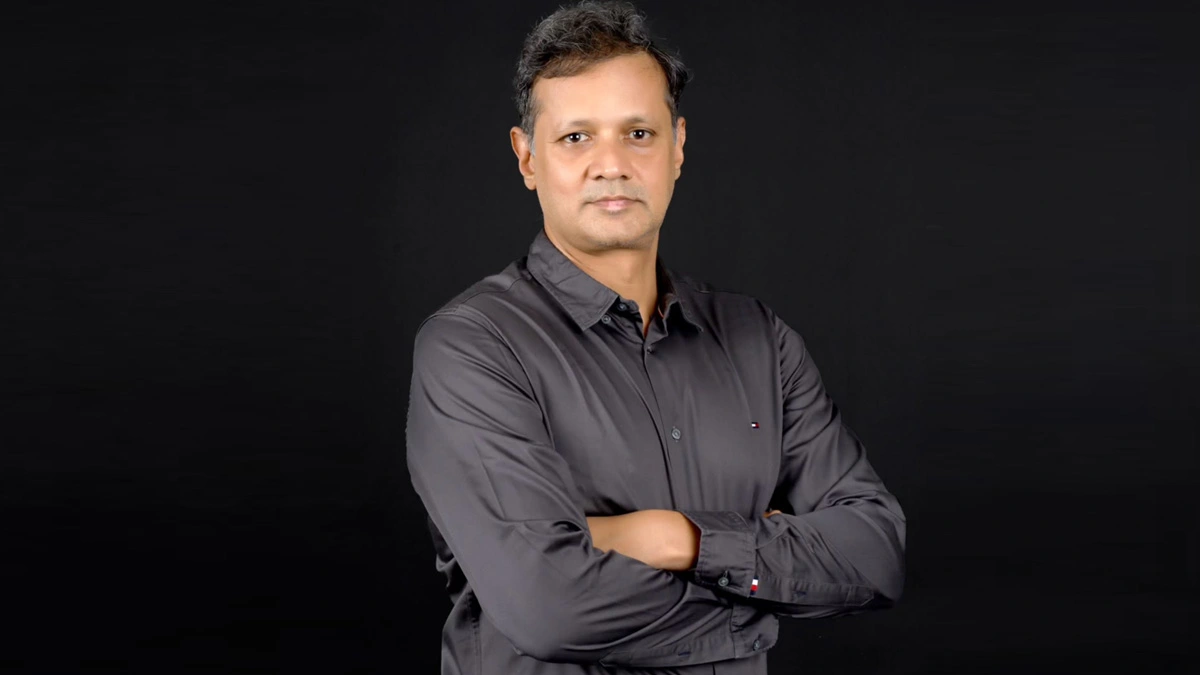
About the Author
Amit Arora is CIO at SHREE (SHR Lifestyles Pvt Ltd), where he leads digital and supply chain transformation across retail and e-commerce operations. With over two decades of experience spanning demand intelligence, omnichannel fulfilment, and enterprise technology, he is a frequent speaker on AI-driven supply chain strategy in India and Southeast Asia.
Explore the latest edition of Journal of Supply Chain Magazine and be part of the JOSC News Bulletin.
Discover all our upcoming events and secure your tickets today.
Journal of Supply Chain is a Hansi Bakis Media brand.
Leave Comment
Join the community of 150,000+ industry professionals
Subscribe to our Daily Newsletter
Subscribe For FreeBy continuing you agree to our Privacy Policy & Terms & Conditions
Latest






Feature Articles

Related