Leaders Opinion
Hormuz to Heavy Industries: The New Supply Chain Shock for Metals and Minerals

The current Iran conflict is no longer just an oil-market story. It has become a live stress test for industrial supply chains. The analysis details how a maritime chokepoint crisis is cascading into energy, freight and industrial disruption, reshaping metals and minerals supply chains in real time.
What begins in the Strait of Hormuz now moves rapidly through LNG and LPG availability, freight markets, marine insurance, industrial gases and downstream metal processing, before reaching factory output and customer delivery commitments. The result is not simply higher prices. It is lower schedule reliability, tighter working capital and a growing premium on continuity over nominal cost.
Within days of escalation in early March, vessel traffic in the strait dropped sharply as ship owners diverted or idled tonnage. Freight rates surged, war-risk insurance repriced aggressively, and energy markets moved into stress mode. For supply-chain leaders, the 2026 Hormuz disruption is a system shock.

A chokepoint turns into a supply‑chain operating system failure: The real problem is not war alone it is system fragility
For years, resilience in metals and minerals was framed as a sourcing problem: add suppliers, build buffers and negotiate indexed contracts. That playbook is no longer sufficient.
In today’s system, supply chains do not fail first at the mine. They fail through route disruption, fuel scarcity, freight dislocation, insurance repricing, foreign-exchange pressure and processing concentration. A chokepoint disruption like Hormuz exposes this fragility immediately. Materials may still exist, but the system that moves, powers and converts them begins to fail.
The first casualty of this crisis is not supply. It is conversion.
Why Hormuz Matters: Maritime Shock to Plant Disruption
No other chokepoint combines this scale of oil, LNG and industrial input flows in a single corridor. The transmission mechanism from Hormuz to industry follows a clear pattern:

This concentration of energy, industrial inputs and export flows in a single corridor creates a structural vulnerability unmatched elsewhere in global trade.
Energy Shock (LNG, LPG AND INDUSTRIAL GASES)
The disruption is intensifying through energy markets. Qatar’s LNG supply (representing roughly 20% of global trade) has been affected, with outages extending risk into the coming months. This is already spilling into industrial gases, with helium prices doubling due to Qatar’s dominant global share. This creates a cascading effect:
- LNG → power generation
- LPG → industrial fuel
- Helium → semiconductor and high-tech manufacturing

Together, these channels compress industrial throughput even before raw material availability is affected. This is not just an energy disruption. It is the fastest transmission channel from geopolitics into metals, manufacturing and high-tech supply chains.
What the market is already telling us:
Indicators are already reflecting stress across commodities, logistics and currency.
|
Indicator |
Movement |
|
Aluminium |
>$3,500/t (4-year high) |
|
Brent crude |
~+40% since escalation |
|
Freight rates |
2–4x increase (select routes) |
|
War-risk insurance |
Up to ~3% of vessel value |
|
INR/USD |
~92–93 (record weakness) |
Table 1 : Beroe Analysis
The key shift is structural: cost escalation is no longer driven only by commodity benchmarks. It is driven by the full landed-cost stack, including freight, insurance, FX and operational disruption. Only part of this increase is commodity-driven. The rest is supply-chain friction.
Conference

Conference

This stress is now translating into visible dislocations across key metals markets, most clearly in aluminium, the first industrial signal.
The Gulf region accounts for roughly 9% of global primary aluminium production, with around 80% of output exported. As shipping routes through Hormuz became constrained, prices rose above $3,500 per tonne, a four-year high, with analysts warning of potential spikes toward $4,000 in more severe scenarios.

Producers are already adapting. Emirates Global Aluminium has begun rerouting exports and alumina imports through Oman’s Port of Sohar, highlighting how route optionality is becoming a core competitive advantage.
The United States is particularly exposed, with the Middle East supplying over one-fifth of its aluminium imports.
The disruption is extending beyond aluminium into steel and bulk materials.
The impact is not limited to aluminium. Iran and Bahrain together account for roughly 18% of global seaborne pellet exports. In bulk materials, disruption is driven more by logistics than by production constraints. Any sustained disruption threatens blast-furnace operations across importing regions. At the same time:
- Steel flows are being disrupted
- Minor bulks (alumina, bauxite, industrial minerals) face logistics constraints
- Petrochemical-linked inputs are tightening
For many industrial buyers, the immediate constraint is not raw material availability, but fuel, freight and processing continuity.
India & Asia: The Impact Epicentre
Asia is the most exposed region to Hormuz disruption, accounting for nearly 85–90% of flows. India illustrates how quickly this exposure becomes industrial stress. In such systems, industry becomes the shock absorber.
This exposure is already translating into operational stress across industrial sectors.
|
Indicator |
Value |
|
Crude import dependence (Middle East) |
>40% |
|
LPG dependence |
~90% |
|
LPG demand (March, partial) |
-17.3% YoY |
|
Currency |
INR ~92–93/USD |
Table 2 : Beroe Analysis
As fuel shortages intensify, governments prioritize households and essential services. For metals and manufacturing:
- Energy costs rise
- Fuel availability tightens
- Processing throughput declines
- Imported input costs increase
The impact is particularly severe for gas-dependent sectors such as stainless steel, aluminium extrusion and heat treatment. Energy allocation, not metal availability, becomes the binding constraint.
The second vulnerability: Concentrated Critical Mineral Processing
The Hormuz shock is colliding with an already fragile system in critical minerals. China remains dominant across rare earths, magnets and battery materials, with some segments exceeding 80–90% global share. In 2024 alone, China exported around 58,000 tonnes of rare-earth magnets. This creates a dual dependency. This is not diversification risk, it is concentration risk across two independent systems
|
Dependency |
Location |
|
Energy & logistics |
Hormuz |
|
Processing & refining |
China |
Table 3: Beroe Analysis
This is the first time a maritime chokepoint shock and a processing chokepoint risk are colliding simultaneously. Together, these form a dual vulnerability trap.
What Companies Should Expect Next: Scenario Model
In the base case, supply chains will not normalize cleanly even if hostilities ease. There are at least three lags after any de-escalation: vessel repositioning, insurance repricing and restart time for gas, petrochemical, smelting and downstream-conversion assets. That is why the next 30–90 days matter more than the next headline.
Based on current data and historical behaviour, industrial buyers are broadly working with three scenarios rather than a single forecast. These ranges are analytical, not exchange benchmarks, but they reflect what banks, risk consultancies and industry bodies are openly discussing as the conflict drags on.

Table 4: Beroe Analysis
What supply-chain leaders must do now (next 30–90 days)
- First, classify materials by shutdown criticality rather than annual spend. A low-volume industrial gas, alloying addition or specialty consumable may be more dangerous than a high-value metal contract if it stops the plant.
- Second, rebuild landed-cost models to capture benchmark price, premium, freight, insurance, FX and downtime risk rather than relying on exchange indices alone.
- Third, secure route optionality now. EGA’s use of Sohar is not tactical improvisation; it is what resilience looks like under pressure.
- Fourth, protect gas-linked downstream operations before chasing nominal commodity-cost savings. In extrusion, rolling, heat treatment, stainless conversion and certain fabricated products, continuity is worth more than the last dollar of purchase-price advantage.
- Fifth, accelerate commercial pass-through. Quarterly resets are too slow when freight, fuel and insurance are repricing daily.
The 2026 Hormuz shock is clearly exposing where industrial supply chains are structurally fragile — and where they must be reinforced immediately.

For critical minerals, those design decisions are especially urgent. Disruption in Hormuz is arriving just as governments in Washington, Brussels and elsewhere are trying to diversify away from highly concentrated refining and magnet supply chains dominated by China, often at precisely the moment when insurance and logistics costs are rising
The Strategic Takeaway
The 2026 Hormuz crisis is a reminder that modern metals and minerals supply chains are not just commodity chains. They are geopolitical operating systems wired through narrow straits, concentrated smelting hubs, fragile insurance markets and energy‑import‑dependent economies.
The companies that come through this period strongest will not be those that simply add one more supplier. They will be those that can shift routes, shift fuels, shift processing locations and tweak design without losing customer trust.
A shock at Hormuz no longer stays at sea. It becomes an LNG issue, then a metals-processing issue, and finally a manufacturing and working-capital issue.
Contact Information
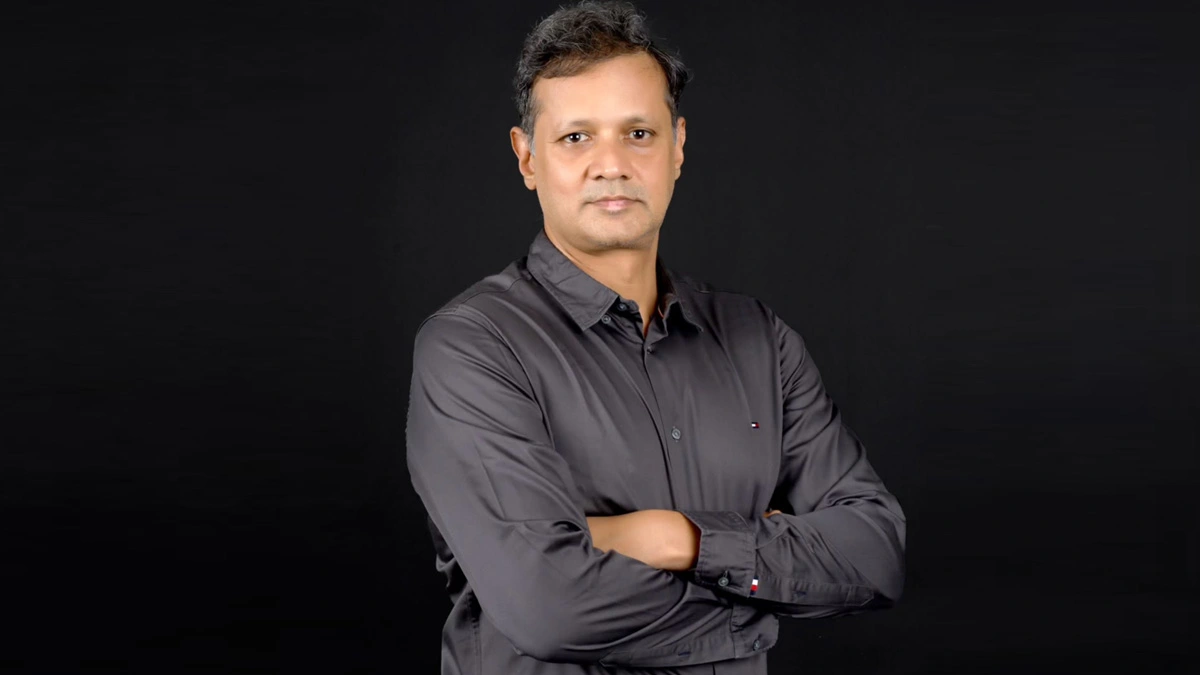
Arun M Vijayan
Vertical Head and Research Manager
Metals, Minerals Mining, CAPEX and MRO
Beroe Inc
Arun M Vijayan is a Research and Advisory Leader at Beroe Inc., heading a vertical focused on strategic sourcing, commodity monitoring, risk management, proactive advisory and supply chain optimization across the Metals, Minerals, Mining, Capital Equipment, and Commodity segments.
Along with developing category playbooks for sourcing and procurement, Arun and his team support global clients in applying game theory frameworks for sourcing optimization and RFP design—enhancing negotiation strategies, supplier competitiveness, and total cost efficiency.
With over 13 years of experience, he drives initiatives to build resilient, analytics-driven supply chains and advance best practices in sourcing and procurement excellence.
He is recognized among Forbes India’s 100 Great People Managers, featured in the S&P Global Metal Awards. Arun has also received multiple industry honours. He is a recognized industry speaker and author on sustainable sourcing, supply chain transformation, and the future of metals markets.
About Beroe
Beroe is a global SaaS-based procurement intelligence and analytics provider. We deliver intelligence, data, and insights that enable companies to make smarter sourcing decisions – leading to lower cost, reduced risk, and greater profits. Beroe has been a trusted source of intelligence for more than 15 years and presently partners with 10,000 companies worldwide, including 400 of the Fortune 500 companies.
Learn more about Beroe https://www.beroeinc.com
Explore the latest edition of Journal of Supply Chain Magazine and be part of the JOSC News Bulletin.
Discover all our upcoming events and secure your tickets today.
Journal of Supply Chain is a Hansi Bakis Media brand.
Leave Comment
Join the community of 150,000+ industry professionals
Subscribe to our Daily Newsletter
Subscribe For FreeBy continuing you agree to our Privacy Policy & Terms & Conditions
Latest





Feature Articles

Related