Leaders Opinion
Artificial Intelligence and the future of Supply Chain Management (SCM) : Why AI will transform but not replace SCM?

Many industries today are increasingly convinced that Artificial Intelligence (AI) will eventually replace Supply Chain Management (SCM). However, from a realistic industry perspective, this assumption is not entirely accurate as far as my understanding goes. AI, despite its rapid advancement, cannot fully replace SCM. Instead, the future of supply chains will be defined by a powerful integration of AI, human expertise, and multiple digital technologies. Let me explain this in a structured and practical way.
The AI Hype vs. Supply Chain Reality in brief:
Over the past decade, Artificial Intelligence (AI) has moved from being a futuristic concept to a core driver of business transformation. From predictive analytics to autonomous systems, AI is reshaping industries at an unprecedented pace. Among these industries, Supply Chain Management (SCM) has emerged as one of the most significantly impacted domains. This rapid advancement has led to a widespread belief that will AI eventually replace supply chain management entirely.
At first glance, the argument seems convincing. AI systems can process massive datasets, automate repetitive tasks, and make data-driven decisions faster than humans. Global enterprises are already leveraging AI to optimize logistics, forecasting, and inventory management. This has created a strong narrative that supply chains could soon operate with minimal or no human intervention. However, this perspective is incomplete and, in many ways, misleading. Supply chains are not purely technical systems—they are complex, adaptive ecosystems shaped by human behaviour, geopolitical dynamics, economic policies, and environmental uncertainties. While AI excels in structured, data-driven environments, it struggles in ambiguous, unpredictable, and human-centric scenarios. The future of supply chain management will not be defined by AI replacing humans, but by AI augmenting human intelligence.
So, in reality, SCM is evolving into a hybrid intelligence system, where AI handles data processing, prediction, automation, Digital technologies enable visibility, connectivity and Humans provide strategy, judgment, leadership. This essay explores this transformation in depth—analysing why companies believe AI could replace SCM, why that assumption is flawed, and how the future supply chain will be built on integration rather than substitution.
If the above explanation is the reality, then why companies believe that AI will replace Supply Chain Management? The belief that AI could replace SCM is driven by tangible, real-world successes. Organizations are not imagining this shift—they are witnessing it. I will now tell you few real time examples wherein there are reasons for this belief.
- Explosion of Data and AI’s Processing Power : Modern supply chains generate enormous volumes of data like Customer demand patterns, Supplier performance metrics, Inventory levels across locations, Transportation and logistics data and Market trends and external signals.
Traditional systems struggle to process this data efficiently. AI, however, thrives in such environments.
Real-world example: Amazon uses AI-powered demand forecasting to predict what customers will buy—even before they place orders. Its “anticipatory shipping” model positions inventory closer to customers based on predictive algorithms. This level of predictive capability creates the impression that AI can independently manage supply chains.
- Automation of End-to-End Operations : AI combined with robotics has automated large portions of supply chain operations.
Warehouse automation example: Amazon Robotics uses autonomous robots to move inventory within warehouses, reducing human effort and increasing efficiency.
Ocado (UK-based retailer) operates highly automated warehouses where robots pick and sort groceries with minimal human involvement.
Logistics optimization: UPS (United Parcel Service) uses its ORION (On-Road Integrated Optimization and Navigation) system to optimize delivery routes, saving millions of gallons of fuel annually.
These examples reinforce the belief that human roles are becoming redundant.
- Cost Reduction and Efficiency Gains : AI reduces operational costs, human errors, and processing time.
Example: Walmart uses AI to optimize inventory replenishment, reducing overstock and stockouts across thousands of stores globally.
When companies see measurable ROI from AI, they begin to assume that full automation—and eventual replacement—is inevitable.
- Rise of Autonomous Decision-Making Systems: AI systems are increasingly capable of making decisions without human intervention i.e. Automated procurement triggers, Dynamic pricing models and Real-time logistics rerouting.
This leads to the perception that supply chains can become self-regulating systems.
Conference

Conference

Now I will explain why AI cannot fully replace Supply Chain Management. Despite its strengths, AI has fundamental limitations. These limitations are not temporary—they are structural as below.
- Human Strategic Decision-Making Cannot Be Replicated : AI operates on historical data and predefined models. Strategy, however, is about navigating uncertainty.
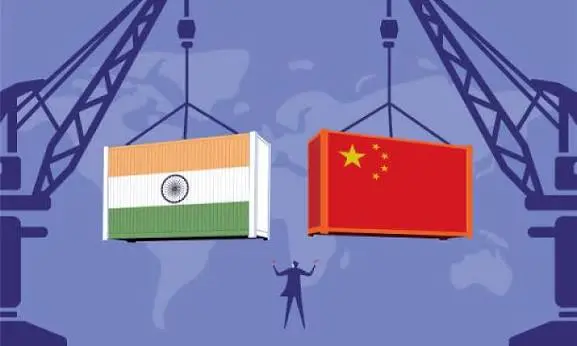
Example: Apple’s Supply Chain Strategy. Apple does not rely solely on AI to decide where to manufacture its products. Its decisions involve Geopolitical risk (China vs. India manufacturing shift), Labor considerations, Government policies, and Long-term market positioning.
These decisions require Foresight, Negotiation, Risk appetite, Strategic trade-offs.
AI can support analysis, but it cannot own such decisions.
- Handling Black Swan Events and Global Disruptions
AI struggles with unprecedented events—situations where historical data is irrelevant.
Case Study: COVID-19 Pandemic
During COVID-19 Demand for essentials surged unpredictably, Factories shut down globally, Logistics networks collapsed.
What AI did was identified demand spikes, flagged supply shortages. But what humans did was reconfigured supply networks, sourced alternative suppliers, prioritized critical goods and made ethical allocation decisions.
Example: Unilever rapidly shifted production to essential goods like sanitizers And Toyota leveraged its risk-aware supply chain philosophy to recover faster than competitors. AI supported—but humans led.
Geopolitical Disruptions – Current global challenges include US–China trade tensions, Russia–Ukraine conflict and Middle East instability affecting oil supply. These require Political judgment, Strategic realignment, and Scenario planning. AI cannot interpret geopolitical intent or negotiate trade-offs.
- Supplier Relationship Management and Negotiation
Supply chains depend on relationships, not just transactions.
Example: Automotive Industry
Companies like Toyota and Honda maintain long-term relationships with suppliers based on trust and collaboration.
During shortages Preferred suppliers prioritize loyal partners and negotiations determine allocation
AI cannot build trust, understand emotions and negotiate complex agreements.
Human interaction remains irreplaceable.
- Ethical and Sustainability Decision-Making
Modern supply chains face pressure to be environmentally sustainable, socially responsible and ethically compliant.
Example: Nike’s Supply Chain Transformation. After facing criticism over labour practices, Nike restructured its supply chain to improve transparency and worker conditions.
This required ethical judgment, brand considerations, and stakeholder engagement.
AI can measure emissions or compliance but cannot decide. “Should we sacrifice profit for sustainability?”
That is a human decision.
- Contextual and Cultural Intelligence
Entering new markets requires understanding local regulations, cultural norms, and consumer behaviour.
Example: McDonald’s Global Supply Chain. McDonald’s adapts its supply chain to local markets sourcing locally in India due to dietary preferences and adjusting menus based on culture.
AI lacks deep contextual understanding of such nuances.
Hence, the Future is indeed Hybrid Supply Chain Model. That means the future is not AI vs humans, rather it is AI + humans.
- Role of Artificial Intelligence : AI will dominate demand forecasting, risk detection, inventory optimization, and predictive maintenance
Example: Zara uses AI to analyse customer preferences and adjust inventory rapidly.
- Internet of Things (IoT) : IoT provides real-time visibility.
Example: Maersk uses IoT sensors in shipping containers to monitor temperature, location, and humidity.
This is critical for pharmaceuticals and food supply chains.
- Automation and Robotics : Automation improves efficiency but requires oversight.
Example: DHL extensively uses collaborative robots (cobots) and autonomous mobile robots (AMRs) as part of its digitalization and automation strategy, to assist workers rather than replace them.
- Advanced Analytics : Companies use analytics platforms for scenario planning, risk modelling, and performance optimization.
- Human Expertise: The Core Driver. Humans will focus on strategy, innovation, risk management, and relationship building
Real-World Integrated Supply Chain Models are
- Amazon – AI + Human Oversight : AI predicts demand & Humans manage exceptions and strategy.
- Walmart – Data + Execution : AI-driven inventory & Human-led supplier management.
- Tesla – Vertical Integration Strategy : Combines automation with strategic control over supply chain.
The evolving role of Supply Chain professionals will be more analytical in sync with AI. AI will transform jobs—not eliminate them. Future Roles of SCM will be AI system managers, Data-driven strategists, Risk analysts, and Sustainability leaders.
Skills Requirement will be Data literacy, Strategic thinking, Digital knowledge, and Leadership.
There will be challenges as well for adopting complete AI driven SCM. The key challenges will be as below:
- Data Quality Issues - AI is only as good as the data it uses.
- Cybersecurity Risks - Digital supply chains are vulnerable to cyberattacks.
- High Implementation Costs - AI adoption requires significant investment.
- Change Management - Employees must adapt to new technologies.
Strategic recommendations for organizations to succeed, companies must adopt AI gradually, invest in workforce upskilling, build resilient supply chains, focus on sustainability, and maintain human oversight.


The conclusion as I understand, AI is undoubtedly a powerful enabler in supply chain management, but it is not a replacement for it. The most effective and resilient supply chains of the future will be those that successfully integrate AI, digital technologies, and human intelligence. AI will handle data-driven tasks and automation, digital technologies will enhance operational efficiency, and human expertise will guide strategy, relationships, and ethical decision-making.
Explore the latest edition of Journal of Supply Chain Magazine and be part of the JOSC News Bulletin.
Discover all our upcoming events and secure your tickets today.
Journal of Supply Chain is a Hansi Bakis Media brand.
Leave Comment
Join the community of 150,000+ industry professionals
Subscribe to our Daily Newsletter
Subscribe For FreeBy continuing you agree to our Privacy Policy & Terms & Conditions
Latest





Feature Articles



Related