Article
World’s Longest Hyperloop? India’s Modest Milestone Mocks the Hype
 Anamika Mishra,
Sub Editor
Anamika Mishra,
Sub Editor
Imagine a pod zooming through a steel tube at over 1,000 km/h, delivering goods or people faster than a flight. That’s the big promise of hyperloop, a concept that’s been around for a while, but never really took off. And now, India’s getting in the game.
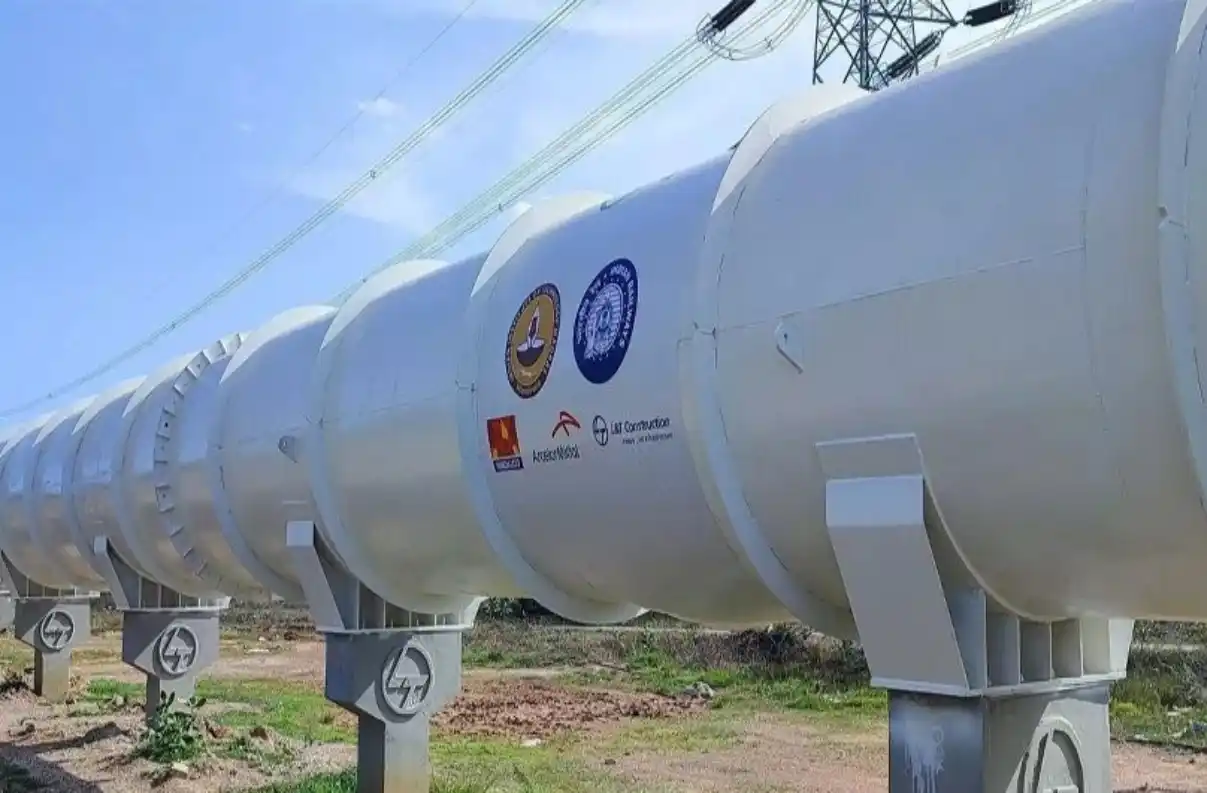
Union Railways Minister Ashwini Vaishnaw recently announced that IIT Madras is building Asia’s longest hyperloop test track, a 410-meter-long vacuum tube, which will later stretch to 460 meters. It’s a research initiative and will help us study the technology. But here’s the real question: what does it mean for India’s supply chains?
A Hype Loop, Not a Hyperloop?
Let’s break it down.
The hyperloop was first proposed by Elon Musk in 2013 to fix “soul-destroying traffic.” His idea: put people or cargo in a capsule, move it inside a tube using magnetic levitation, and remove air resistance by making it a near vacuum.
Fast, futuristic, and fancy but is it feasible?
So far, not really. Hyperloop companies in the US, France, and UAE tried and failed. One of the most famous, Hyperloop One, did a small test in 2020 500 meters, two people, and a speed of just 175 km/h. That’s slower than our freight trains.
The company shut down in 2023. Others like Hyperloop TT started projects that were cancelled, delayed, or simply forgotten.
Even Japan, known for its maglev trains, hasn’t built a working hyperloop yet. So why is India jumping in?
Will It Help Our Logistics Sector?
India’s logistics and supply chain industry is massive and growing fast. With the Gati Shakti plan, Dedicated Freight Corridors, and multi-modal logistics parks, we’re aiming to make goods movement faster, cheaper, and cleaner. These are real, grounded efforts.
Hyperloop, on the other hand, is still a lab experiment. It's expensive, untested at scale, and comes with lots of technical and safety concerns. Maintaining a vacuum across hundreds of kilometres, ensuring safety, and avoiding system breakdowns is no small task.
Yes, hyperloop is often sold as a game-changer for cargo transport. Imagine shipping pineapples from Assam to Delhi in two hours! But we’re nowhere near that. No country has built a working, cost-effective freight hyperloop. The tech is cool on paper, but not ready for India’s supply chain realities not when basic issues like cold storage, last-mile connectivity, and warehouse automation still need fixing.
Conference

Conference

Are We Spending in the Right Places?
The IIT Madras hyperloop project costs ₹8.34 crore. That’s small compared to big infrastructure budgets. But the real concern is attention. In a time when Indian Railways is under pressure to improve safety, modernise stations, and upgrade freight services, does it make sense to chase a dream that even tech giants have let go?
Instead of chasing vacuum tubes, what if we:
- Strengthen rail freight corridors to cut down road congestion
- Build more temperature-controlled supply chains for agri-products
- Invest in digital tracking and automation for warehouses
- Improve port-rail-road connectivity to reduce dwell time
These would give real, tangible gains to Indian businesses, MSMEs, and farmers trying to access distant markets.
Innovation vs Distraction
To be fair, research is important. And it’s great that IIT Madras is exploring new frontiers. Innovation often starts with trial and error. But let’s not confuse a science experiment with a logistics breakthrough.
Hyperloop is not going to move cargo anytime soon. It may take decades (if ever) to become commercially viable. Until then, the focus should stay on strengthening what we already have because even our fastest trains still face delays, and many rural areas remain cut off from major supply routes.
So yes, the hyperloop sounds fancy, and it makes headlines. But when it comes to India’s supply chain transformation, we need more than buzzwords. We need reliable railways, efficient multimodal transport, digitised logistics, and a system that works for everyone from metro cities to remote villages.
In the world of supply chains, reliability beats hype. Let’s not forget that.
Explore the latest edition of Journal of Supply Chain Magazine and be part of the JOSC News Bulletin.
Discover all our upcoming events and secure your tickets today.
Journal of Supply Chain is a Hansi Bakis Media brand.
Leave Comment
Join the community of 150,000+ industry professionals
Subscribe to our Daily Newsletter
Subscribe For FreeBy continuing you agree to our Privacy Policy & Terms & Conditions
Latest





Feature Articles


Related